


 Francais
 Deutsch
 Italiano
Refine Your Search
+"Japan" +1943 stock footage and images
- Showing 13 to 18 of 63 results more
more Hide
Hide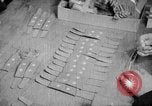
Japanese girls make insignia and sew clothes for the soldiers in Japan (WW2)
Japanese people work to help the soldiers during World War II. Many Japanese girls hand sew army insignia in class. Japanese schoolgirls use sewing machines to make insignias. A teacher demonstrates insignia making in class. Sewing pattern for diagram is drawn on the blackboard. Other girls, wearing white aprons, sew some clothes and belts for the soldiers. Girls folding handmade parachutes and stacking them on a pile. View of the Imperial Diet building in Tokyo, Japan (1 Chome-7-1 Nagatachō, Chiyoda City, Tokyo 100-0014, Japan). Sign in Japanese reads “Section Committee”. Japanese office workers working inside a small office. Piles of paper on desks. Men seated at desk as they work on the documents.
Emperer Hirohito on horseback reviews his troops in Tokyo, Japan.
Training film for U.S. Navy titled 'Our Enemy - The Japanese'. U.S. Ambassador to Japan, Joseph S Grew states that Japan's logic is incomprehensible by Western standards and that they are 2000 years behind in ethical, social thinking. Wall charts in the background. Grew further talks about Japanese weapons. Hirohito's tomb in Hachioji. Emperor Hirohito on horseback followed by other Japanese officials on horseback. Japanese Army officials stand in formation. Troops lined up. Troops parade on streets. Japanese monks pass along road. (World War II period).
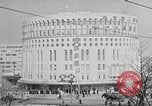
Japanese banks, stock exchange and industries make Japan self sufficient for arming and fighting in World War 2
Exteriors of a large building in Tokyo during World War II. Men around various counters inside building. Banker using abacus. Close view of Japanese bill. Banker deals with a customer. Men on Tokyo stock exchange trading floor. Japanese industries. Sign reads 'Chamber of Commerce and Industry of Japan'. Various men in meeting. Propaganda theater with national symbols of Japan and Nazi Germany shown as decorations, showing bond between the two countries. A stage performance underway in the theater.
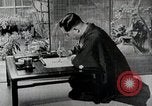
Child naming ceremony or Miyamairi at local Shinto shrine in Japan (WW2)
Parents take a newborn baby for a Miyamairi (literally "shrine visit") to pray for good health at a Shinto shrine in Japan, during World War II. A Japanese man writes his child’s name using a calligraphy pen. Man displays his child’s name in front of an altar. A Japanese couple takes their newborn child to a Shinto shrine. The couple and the child’s grandmother sit in front of a clerk. The grandmother holds the child as mother sits next to her. The Shinto priest recites a prayer and swings a tamagushi right and left. The priest gives holy sake to the mother for the child. She feeds sake (symbolically) to child and then she drinks it. Priest folds the paper of Japanese writing and gives it to the family.
Comparison of Japanese Scout 95 seaplane and United States Curtis SOC in Japan (WW2)
A World War II U.S. army war training film on Identification of a Japanese Scout 95 seaplane and United States Curtis SOC seaplane in Japan. Japanese Navy scouting 95 seaplanes in flight. Other planes flew nearby. High altitude view of the city. Animation shows the structure and the working of the plane. The prominent features of the plane are shown. Silhouette of plane from all angles. The wings and tail of the plane are described through the animation. Information about the pontoon of the plane. The plane consists of two cockpits. The comparison between United States Curtis SOC and the Japanese Navy Scout 95 is made. The wings compared which are almost the same. The difference lies in the open cockpit of the Japanese plane and the covered cockpit of the United States plane. The difference in the tail pattern is shown. The Japanese plane consists of a smaller tail.
Japanese people contribute money and material useful for war purpose in Japan during World War II.
Japanese people work to help soldiers and contribute to the war effort on the home front in Japan during World War II. Man puts charcoal into a gas tank of bus. Charcoal bus departs. Japanese soldier's caps being made on sewing machine. School children collect metals. Boy buys Japanese war bond at a post office. People put coins into a safe. Monoplane (fighter) being contributed by a school. Several Japanese biplane aircraft take off. Small Japanese tanks at a parade in Tokyo with view of Imperial Palace in background. People watch the tanks.