


 Francais
 Deutsch
 Italiano
Refine Your Search
+"Japan" +1945 stock footage and images
- Showing 1 to 6 of 1093 results more
more Hide
Hide
USAAF strikes on ground, water, and railroad targets on Kyushu Japan in early August 1945
Gun camera footage of U.S. Army Air Force 19th Fighter Squadron, 318th Fighter Group aircraft. Footage from aircrafts of Lt. Towner on August 1 and Lt. Taylor on August 5, 1945. Shows ground, ship, and railroad targets in Kyushu Japan being struck. Incoming anti-aircraft fire is seen. (World War II period).
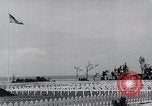
U.S. Army aircraft bombing raids on Japanese cities in 1945, and atomic bomb explosion in World War 2.
Air raids and battle in Japan in the Pacific Theater near the end of World War II. A cemetery of United States military soldiers in the Japanese island of Okinawa. Memorial at the tombstone of Ernie Pyle built by the 77th Infantry Division of the U.S. Army. General Doolittle, General Henry Arnold, General George Kenney, General Ennis Whitehead and other officers during a discussion standing before planes at the 48th Air Force base. B-29 aircraft advances towards Tokyo. Bomber aircraft dropping of a number of guided bombs towards their targets. Targets include Japanese airplane factories, shipping industry, military supply chains in the cities of Tokyo, Nagasaki, Nagoya, Okinawa and Yokohama of Japan. Explosion and smoke arises from bombed targets on ground. Aerial wide and close up views of a B-29 aircraft in flight. Narrator notes that on 05 August 1945, Enola Gay, a B-29, carries the atomic bomb and flies towards Hiroshima. Atomic explosion seen signifying the one in Hiroshima on August 6, 1945, but narrator indicates the image seen is that of the first atomic explosion (the Trinity test) during on July 16, 1945 in New Mexico. Immense cloud of smoke and light. This atomic explosion, the first of two, was pivotal in compelling Japan to surrender unconditionally. Film ending includes public service announcement image "Buy Bonds. Hold Them. Victory Loan."
French General Charles de Gaulle is feted in Chicago during his visit to the United States in 1945
Film opens showing people in an American city (possibly Chicago) celebrating the Allied victory over Japan on VJ Day, August 15th, 1945. Scene shifts abruptly to Chicago, Illinois, where French General Charles de Gaulle is seen saluting in a reviewing stand at Victory Plaza near Lasalle Street entrance to City Hall. (On August 24th, he had accepted an invitation from Mayor Edward Kelly to stop in Chicago on August 27-28, 1945, during his visit to the U.S. and Canada.) Next, general de Gaulle and Mayor Kelly are seen in an open car in a motorcade amidst crowds of well-wishers. Enthusiastic spectators run along side their car. Glimpse of a dense crowd of people, including a contingent of sailors in dress whites. Final scene shows General de Gaulle speaking with reporters and photographers near a sign reading "W-G-N." (A Chicago radio station). (World War II period).
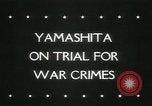
Runup to Yokohama War Crimes Trial of Kuroda and others; Clips of Trial of General Yamashita in Manila 1945 (WW2)
First part deals with World War II Allied war crimes trials of Japanese defendants in detained in Omori Prisoner of War Camp in Tokyo, Japan. Soldiers unload luggage from the back of a truck in Omori Prisoner of War Camp. Captured Japanese generals bring their luggage to prison camp. Sign reads “XI Corps Stockade #2 Omori P.O.W. Camp”. 8th Army Chief General Clovis E. Byers and Lieutenant Colonel Salvi, Commandant of Omori, talking to each other. Japanese military officials in Omori Prison Camp include Admiral Shigetaro Shimada, Commander Shigemori Kuroda, General Masaharu Homma and Colonel Kingoro Hashimoto. Second part is Japanese General Tomoyuki Yamashita on trial for war crimes in Manila, Philippines. Few Military soldiers talk to each other at a camp. Few views of Japanese Generals under trials for war crimes. General Yamashita brought for the trial. General Yamashita enters a court in Manila for the trial. An interior view of the trial court. General Russel Burton Reynolds presides the trial session. General Yamashita sits on a chair at his trial. A member of the trial court reads a document. Lawyers give their points during the session. General Yamashita is taken out after the trial session in court.
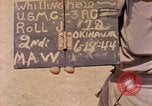
Wounded U.S. Marines being loaded aboard Stinson L-5B Sentinel ambulance aircraft in Okinawa , June 1945.
Air evacuation of wounded United States Marines in Okinawa, Japan during World War II. Marines unload a litter patient from an ambulance and load it aboard U.S. Army Air Forces L-5B aircraft of the 163rd Liaison Squadron. Aircraft taxis for take off. A signalman with flags with numerous Marine and Air Force L-5 aircraft in the background. Marines unload a wounded marine on a stretcher from the ambulance and load it aboard L-5B aircraft. Another litter patient being loaded aboard the L-5B aircraft. Identifiable aircraft serial numbers: 44-16995, 163rd Liaison Squadron
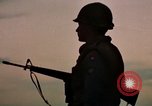
Visual saga of the American Soldier from 1945 to 1970: WWII; Korea; Berlin Crisis;Cuban Missile Crisis; Red China
Review of conflicts involving U.S. from World War 2 to 1970. A U.S. soldier with rifle and binoculars, on guard. German Chancellor Adolf Hitler speaks in Germany to mass audience. German mobilization and blitzkrieg. U.S. troops firing small arms on island in Pacific, battling Japanese. U.S. soldiers on half-track firing artillery. Explosive destruction of Nazi swastika and Eagle symbol on top of building in Zeppelin Field, Nuremberg, Germany. General Douglas MacArthur stands as Japanese General signs surrender documents aboard USS Missouri, ending World War II. Times Square in New York City on Victory over Japan Day (VJ Day) marking end of World War 2. American troops firing artillery and small arms in Korean War. Soviet leader Nikita Khrushchev speaking at the United Nations. Newspaper headlines about postwar Berlin Crisis. Soviet missiles on display in military parade in Red Square in Moscow, Russia, Soviet Union. Soviet General Georgy Zhukov and Nikita Khrushchev, at Kremlin, reviewing the parade. Cuban President Fidel Castro giving a speech. A newspaper headline reading: "Khrushchev orders removal of missiles" ending the Cuban Missile Crisis. Soviet cargo ship with covered missiles on its deck. Red flag with image of Lenin and message: 'Partido Communista Dominicano' and a crowd chanting support for the Communist party in the Dominican Republic. Communist Chinese people marching with massed flags in the People’s Republic of China. Chairman Mao Zedong waving to a crowd of young supporters and Red Guards in China as they chant. A United States soldier in South Vietnam during Vietnam War looks through binoculars and then walks carrying his M-16 rifle. A map of Vietnam.