


 Francais
 Deutsch
 Italiano
Refine Your Search
+"Japan" +1946 stock footage and images
- Showing 247 to 252 of 317 results more
more Hide
Hide
U.S. orientation film for Allied occupation forces, to provide background for understanding Japanese and their society
Background information for United States occupation forces in Japan after end of World War II. At start, the film shows sky filled with U.S. Navy airplanes flying in formations. They include Vought F4U Corsair aircraft, among others, and are seen overhead above the Battleship USS Missouri (BBB-63). Closeup of the USS Missouri with her crew in formation on deck wearing dress whites. Next, General Douglas MacArthur is seen and heard speaking from a podium on the Missouri's deck. He invites the representatives of the Emperor of Japan, and the Japanese Government, and the Japanese Imperial headquarters, to sign the instrument of surrender. The date is September 2, 1945, just after the end of World War 2. Closeups of the Japanese delegation, which includes envoys Foreign Minister Mamora Shigemitsu and General Yoshijiro Umezu, and of MacArthur. Japanese Foreign Minister Mamora Shigemitsu sits at a table. Closeups of him signing the surrender document. Change of scene to Japan, where camera pans over many thousands of Japanese people assembled to learn of their fate. Closeups of Japanese soldiers and family members, as Narrator asks how should the U.S. occupying force treat them. View of soldiers in plain non-military uniforms. Views of Japanese responding en masse to a leader, during World War 2. Views of child victims of the war. Closeup of Japanese soldier firing a short barrel light machine gun. Views of Japanese pedestrians including families, most in western dress. Japanese workers in an office. Film shows artists view of one worker's brain, and then many brains, as Narrator refers to need for reorienting Japanese thinking. View of learned wise Japanese leader at a podium. View of a Japanese soldier posed with his sword above the head of a war prisoner. Japanese mother feeding her baby. Closeups of Japanese babies. Closeups of Japanese school age children, in a group, and some doing things in school, and some at a playground. Group of uniformed Japanese students studying the art of Japanese calligraphy. Students doing artwork, studying nature outdoors, and paying attention to a teacher using a black board to explain how to calculate volumes of different shaped vessels. Students in classes of Geography and of geology. Japanese chemists, architects, and lawyers at work. Telephone switchboard operators at work. Electrified train moving on a track.
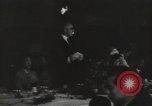
Japanese Prime Minister, Kichizaburo Nomura, expresses confidence in future relationship with the U.S.
Kichizaburo Nomura, last ambassador to U.S. of America, is seen in Japan, before World War II. A Japanese official speaks at a table. After the end of the second World War, Nomura expresses his firm belief that there are no problems between United States and Japan that cannot be resolved.
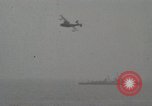
Captured Japanese submarines being sunk by United States Navy near Sasebo,Japan.
United States Navy Martin PBM Mariner flies over Japanese submarine during Operation Road's End. Destroyer USS Everett F. Larson (DD-830)seen nearby. Two Admirals and a Captain observing from bridge of the USS Chicago (CA-136). Japanese submarine explodes. View of captured Japanese submarines sinking. U.S. Destroyer, USS Everett F. Larson in the background.
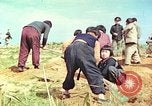
Japanese school girls do various exercises such as running, jumping and the ceremonial dismissal by their teacher in Japan.
A group of young primary school children tend a garden and dig up the ground for further planting. A physical training class being conducted on a school playground. Girls do various exercises such as running, jumping and play basketball. The ceremonial dismissal by their teacher. They are uniformly dressed in white middies and navy blue bloomers.
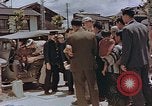
Japanese Military Police controls black market activities between civilians and members of UnitedStates occupation force,Kyoto.
Japanese Military Police acts to control black market activities in Kyoto, Japan. Japanese civilians, two men and a child and a member of the United States occupation force in Japan checked and arrested after being caught doing an illegal transaction.
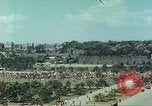
Views of May Day celebrations and the Imperial Palace
May Day demonstrations in Tokyo, Japan. Half a million laborers, agrarians and white-collar workers demonstrate in front of the gates of the Imperial Palace (1-1 Chiyoda, Chiyoda City, Tokyo 100-8111, Japan). People assemble in the Imperial Park. Some protesters hold red banners. Speeches are held in the park. Some cars are driving in the park.