


 Francais
 Deutsch
 Italiano
Refine Your Search
+"Japan" +1946 stock footage and images
- Showing 289 to 294 of 317 results more
more Hide
Hide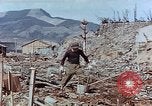
A Japanese uses a long handled ladle to pour fertilizers and seaweeds is laid onto concrete slabs to dry in Nagasaki.
A Japanese drying seaweeds after the atomic bombings in Nagasaki, Japan during the end of World War II . A Japanese stands on the ruins and debris. He uses a long handled ladle to pour some fertilizer into the ground. The seaweeds is laid onto concrete slabs to dry.
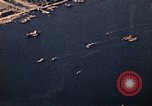
An aerial coverage of a harbor area and a river parallel to the Mitsubishi Small Arms Plant in Nagasaki after World War II.
An aerial coverage of Nagasaki, Japan to show the atomic bomb damage which occurred during World War II. Aerial views of a harbor area and a river parallel to the Mitsubishi Small Arms Plant and a new air strip. Ships anchored and a bridge over a river. Views of buildings and plants.
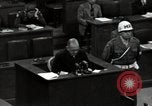
U.S. Admiral James O Richardson gives the figures on U.S. and Japanese losses at Pearl Harbor during war crime trials in Tokyo.
Japanese war crime trials in Tokyo, Japan. U.S. Admiral James O. Richardson quotes from affidavit concerning Japanese Fleet Admiral Isoroku Yamamoto's plan to attack Pearl Harbor during World War II. Admiral Richardson gives the figures on U.S. and Japanese losses at Pearl Harbor and mentions USS Arizona (BB-39).
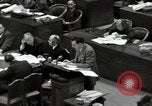
Defense attorney Brannon asks U.S. Admiral James about statement attributed to Japanese Admiral Yamamoto during trials in Tokyo.
Japanese war crime trials in Tokyo, Japan. Defense attorney James Brannon asks U.S. Admiral James O. Richardson about statement attributed to Japanese Fleet Admiral Isoroku Yamamoto.
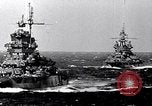
Role of U.S. Naval gunfire during battle for Okinawa, Japan, during World War II.
U.S. Battleships cruising in the Pacific. Close views of naval 16 inch gun barrels Navy personnel manning radio and teletype stations in a communications center. (They are shirtless, presumably due to heat.) They receive a message from General Bruckner, Commanding General, 10th Army, to Admiral Turner, Commander, Task Force 51,praising the active naval support for U.S. ground forces. Scenes of naval gunfire of all types. Japanese aircraft hit and burning. A U.S. naval 16 inch gun fires and produces a giant smoke ring.
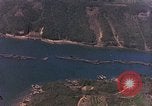
Operation Roads End: Japanese submarines being taken from Sasebo Bay to the sea for destruction by United States Navy.
Aerial view shows fleet of captured Japanese Submarines at Sasebo Bay, Japan. The Japanese submarines with skeleton crews being escorted from Sasebo Bay to the sea for destruction by the United States Navy as part of Operation Road's End.