


 Francais
 Deutsch
 Italiano
Refine Your Search
+"Manila Philippines" +1942 stock footage and images
- Showing 1 to 6 of 25 results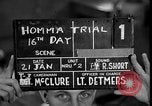
Major Tisdell recalls events of April 8, 1942 in Bataan, Philippines during the Homma trial in Manila, Philippines.
U.S. Army Major Achille C. Tisdell testifies before a military tribunal in Manila, Philippines during the trail of Japanese Army General Masaharu Homma for World War II crimes. Major Tisdell takes an oath on the 16th day of the Homma trial. He says that he was aide-de-camp to Major General E.P. King, Commanding General of the American forces in Luzon in April, 1942. Major Tisdell recalls that Japanese forces had pushed back the American forces in Bataan to a point that it was difficult for the Americans to reorganize. He also talks about the lack of ration for the American forces. Major Tisdell says that U.S. reserves were released for the forces. He says that on 9th April, 1942 General King was unable to make contact with Japanese commander and Colonel Edward C. Williams volunteered to make contact with the Japanese.
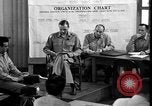
Major Tisdell talks about American surrender to the Japanese in 1942 during trial of General Hommal in Manila, Phillipines.
U.S. Army Major Achille C. Tisdell testifies before a military tribunal in Manila, Philippines during the trial of Japanese Army General Masaharu Homma for World War II crimes. Major Tisdell, aide-de-camp to Commanding General of the American forces in Luzon Major General Edward King, says that Colonel William and Major Marshall went in a jeep to contact the Japanese forces. They met the forces at a bridge. Japanese infantry elements led them to head quarters. Tisdell says that a Japanese Major General kept Colonel Williams as a hostage allowing Major Marshal to return to the American headquarters. After his return on April 9, 1942 General Edward King assembled some officers.
Montage of scenes related to 1942 Fall of Corregidor, the Bataan Death March, POWs and destruction of manila, in World War II
World War 2 scenes related to the Philippines. Opening shot shows Japanese troops unceremoniously taking down American flag in 1942, followed by superimposed images of Japanese soldiers boots trampling over U.S. flags. Next, U.S. Lieutenant General Jonathan Wainwright with members of his staff, are seen seated at a table in the Japanese headquarters building on Bataan to discuss surrender with General Masaharu Homma, Commander of the 14th Japanese Imperial Army. Homma has General Wachi at his left and Colonel Nakayama to his right. Repetition of the superimposed Japanese army boots trampling American flags. Next, U.S. defenders of Corregidor are seen surrendering to Japanese troops in 1942, and then being marched under guard to Mariveles, where the infamous Death March commenced. Several views of the American and Filipino prisoners marching under guard. Glimpse of American combat helmets piled up in a heap. Views of the POWs without helmets, using white cloths over their heads to protect from the sun. Huge numbers of POWs held in an open area for the night, and then marching again during the day. One who had fainted is carried in a blanket by several others. Illustrations of POWs being tortured by Japanese soldiers. Views of two POWs, who died during the march, lying on the ground. Next scene shows emaciated Allied POWs in 1945 being freed by American soldiers from a Japanese prison camp. American soldiers speaking with another group is a section of prison behind a sign reading: "Dysentary, Keep Out." Undernourished former prisoners of war eating a meal. One smoking a cigarette. Aerial view showing large swaths of Manila, Philippines, destroyed by Japanese forces retreating from advancing American forces. Smoke rising along a line of destruction in the background. Bodies of numerous Filipinos lying amid rubble in the streets of Manila. Many have hands tied behind their backs. Glimpse of dead children. Cadres of Japanese soldiers raising victory cheers. New Japanese conscripts in large formations during military training for new recruits following draft. Japanese naval trainees in white uniforms, waving their hats. Huge crowd of Japanese people cheering, followed by view of Emperor Hirohito, in Army uniform, saluting as he stands on a balcony. Cheering Japanese people, at a rally in a stadium.
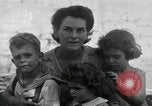
Margaret Moule, wife of William Moule, describes their life in Manila,Philippines during World War 2
Margaret Moule, the wife of William Moule, is seen along with her three children, Billy, Eileen, and Linda, late in World War 2. She describes how they hid from the Japanese in 1942, but were captured by the Japanese in 1943 and lived in a concentration camp in Manila, Philippines.
The United States mobilizes and joins Allies in World War II. A montage of numerous World War 2 period images.
Film opens with views of goosestepping German, Italian, and Japanese soldiers during parade reviews in their respective countries. Emperor Hirohito, on a white horse. American battleships burning in the Japanese attack on Pearl Harbor. U.S. General Douglas MacArthur decorating a soldier in Manila, Philippines. Air raid sirens sounding in Manila and residents hurrying to take cover. Heavy black smoke rising from a bombed site and emergency vehicles responding and rushing to several bombed and burning locations. A burning rickshaw amidst other bombing rubble and bodies of victims. U.S. Army General MacArthur greeted by Australian officials at his headquarters in Brisbane, Australia. Sign reads: Headquarters UNITED STATES ARMY FORCES in Australia. American flag flying on tall flagpole. View from ship underway in supply convoy. A battleship seen on horizon and a destroyer passing the camera ship. U.S. President, Franklin D. Roosevelt signing the "Lend Lease Act" of 1941. A U.S. industrial plant with four tall stacks emitting smoke. A steam locomotive belching steam. A locomotive pulling an open car and some tank cars. New 1941 Plymouth automobiles coming off a production line. A new M3 Medium Tank in a U.S. factory. View of Liberty Ships, including the "Zebulon Pike" and the "Henry Knox" under construction at the California Shipbuilding Corporation yard, Terminal Island, California. U.S. Navy Destroyers constructed at Federal Shipbuilding & Dry Dock Company, Kearny, New Jersey. One is being launched, next to DD-446 (the USS Radford). A formation of U.S. Navy aircraft including Curtiss SBC Helldiver scout bombers and Douglas TBD Devastator torpedo bombers. A tight formation of U.S. Army Douglas B-18 Bolo medium bombers in flight. A formation of U.S. Army Curtiss P-36 Hawk aircraft in flight. Closeup of a U.S. Army Lockheed P-38 Lightning aircraft in flight. Several huge gun barrels for guns under construction at a U.S. war plant. Large artillery shells lined up in a manufacturing plant. U.S. Army M3 Medium tanks under construction at a factory. Steam and smoke rising from a U.S. industrial plant. Aerial view of open pit iron mine. Sparks shooting up inside a steel plant. A virtual "forest" of oil well derricks in the Western U.S. drilling for oil. Coal being transported by railway. View from stern of a warship in a convoy. An Atlanta-class light cruiser leading three destroyers at sea. Transport ships in convoys to places like Australia, Britain, and the Middle East. Troops on a pier near a large transport ship. A stack of wartime supplies on a pier next to a ship destined for Russia. Glimpse of wake from a U.S. warship having triple guns astern. Silhouette of a U.S. Navy Enterprise-class Aircraft carrier, with an aircraft taking off from her deck. The aircraft carrier, USS Saratoga. U.S. Army soldiers marching on parade, followed by numerous jeeps with machine guns mounted in their rears. Young men being drafted into the U.S. military. A draft lottery being conducted. New recruits doing calisthenics. Trucks pulling artillery pieces. B-18 Bolo bombers flying over U.S. tanks. Closeup of M3 tank. Cavalry fording a stream. Soldiers on motorcycles. Troops crossing a pontoon bridge. A loaded troop ship. A troop transport at Newfoundland. Sentry in Trinidad. Troops encamped in Bermuda. Troop transport ship docked in Greenland. Troops disembarking in Iceland. Formations of Curtis P-36 Hawk aircraft. Douglas DC-2 aircraft factory. P-36s with engines running. M3 tank suspended on factory crane. Exterior of Palácio Tiradentes in Rio de Janeiro, Brazil on January 15, 1942. U.S. Under Secretary of State Sumner Welles ascending the steps during Rio Conference of 1942. Officials of Pan American nations meeting there to declare their support for the Allies against the Axis nations. Sumner Welles speaking and declaring, "At this time the issue is clearly drawn. There can be no peace until hitlerism and its monstrous parasites are utterly obliterated." Scenes changes to montage of views of Allied troops including Dutch, Belgian, Yugoslav, Greek, Czech, Filipino, Polish, Norwegian, Free French, Australian, New Zealand, South African and Canadian soldiers. British warships. British Hawker Tempest aircraft. British commandos. Russian troops on parade. Chinese troops on the Great Wall of China.
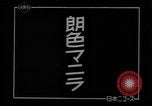
Scenes of Manila, Philippines, early during the Japanese occupation in World War II
Title card with title “Roaring color Manila” in Japanese. A street corner in Manila after the Japanese invasion and occupation in World War 2. Japanese flag in storefront as Filipinos walk pass store. Closeup of the statue of St. Anthony of Padua with a kneeling woman and child, in front of the Church of St. Francis (the former San Francisco Church, now site is occupied by Mapúa University), Church of Our Lady of Angels, Intramuros, Manila, Philippines. Camera pans down over the statue. View from above, at a short distance, of parishioners going in and out of the church. (This church was destroyed in the battle of Manila, 1945, but the statue survived.) A Japanese sign outside of a building. View inside the building, where many school children are seen walking through an exhibit of artwork and other displays of school projects. Closeup of one drawing on display, depicting a Spanish Toreador. Several displays of Japanese calligraphy. A model of two small structures. Closeup of several schoolboys interested in small objects on display. A group of schoolgirls at exhibits of clothing designs and patterns. A cartoon sign in the building, in Japanese but mostly in English. It shows two small girls and a boy in different exercise poses and two ducks walking past them near their feet. The sign announces in Japanese and English, "Radio Taisou Daily Calisthenics on the air." It also reads: "Health First" and "Mass exercise at Luneta Park." A man conducts calisthenics in the open in front of a rotunda. Jorge B. Vargas, chairman of the Japanese-sponsored Philippine Executive Commission, sits inside the rotunda observing a vast field filled with school children following the lead of the exercise director, as they perform calisthenics. The Rizal Monument (1225 Roxas Blvd, Ermita, Manila, 1000 Metro Manila) is seen far in the background. Some closeups of the children as they exercise. Wide view of the children organized in lines across the field. The French renaissance-style Luneta Hotel (414 Kalaw Ave, Ermita, Manila, 1045 Metro Manila, 1000 Metro Manila) is seen in the background.