


 Francais
 Deutsch
 Italiano
Refine Your Search
+"Manila Philippines" +1942 stock footage and images
- Showing 19 to 24 of 25 results
The Japanese Army parades in victory through Manila, Philippines and a crowd cheers and releases balloons.
A film depicts Japanese invasion and occupation of the Philippine Islands during World War II. Japanese Army parades in victory through Manila. Japanese troops holding the Japanese flag parade. A band plays music. The troops march. Filipino policewomen march. Japanese Military Commander of the Philippines General Masaharu Homma sits on a reviewing stand holding a samurai sword and reviews the parade. Students of different departments of the University of the Philippines parade. A banner reads 'Manila Department Store'. Philippines General Hospital personnel, Thai and Indian students, University of Philippines students, and, members of Manila's German , Italian and Japanese community march by in review. Homma seated with officials. Homma speaks into a microphone. The Japanese flag is raised. Men on a platform take pictures. A crowd cheers and releases balloons. Aircraft in flight.
Japanese bombing and occupation of Philippines; US Army soldiers fight in the Pacific during World War II (WW2)
Animated map of Philippines and Guam. Pre-war scenes of buildings in Philippines before Japanese attack. Flag waving from a building in Manila, Philippines. Filipino civilians running on streets and Japanese planes bombing in Manila during World War II. Fire on a house due to bombing. Scenes of devastated houses. Christ's statue dropped on ground in a church. A bell on the church. An animated map of Pacific region and focuses on Australia. Scene of General Douglas MacArthur. American troops gathered in an Australian port. Japanese attack by air at Port Moresby. U.S. troops debarking. Anti-aircraft guns firing in Midway Island. Admiral Chester W Nimitz decorates heroes of the battle of Midway. Scenes of ships in sea. A plane and some U.S. troops on boats. Scene of U.S. troops in jungle. Animated map of Solomon Islands. U.S. flag on a ship. Fighters and land-based Army bombers fly in air. Soldiers save themselves from firing by plane. Scenes of U.S. soldiers on island. Japanese signboard on a tree.
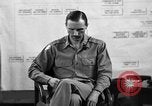
Major Tisdell describes ill treatment of prisoners at Japanese camps during the trial of General Homma in Manila, Phillipines.
U.S. Army Major Achille C. Tisdell testifies before a military tribunal in Manila, Phillipines during the trial of Japanese Army General Masaharu Homma for World War II crimes. Major Tisdell, aide-de-camp to Commanding General of the American forces in Luzon Major General Edward King is asked about how long he was at Camp O'Donnell. He says that he was there from April 13, 1942 to June 1, 1942. He recalls that at the camp the commanding officer of the prison camp addressed them. Major Tisdell being questioned about the Red Cross supplies. He says that once Red Cross food and medical supplies arrived at the camp gates but were not permitted to enter. He also speaks about the number of times he was questioned at the camp and that he was offered an opportunity to move to Manila and work for the Japanese. He says that a number of times the prisoners were beaten for no reason by the Japanese guards.
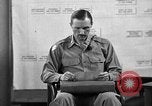
Major Tisdell reads out a Japanese note to the Americans during the trial of General Homma in Manila, Phillipines.
U.S. Army Major Achille C. Tisdell testifies before a military tribunal in Manila, Phillipines during the trial of Japanese Army General Masaharu Homma for World War II crimes. Major Tisdell, aide-de-camp to Commanding General of the American forces in Luzon Major General Edward King reads out an advisory note of the Chief of Imperial Japanese Army and Navy sent to the Americans on March 22, 1942. A member of the tribunal asks him whether there was any doubt that the Japanese had accepted the American surrender. Major Tisdell also testifies about the location of American headquarters and the surrender by the Americans.
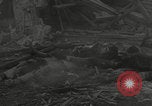
The Philippines under Japanese occupation, liberation by allied forces, Philippine Independence ceremony.
The Philippines under Japanese occupation, liberation, and subsequent granting of independence by the United States in World War 2. Bodies of Filipino and United States soldiers killed during the Japanese invasion of the Philippines. Captured American, Filipino, and Australian soldiers raise their hands after the Fall of Corregidor. United States General Jonathan M. Wainwright negotiating the surrender of The Phillipines with Japanese General Masaharu Homma in 1942. Brigadier General Lewis C. Beebe and Major Thomas Dooley are seen to Wainwright's left. An American warship firing during the United States Pacific campaign to defeat Japanese occupying forces in the Pacific. United States soldiers get off an amphibious landing craft during the U.S. retaking of the Philippines. United States General Douglas MacArthur arrival in Leyte Gulf with a retinue consisting of Philippine President-in-exile Sergio Osmeña, Lieutenant General Richard Sutherland, Philippine Brigadier General Carlos P. Romulo, Major General Courtney Whitney, Philippine Sergeant Francisco Salveron and CBS Radio correspondent William J. Dunn in Palo, Leyte, the Philippines- a fulfillment of his promise to return to the Philippines. General Douglas MacArthur speaking at the Independence Day ceremony in Manila on July 4, 1946. “America never wavered in that purpose. America today redeems that pledge.” Says General MacArthur. United States Senator Millard Tydings, the co-sponsor of the Tydings–McDuffie Act (a law that provides independence to the Philippines after a 10-year transition as a Commonwealth) attends the ceremony. Paul V. McNutt, the United States High Commissioner of the Philippine Commonwealth (later the first United States Ambassador to the Philippines), reads the United States President Harry Truman's official proclamation of Philippine Independence. Filipino elites and United States dignitaries watch the ceremony in the Independence Grandstand (a temporary structure built in front of the Rizal Monument). Manuel Roxas being sworn in as the first President of the Philippines after gaining independence from the United States. The Philippine national anthem, Lupang Hinirang, plays in the background. High Commissioner McNutt lowers the United States flag from the flagpole as President Manuel Roxas raises the flag of the new Republic of the Philippines. A celebratory parade following the Independence ceremony takes place, which includes floats from various provinces in the country. A float with signs reading: "Let's Produce and Rebuild,". "Mountain Province" float with women wearing formal Filipino Baro’t Saya gowns. "The City of Manila" float with soldiers. "The University of the Philippines" (UP) float featuring two women dressed as allegorical figures and sign saying, “The University of the Philippines At the Service of the State”. "The Division of City Schools" float features two Filipinos in traditional attire in front of a Statue of Liberty model. A float, likely belonging to the National Library of the Philippines, with children and a huge book model. The Chamber of Commerce Philippines float contains a machine gear model and small models of an aircraft and a ship. American soldiers marching, carrying the United States flag. A military marching band play. Filipino soldiers marching with the Philippine flag. Military aircraft in flight above the Independence Grandstand in Manila.
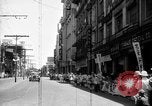
Lieutenant General Masaharu Homma, Japanese Military Commander of the Philippines, during World War II
Japanese Lieutenant General Masaharu Homma being greeted in Manila during World War 2. People lining the sidewalks, wave Japanese flags. General Homma drives past in an automobile. He salutes as he walks through outer gates of the U.S. Embassy and further to the main building which has become his residence, as Commander-in-Chief of the Japanese Imperial Military in the Philippines. The Japanese flag now flies from the flagpole in front of the building.