


 Francais
 Deutsch
 Italiano

Refine Your Search
+"Manila Philippines" +1945 stock footage and images
- Showing 7 to 12 of 112 results more
 Hide
Surrender of Japan, ending World War II; imprisoned Japanese officials; German concentration camp scenes
View of first atomic explosion (Trinity) on July 16, 1945, at New Mexico, United States. View of the battleship, USS Missouri, in Tokyo Bay, Japan, with entire ship's company on deck in dress whites, Japanese military high command and several formally dressed Japanese diplomats standing on the ship's deck. Brief closeup of General Douglas MacArthur. Japanese foreign minister, Mamoru Shigemitsu, bending to sign the instrument of surrender ending World War 2, on September 2, 1945. Supreme Commander, General Douglas MacArthur, seated, signing the document. Lieutenant General Jonathan M. Wainwright and British Lieutenant-General Arthur Ernest Percival stand behind MacArthur. General Hsu Yung-chang signs for China. View of sailors observing the historic moment from every possible place aboard the ship. Large numbers of aircraft flying over the ship. Scene shifts in flashback to Manila, Philippines, where dead bodies of civilians litter the streets in silent witness of Japanese wartime atrocities. Some have hands tied behind their backs. Views of destitute Filipino mothers and children wandering through the rubble. A sign identifies the 98th Evacuation Hospital. Inside, a doctor and a nurse stand over the bed of Japanese Prime Minister, Hideki Tōjō, who attempted suicide by pistol, when apprehended, but was taken for treatment and is seen resting in his bed. View of Japanese Adrmiral Shigetarō Shimada, Minister of the Navy, behind bars in prison. Also seen in prison are Japanese general of the Japanese Imperial Army and Governor-General of the Philippines, Shigenori Kuroda;. General Masaharu Homma; and militarist Colonel Kingoro Hashimoto. Scene shifts to bodies of numerous victims of German death camps. American Army medics attend to some survivors rescued from the camps.
Montage of scenes related to 1942 Fall of Corregidor, the Bataan Death March, POWs and destruction of manila, in World War II
World War 2 scenes related to the Philippines. Opening shot shows Japanese troops unceremoniously taking down American flag in 1942, followed by superimposed images of Japanese soldiers boots trampling over U.S. flags. Next, U.S. Lieutenant General Jonathan Wainwright with members of his staff, are seen seated at a table in the Japanese headquarters building on Bataan to discuss surrender with General Masaharu Homma, Commander of the 14th Japanese Imperial Army. Homma has General Wachi at his left and Colonel Nakayama to his right. Repetition of the superimposed Japanese army boots trampling American flags. Next, U.S. defenders of Corregidor are seen surrendering to Japanese troops in 1942, and then being marched under guard to Mariveles, where the infamous Death March commenced. Several views of the American and Filipino prisoners marching under guard. Glimpse of American combat helmets piled up in a heap. Views of the POWs without helmets, using white cloths over their heads to protect from the sun. Huge numbers of POWs held in an open area for the night, and then marching again during the day. One who had fainted is carried in a blanket by several others. Illustrations of POWs being tortured by Japanese soldiers. Views of two POWs, who died during the march, lying on the ground. Next scene shows emaciated Allied POWs in 1945 being freed by American soldiers from a Japanese prison camp. American soldiers speaking with another group is a section of prison behind a sign reading: "Dysentary, Keep Out." Undernourished former prisoners of war eating a meal. One smoking a cigarette. Aerial view showing large swaths of Manila, Philippines, destroyed by Japanese forces retreating from advancing American forces. Smoke rising along a line of destruction in the background. Bodies of numerous Filipinos lying amid rubble in the streets of Manila. Many have hands tied behind their backs. Glimpse of dead children. Cadres of Japanese soldiers raising victory cheers. New Japanese conscripts in large formations during military training for new recruits following draft. Japanese naval trainees in white uniforms, waving their hats. Huge crowd of Japanese people cheering, followed by view of Emperor Hirohito, in Army uniform, saluting as he stands on a balcony. Cheering Japanese people, at a rally in a stadium.
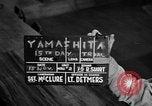
Richard Sakakida tells of his capture and assignment as interpreter in HQ of General Yamashita in Manila, Philippines.
Sergeant Richard Sakakida testifying during Yamashita trial in Manila, Philippines after World War II. American officers and prosecutors enter into the court room. Maps on a wall. Hawaiian-born Japanese-American (Nisei) sergeant Richard Sakakida sits in a chair and is questioned. He answers about his birth and his capture by Japanese forces. He answers about Japanese attitude during capture and his assignment as interpreter in HQ of General Yamashita.
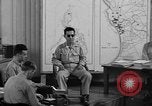
Sergeant Richard Sakakida answers about the North Cemetery Massacre and the Court Martial Cases in Manila, Philippines.
Sergeant Richard Sakakida testifying during Yamashita trial in Manila, Philippines after World War II. Hawaiian-born Japanese-American (Nisei) sergeant Richard Sakakida seated in a chair before prosecutors and officers in a court room. Maps on a wall. Sergeant Richard Sakakida answers about the North Cemetery Massacre and the Court Martial Cases # 77, 88 and 89. Prosecutor questions him. Sergeant also tells of the 2000 cases of people being executed, including seven Americans. He witnessed the execution of the Americans.

Dr. Walter K Frankel being cross examined by Manning D Webster during trial in Manila, Philippines for World War II crimes.
Dr. Walter K Frankel testifying during Yamashita trial in Manila, Philippines after World War II. Prosecutors and officers in a court room. Maps on a wall. Dr. Walter K Frankel is called to the stand and cross examined by Captain Manning D Webster, assistant prosecutor. The doctor describes how four families and his own were herded into a house. Furniture was stacked around them, a grenade thrown at them and the furniture ignited with gasoline. Four of the women cried out and were shot in the head by the Japanese soldiers.

Japanese General Tomoyuki Yamashita under cross examination during trial in Manila, Philippines for World War II crimes.
Japanese General Tomoyuki Yamashita testifying during Yamashita trial in Manila, Philippines after World War II. Prosecutors, officers and soldiers in a court room. Maps on a wall. Japanese General Tomoyuki Yamashita under cross examination by Major Robert M Kerr. Yamashita explains how he failed to know about the killing and mistreatment of the Filipinos.