


 Francais
 Deutsch
 Italiano
Refine Your Search
+"North Africa" +1943 stock footage and images
- Showing 133 to 138 of 163 results more
more Hide
Hide
U.S. troops and their improvised movie theaters in combat zones during World War II
A U.S. Army Air Forces C-47 airplane carrying movies among its cargo bound from New Caledonia to troops stationed at Bougainville, Solomon Islands, during World War 2. Views inside the airplane cabin, where troops sit alongside the cargo. Glimpse from cockpit of aircraft on final approach to land on the airfield. Troops unloading canisters of movie films from the C-47. (Handing the movie reels out of the C-47 is Russ Laming of the 13th Troop Carrier Squadron, a.k.a the Thirsty 13th.) Army truck carrying mail bags and movie films driving away from the airfield. U.S. soldiers walk to their makeshift movie tent from foxholes and fortified positions. Sign on the tent reads: "Bougainville Roxy, Tonights feature." Movie projector seen inside the tent, as soldiers enter. Views of movie theaters made out of logs and other available materials at various locations in the Pacific theater of operations. They range from simple and rugged to more elaborate, at rear locations, away from the front lines. U.S. servicemen racing to get the best seats in a theater, as the doors open for a movie. Servicemen walking into an open air theater. They are called to attention as the unit commander arrives and takes his seat. View of wounded soldiers recuperating in a hospital,where a movie camera is being set up in the ward. They are tended by a French nurse wearing a "flying nun" hat (possibly North Africa). Servicemen and women being seated in an outdoor theater, and other places, waiting to watch movies. Allied troops join Americans to watch U.S. movies. A theater sign announcing the week's movie program at a Royal New Zealand Air Force post in the jungles. Courier carrying film canister from a jeep into a jungle theater. Soldier mounting the film on projector. U.S. troops watching a movie outdoors, during rain storm.
U.S. General Eisenhower, British Admiral Cunningham, and Vice-Admiral Sir Bertram Ramsay, visit Casablanca in World War II
Operation Torch (invasion of North Africa) during World War 2. View from stern of a British warship underway with setting sun behind. Several British sailors help a shipmate untangle himself from lines on the deck of ship. British, Free French, and American sailors line up for inspection on shore. A British launch, flying a white ensign, approaches and docks at Casablanca. The Allied Commanders of Operation Torch disembark. General Dwight D. Eisenhower (wearing 4 stars) is followed by British Admiral Sir Andrew Cunningham, Allied Naval Commander of the Expeditionary Force (carrying a cane on his arm), and his deputy, Vice-Admiral Sir Bertram Ramsay, who planned the ground effort. Eisenhower pauses to greet American Naval officers (and he stumbles on pier planking). Eisenhower, Cunningham, and Ramsay, then enter a staff car and drive away.
U.S. Army Quartermaster Corps prepare mortars, fire anti aircraft guns, and provide supplies during World War II.
Clip opens with brief World War I scene, circa 1917, of new American army recruits receiving army uniforms being issued by a U.S. Army Quartermaster. Clip then covers U.S. Army Quartermaster Corps' combat operations in various Theaters of Operations during World War II. Quartermaster Corps soldiers with rifles under the cover of a military truck during battle. Troops in trucks. An aircraft in low flight over a field. A U.S. Army truck. A Quartermaster fires an anti aircraft gun. Explosions occur and smoke rises. A British tank in a field. Soldiers beside a truck. Cans and barrels stacked on the ground. An enemy German tank in a field. Soldiers take cover. Quartermasters with guns in a trench. They come up the trench in prone positions. Dramatized battle scene with several Quartermaster corps casualties beside a wire fence. Soldiers prepare a mortar gun. An anti aircraft gun on an army truck. A soldier takes aim and fires a rifle during training. The Quartermaster flag hoisted on a pole. Actual footage shows aerial view of Bataan, and then ground views of groups of remaining U.S. Army soldiers around time of surrender of Bataan in April 1942. American soldier seen with their hands up and under guard of Japanese soldiers during Bataan surrender. Landing crafts arrive at a beach in North Africa. Supplies being offloaded at various battle fronts of World War 2. Soldiers and supplies off-loaded on the beach. Quartermasters seated on supplies boxes. Landing crafts arrive at a beach in the South West Pacific. Troops move across the beach. Troops disembark from landing crafts and move across a beach in Sicily, Italy. The Quartermasters unload boxes of supplies during various beach landings. They unload supplies and fire artillery on a beach head in Italy. Troops in trucks. A convoy of trucks loaded with supplies. Ammunition, ration and personnel in trucks move from Algeria to the front in Tunisia. Explosions occur and smoke rises. Trucks advance through smoke at night and in difficult conditions. Quartermaster General Major General E. B. Gregory speaks about the Quartermaster Corps. He says that the Quartermasters distribute goods to the army during training and combat. The movement of the Corps should be so regulated so as to deliver the goods at the right time in the right quantity.
U.S. Army Air Force pilots fly P-40 airplanes off the USS Ranger, to captured Vichy French airport in Morocco during World War II
Seventy five U.S. Army Curtiss P-40L airplanes are ferried across the Atlantic Ocean to within flying range of Morocco, North Africa, by the Aircraft Carrier, USS Ranger (CV-4), during World War 2. U.S. Army Air Force pilots prepare to fly the P-40s to the former Vichy French Anfa Airport near Casablance, captured by the Allies in Operation Torch. The Army pilots and support personnel are seen being briefed on the flight deck. Navy deck crews help move a P-40 into position. USAAF 57th Fighter Group commander, Colonel Frank H. Mears shakes hands with a navy officer from the cockpit of his P-40. Carrier officer seen signaling for take off. Colonel Mears takes off. More P-40s follow. Navy officers and sailors watch the departing P-40s and give thumbs up for approval. The P-40s buzz the carrier as they form up to depart.
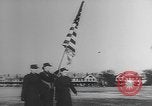
Women in the U.S.military in World War 2: Role of WAACs and review of their jobs after training period in the United States.
A film on the Women Army Auxiliary Corps (WAAC) in the United States during World War II. WAACs parade at the end of their training period. Officers review them. Recruits stand at attention and are ready to serve the army. An officer seated at his desk in an office. A woman stands nearby. A woman driving a jeep. Another woman repairs a jeep. The WAACs prepare food for soldiers. Animated map locates work areas of the women. A train passing on a railway track. Newly assigned WAACs arrive at their quarters. Ships in a harbor. The first WAAC detachment in North Africa. Clerical, technical and other types of work done by the WAACs. They work with soldiers. They draw military maps and charts. Group of African American women soldiers relieve African American male soldiers working as switchboard operators. Women are shown serving as dispatchers, as typists, developing film in photographic laboratories, serving as pigeoneers who handle carrier pigeons used in war communications, serving as radio operators, issuing clothing in quartermaster houses, working in post offices, fingerprinting, and collecting rations at a commissary. Female African American soldiers and and female white soldiers work at a motor pool. The WAACs marching.
Major General Doolittle at ceremony presenting P-40 Warhawks from the U.S. to the Lafayette Escadrille in Morocco in World War 2
Major General James Doolittle and Lt. General Carl Spaatz of the United States Twelfth Air Force, Colonel Willis, as well as French Major-General Bergeret and other American and French officers attend ceremonies at the presentation of Curtiss P-40 Warhawk planes by the U.S. Army Air Forces to the French Lafayette Escadrille in Morocco during World War II. American troops parade before a hangar. Officers stand in front of P-40 planes lined up near the hangar. The band plays in the parade. French Moroccan horsemen. Officers salute the American and French flags. Opening cameraman slate indicates January 9, 1942, but this is an error as the event took place on January 9, 1943.