


 Francais
 Deutsch
 Italiano

Refine Your Search
+"Okinawa" +1945 stock footage and images
- Showing 7 to 12 of 656 results more
 Hide
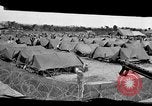
Mopping up operations at end of battle for Okinawa in World War II. Numerous Japanese prisoners of war impounded.
Opening scene shows tents housing more than 1500 Japanese prisoners of war at Kadena, Okinawa during World War 2. The area is surrounded by fencing and, as camera pans, it shows an American soldier overlooking the prison camp as he holds a Browning M1919A6 light machine gun. Another view of the prison compound with warning sign against admittance and another sign reading: "PW inclosure." As narrator refers to "mopping up operations" a jeep carrying more Japanese POWs drives past the signs. Ambulatory Japanese POW entering the prison compound past armed military policeman. View from inside the compound as Japanese POWs enter. A POW being frisked by a U.S. soldier. Closeups of some Japanese prisoners standing behind barbed wire enclosure. American soldier makes notes as he interviews a prisoner. POWs receiving haircuts under a tent in the stockade. Others washing and shaving at an outdoor trough of water. Some seen playing a board game at a tent. POWs in a wrestling contest, surrounded by others watching. Prisoners offloading supplies from a truck and stacking them in their compound. POWs cooking food in large kettles and distributing it to other prisoners. Various views of prisoners in the compound. U.S. medics attending to a wounded POW, administering blood plasma. Numerous Japanese prisoners loosely assembled outdoors. Next, on June 22, 1945, U.S. troops are assembled for a flag raising ceremony. The U.S. flag is raised on a tall flagpole to mark the securing of Okinawa. An unidentified U.S. Army Lieutenant General leads the ceremony, saluting as the colors are raised. (Lieutenant General Simon Bolivar Buckner Jr., Commander, 10th Army that took Okinawa, was killed 4 days earlier, on June 18, 1945.)
Operation of United States Coast Guard in Okinawa and Iwo Jima, Pacific Theater during World War II
Overseas activities of United States Coast Guard in World War 2. February 19, 1945, U.S. Marines invade Iwo Jima in Pacific Theater. Naval guns and aircraft bombard Iwo Jima. Mountain in the background. Aircraft in flight. Marines and Coast Guardsmen aboard landing craft. Marines landing on Iwo Jima under heavy Japanese fire. Destroyed landing ships litter water's edge. Marines hunkered down and treating wounded, under fire. LSTs and other ships at established beachhead. Vehicles drive onto beach. April 1, 1945, Marines attack Okinawa. Navy warships bombard Okinawa with heavy guns and continuous rocket fire. Beachhead is established against light resistance. Japanese kamikaze aircraft attack American invasion ships. Several ships are hit and sunk. Surviving sailors are helped aboard rescue boats. Antiaircraft fire from American ships fills sky with smoke and flak. A kamikaze aircraft crashes in the sea. Sky filled with American bombers. Aerial view of Atomic bomb explosion over Nagasaki Japan on August 9, 1945. Raising American Flag on Japan homeland.
U.S. Navy Task Force 58 defends against Japanese Kamikaze attacks and bombards Okinawa during Operation Iceberg
A glimpse of Navy gunners firing Bofors anti-aircraft guns from battle station on a U.S. aircraft carrier is how this film begins. Next, black flak clouds fill the sky and tracer rounds are seen in a nighttime battle as ships of U.S. Task Force 58 (TF-58) battles attacks from Japanese aircraft, including Kamikazes dispatched from Mainland Japan, during World War 2. View of Japanese attacking aircraft subject to relentless tracer bullet fire, until is is hit. It continues toward a target ship, but misses and crashes into the sea. A flaming Japanese aircraft moving overhead in daylight, amidst many black flak clouds. It crashes into the sea. Another nighttime scene shows numerous tracer rounds flashing through the darkness as hundreds of land--based Japanese warplanes attack ships of Task Force 58. Explosions are seen in the air as attacking planes are hit by anti-aircraft fire. View of a Japanese attacking aircraft diving from overcast skies, banking to its left and crashing into the water. Gun camera views from American aircraft shooting down a Japanese multi-engine bomber from the rear and one from another aircraft shooting a Japanese fighter head-on. It veers off in smoke as the American plane passes to its left. The Japanese plane crashes into the sea with a huge explosion and fireball. Another gun camera view of large Japanese aircraft being shot down from the rear. Scene shifts to column of 5 "old" U.S. battleships underway. Views of guns firing from newer battleships of the line. Glimpse of foreign correspondent Ernie Pyle aboard a warship. The battleship USS Pennsylvania (BB-38) seen silhouetted against moonlit sky. (She was damaged by hit from Japanese aerial torpedo, off Okinawa on April 12th, 1945.) Views of fast battleships and other ships of TF 58,firing their naval guns. View on Okinawa as their shells explode, supporting advance by U.S. Army and Marine advancing forces. The U.S. troops running across fields as they advance. Burning buildings on Okinawa. US troops advancing through rice paddies. A soldier calling for close air support on a field radio. View of two Escort carriers providing air support. View air control officers aboard the Command ship, heavy cruiser USS Indianapolis (CA-35), as they order air strikes in support of the troops. F4F fighter planes carrying bombs take off from a carrier. Formations of U.S. aircraft in flight overhead. Their bombs exploding on Okinawa. frontal view of an F4F firing rockets. Wider views of F4Fs firing rockets.
U.S. Navy ships bombarding Okinawa and fighting off attacks by Japanese Kamikaze aircraft in World War II
Conclusion of U.S. Navy film: "The Fleet That Came To Stay." Role of U.S. Navy Task Force 58 during the Battle of Okinawa in World War 2. Opening scene shows ships of U.S. Task Force 58 sitting quietly in waters off the coast of Okinawa, at dawn on May 9, 1945 (VE Day, when Germany surrendered in World War 2). Navy gunners silhouetted against the dawning sky, with twin Bofors anti-aircraft guns. Silhouettes of sailors on early watch. Sailor walks on deck of an aircraft carrier, past parked aircraft with it's vertical stabilizer and rudder riddled to pieces by battle damage. An escort aircraft carrier and other warships are moving slowly past the camera ship. A Douglas Dauntless dive bomber, with only a pilot aboard, takes off from a carrier. Brief glimpse of aircraft taking off from a carrier. It carries a bomb underneath and displays the number 559 on its engine cowling. Numerous American aircraft in formation above the ships. A U.S. cruiser in the distance. Closeups of capital ships bombarding Okinawa with heavy guns and firing anti-aircraft guns at attacking Kamikaze aircraft. Black flak clouds and tracer bullets tracking a Japanese aircraft. Superimposed slate tallies Japanese aircraft shot down: "May 12th: 164; June 3rd: 45; June 6th: 67; June 8th: 30." A kamikaze plane crashes into the sea. Gunners aboard a ship work rapidly to reload their anti-aircraft guns. View of an Essex class aircraft carrier with black flak clouds overhead. Two explosions occur next to her hull. Gunners track a Japanese airplane flying low and close to the water. It passes a carrier and crashes into the sea. More views of sailors working at speed to reload anti-aircraft guns. A sailor firing an Oerlikon 20 mm cannon from gun position atop a ship. A Kamikaze plane crashes at starboard side of an Escort aircraft carrier underway. View of long line of anti-aircraft guns firing simultaneously from beside the flight deck of an aircraft carrier. Smoke rising from the firing and driven by the wind. Remains of a Kamikaze plane spin down amid black flak clouds, after being hit by gunfire. Slate reads "4232 (Japanese planes shot down). The spinning pieces of the Kamikaze plane crash well clear of a nearby Cleveland class light cruiser. Against background of flak filled sky, a Washington Post Newspaper headline is shown reading: "Navy Okinawa Casualties near 10,000 and 2 more ships hit."

General Joseph Stilwell and General Simon Buckner confer in Okinawa; battle scenes on Okinawa.
General Roy Geiger and General Simon B. Buckner Jr on Okinawa during World War 2 (prior to General Buckner's death at Okinawa in June, 1945. General Buckner and General Joseph Stilwell confer outside a tent. Tanks and infantrymen move at Hill 92 for a battle against Japanese troops. View from elevated position of battle underway and tanks with mounted flamethrowers attacking Japanese machine gun nest positions. U.S. Army soldiers standing on a ridge and firing rifles at enemy positions. Long extension hose is run from tank flamethrower up a hill to reach another enemy position. A Japanese officer with a badly burned face and injuries to neck, head, and arms surrenders to U.S. Army soldiers. He is assisted by U.S. soldiers in climbing over rocks during surrender. Officers feed Japanese officer, a 1st Lieutenant in a Japanese Navy unit, and give him a cigarette which he smokes. They carry him on a stretcher to receive medical attention and further interrogation. (World War II period).
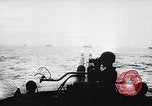
United States warships and the Marine Corps raid and gain control over the Japanese island of Okinawa, during World War II.
The Pacific Theater of World War II during the Year 1945. Attack on Japanese island of Okinawa by the United States Military. United States Navy ships from the sea, launch a number of missiles towards the islands. The missiles traverse an aerial route and destroy the target Japanese positions. United States Marine Corps raid the island moving in amphibious landing tractors towards the island. Battle between Japanese soldiers and U.S. Marines. American flag hoisted on Okinawa after four months of furious battle. Officials and Military Commanders and soldiers salute the flag.