


 Francais
 Deutsch
 Italiano

Refine Your Search
+"Pacific Theater" +1945 stock footage and images
- Showing 67 to 72 of 211 results more
 Hide

Seabees push Bailey Bridge across a stream and work on it in the Pacific theater during World War II.
U.S. Navy Seabees (Construction Battalion) construct Bailey bridge in the Pacific Theater during World War II. Seabees push Bailey bridge across a stream. Bailey bridge in position. Seabees work on a Bailey Bridge. They carry reel and place it down. They work at the construction site. Trucks and vehicles pass down a road.

Seabees construct buildings and work at machines in the Pacific Theater during World War II.
U.S. Navy Seabees (Construction Battalion) work on construction in the Pacific Theater during World War II. Seabees construct buildings. They hammer a wooden board. They use hand tool. Seabees carry wounded on a litter. Seabees fill sack with sand. Sandbag in the background. A crew man work at machine. A crew man works with electronic device.

U.S. aircraft strafe Japanese positions in the Pacific Theater and suffer damage due to enemy attacks during World War II.
A film titled 'This could be America' about the importance of buying war bonds during World War II. Aerial bombing of Japan. U.S. Navy F4F Wildcat aircraft in flight in the Pacific Theater. They peel off. The aircraft strafe and bombard Japanese positions. Smoke rises due to strafing. The F4F Wildcat aircraft in flight. A pilot in the cockpit of an aircraft. Aerial views of the ground below. An aircraft strafes a Japanese ship and beach positions. The aircraft in flight and descend after being hit. An aircraft makes a crash landing on the flight deck of an aircraft carrier. Crew members try to rescue the injured pilot but he dies. Dead pilot's body is wrapped in American flag. Funeral services being conducted aboard the ship. The casket being thrown into the sea. Information encourages people to buy 7th war bond.
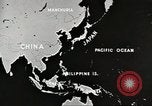
Events showing the surrender of Japanese forces to the Allied forces in the Pacific Theater at the end of World War 2
Following victory over Japan in World War 2, a map shows the surrender of Japanese troops to Allied forces in different regions of Pacific Theater during World War II. On Cebu Island in the Philippines, U.S. 8th Army soldiers march several thousand Japanese prisoners along a road. Command of Japanese 34th Army hands over his saber. American soldiers gather piles of swords received in surrender from the Japanese forces. View of mist hanging over Governor's Palace (The Mansion) in Baguio Philippines. General Wainwright and General Percival arrive by car at the mansion. Japanese General Yamashita arrives next and enters the building. General Tomoyuki Yamashita signs surrender documents as General Wainwright and other Allied officers look on. General Yamashita is taken to New Bilibid prison and is seen being escorted into a prison cell.
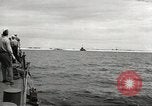
Japanese troops surrender Marcus Island and Wake Island in the Pacific Theater
Part of ceremonies marking Japanese surender and victory over Japan at end of World War 2. Japanese forces surrender Marcus Island on board USS Bagley (DD-386) in Pacific Theater. Japanese Rear Admiral M. Matsubara surrenders his garrison to U.S. Navy Rear Admiral Whiting. Japanese and Allied officers sign the papers of surrender. View in September of American flag being raised on Wake Island by U.S. Marines after Japanese surrender. Colonel Walter Baylor accepts honors at the ceremony, having been the last to leave Wake Island, and now the first to return. View of destroyed Grumman F-4 Wildcats that assisted in efforts to hold off Japanese forces for 14 days of attack, earlier in the war.

U.S. Navy PB4Y-2 Privateer bomber aircraft takes off from airstrip for combat operations during World War II, Pacific Theater.
U.S. Navy PB4Y-2 Privateer bomber aircraft enters service during World War II, Pacific Theater. Shows PB4Y-2s parked on a flight line. Fin and rudder of the aircraft. Engines of the aircraft. Aircraft houses a machine guns. Interiors of a hangar shows bombs being loaded aboard PB4Y-2. PB4Y-2 takes off from airstrip.