


 Francais
 Deutsch
 Italiano
Refine Your Search
+"Pacific Theater" +1945 stock footage and images
- Showing 199 to 204 of 211 results more
more Hide
Hide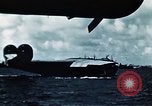
Injured soldiers are transported in army aircraft, seaplane and are treated on a medical ship on a Pacific island.
Wounded American troops are treated on a Pacific island during World War II. Soldiers on a speed boat in water. A seaplane taxis on water. Men carry injured on stretchers and load crates in an aircraft. Injured men are loaded in an army aircraft. Injured men on beds in a line aboard a medical ship. A doctor and a nurse treat the patients. An injured carried to an operation theater. A doctor washes hands. Doctors treat the injured soldiers. An injured soldier in a wheel chair is carried on a deck. The injured soldiers on the deck of the ship smoke. The injured on a landing craft. Soldiers who fought in the war. Men lying on stretchers in pain.
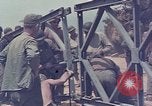
Seabees construct Bailey bridge and lay planking on deck of it in the Pacific Theaterduring World War II.
U.S. Navy Seabees (Construction Battalion) construct Bailey bridge in the Pacific Ocean during World War II. Seabees construct a Bailey bridge. They install metal beams. Seabees lay planking on deck of Bailey bridge. Seabees pull Bailey bridge into position.
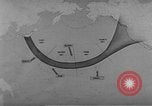
U.S. Navy personnel demonstrates balancing mechanism of fire balloon used to attack North America during World War II.
Diagram shows pattern of air currents that carried Japanese paper balloon fire bombs from Japan to America's West Coast, during World War II. The paper bomb balloon or fire balloon unit consists of the paper gas sac and an automatic balancing and firing control device. United States Navy personnel inspects the balloon as it descends to the ground. He looks at the paper bags filled with sand which provide balance and the central payload,incendiary and bombs. He holds paper material and inspects its strength. The balloon is filled with hydrogen gas. Pressure is exerted by a rubber ring. United States Navy personnel demonstrates the various parts: demolition block,aneroid switches,jacks,blow out plugs,incendiaries and central payload. He demonstrates the balancing mechanism: Balance bags,payloads and incendiaries are suspended by T-hooks switched between the blow out plugs on the balancing ring. A man unhooks the T-hook and releases balance bags.

U.S. Navy personnel demonstrates blow out plugs connection in fire balloon bomb used to attempt attack on North America during World War II.
Demonstration of the Japanese Paper Balloon Bomb or fire balloon used to attempt attack on North America during World War II. United States Navy personnel demonstrates connections of the blow out plugs in a Japanese paper balloon or fire balloon . Animation depicts: rise up and descend of the balloon in air as the blow out plugs are released and plugged in. Personnel explains the diagram showing bomb mechanism of battery, starter fuse, blowout switch, fuse leads, blow out plugs and aneroid.
Montage of World War II combat scenes.
Montage of combat all over the world, during World War 2. Amphibious assaults, American soldiers advance and fire artillery on the battlefield. Soldiers fire rifles near gun emplacements on a Japanese island. U.S. medics or corpsmen give medical aid to a wounded soldier. German soldiers holding up white handkerchief and surrendering in a town in Europe as American soldiers receive the German prisoners of war. American soldiers leading an unclothed Japanese prisoner of war at gunpoint on a Pacific Island. A newspaper headline reads ' Japan surrenders'. Numerous jubilant Victory over Japan or VJ Day celebrations in the United States. Crowds gathered in celebration, sailor and soldier in uniform celebrating with civilians. Ticker tape rains down from buildings in New York City and other cities. A large crowd of civilians gathered on the streets to celebrate the end of World War 2.
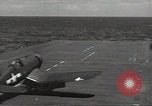
Carrier Group CVG-82 operations aboard the USS Bennington (CV-20) during World War II
U.S. Carrier Group CVG-82, aboard the USS Bennington (CV-20) during World War 2. Marine Corps F4U Corsair aircraft of VMF-112 (Wolfpack) and Navy F6F Hellcat aircraft of VF-82 (Fighting Fools) taking off from the USS Bennington. The Carrier's "Pine Tree" symbol is visible on the tails and upper right wings of the aircraft.