


 Francais
 Deutsch
 Italiano
Refine Your Search
+"Philippines" +1942 stock footage and images
- Showing 97 to 102 of 116 results more
more Hide
Hide
American civilians realize their war obligations and contribute to the war effort (WW2)
A World War II-era film shows Americans realize their war time obligations after the attack on Pearl Harbor and Fall of Corregidor in the Philippines. Crowds watch a marching band and newly enlisted soldiers in parade. A smiling woman waves at the marching soldiers. Women in car watch the parade. Tents in camp. Soldiers perform mass calisthenics and train with outdated tanks. Enlisted men learn how to fire machine guns and mortars. United State Army soldiers board a ship for their deployment. A ship departs for the Philippines. Soldiers arrive in the Philippines, a United States commonwealth in Asia. Japanese bombers drop bombs over Pearl Harbor. Civilians running on the streets during a Japanese aerial bombardment. United States Navy sailors firing machine guns and howitzers from ships. A ship explodes from Japanese bombing. A little girl runs to her father washing the car to tell the news about Pearl Harbor. The little girl runs across the street to tell her neighbor about Pearl Harbor. A woman writes a letter. A woman bakes a cake. People leave a church after service. An American soldier is shot by Japanese soldiers in the Philippines. A man reads a telegram. The man drives to a farm house, accompanied by a church minister. The man and minister tell the elderly couple living in the farm that their son was killed in action. Women selling war bonds on the street. A man silences his alarm clock and goes back to sleep. Cars racing on the street. Soldiers and civilians evacuating Manila. Japanese bombardment of Manila. A girl turns on the radio before Christmas dinner. Men and women congratulates a woman outside a law office. More civilians receive telegrams. Dead soldiers in the battlefield. A woman opens the Bible and writes the names of the dead. United States soldiers retreat in the Fall of Bataan. A woman shakes her head in disbelief after being told of a rumor her son was killed in action. A man hangs the United States flag on his porch. A bomb explodes near a makeshift tent hospital. Woman fixes bed. A woman eating on the dinner table alone. A soldier swats a mosquito from his neck in the Philippines. Forlorn men and women. Soldiers fighting in Corregidor. Soldiers surrender to the Japanese forces at Corregidor. A captured American soldier harasses a Japanese soldier while frisking him. He was apprehended by Japanese soldiers on guard. Despondent American civilians struggling after the Fall of Corregidor. A man despondently smokes from his bed. A depressed woman struggles to cut vegetables. A doctor treats civilians for shock and depression. A baseball game. A horse race. Boys playing on the beach. United States and Filipino soldiers march with United States and Philippine flags. People line up for blood donations. Civilians donate old rubber and hats. Men line up to punch their time in at work. Boys helping on the farms. Male teachers volunteer to fix civilians’ appliances and cars after school. A welder working at the shipyard. Civilians walking instead of using cars. An Allied plane landing. A woman sewing. A man opens a package of binoculars. People line up to buy war bonds. A majorette leading a marching band. Newly enlisted men with suitcases marching in parade.
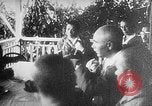
Fall of Corregidor. Surrender of Allied forces in Philippines. Japanese occupation of Manila.
Lieutenant General Jonathan M. Wainwright and staff sit opposite Japanese General Masaharu Honma and officers during surrender after fall of Corregidor. General Honmu enters Manila greeted by crowd gathered on the street. People carry large banners. The banners read in Japanese language. The crowd carries Japanese flags. Two WAC's (Women's Army Corps) talk about the situation in the Pacific Theater. Railroad train filled with U.S. army trucks. A United States naval fleet underway in the Pacific Ocean. Soldiers disembarking troop ship overseas. Naval guns in view on U.S. warships near wharf. . A P-38, Lightning fighter plane being offloaded onto the dock. A P-38 taking off from a pierced steel plank runway, in the Pacific. (World War II period).
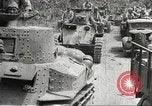
U.S. Army and Filipino prisoners of war are marched to a stockade by occupying Japanese soldiers in the Philippine Islands.
Bataan Death March after the capture of United States and Filipino troops in Bataan during World War II. Japanese troops with pack animals and trucks move along a dusty road. U.S. and Filipino troops surrender. U.S. and Filipino prisoners of war are marched to a stockade. Japanese infantry, staff cars and pack animals cross a bridge and move through ruins towards Mariveles. A sign board reads 'Mariveles'. Mountains in the foreground.
Japanese air operations from Clark Field, after its capture by forces of Japan in World War II
Aerial view from Japanese aircraft of smoke rising from bombs dropped on Philippines, after its occupation by Japanese forces in World War 2. Several Japanese Aichi D3A (Type 99 Navy dive bombers, later called "Val") filmed from Japanese-occupied Clark Field, as they fly overhead in formation. Two of them pitch up and execute a loop, together, as Japanese military personnel on the ground watch them. Momentary view of pilot in cockpit of airplane. Those on the ground cheer and applaud the maneuver. A wrecked U.S. Army B-17 bomber is seen with all four engines removed. Camera shows cockpit interior and "Model B-17D, Air Corps, Serial No. A.C.40-3069" stenciled on the fuselage. (It is believed parts from this aircraft were used by the Japanese to repair B-17 40-3095, which was later flown to Japan as a war prize.) View of a destroyed American B-10 bomber. Interior of wrecked hangar in which Japanese maintenance is being performed on a Mitsubishi Ki.30 and a Mitsubishi Ki-21 twin engine bomber ("Type 97 Heavy Bomber" later called "Sally.") Japanese mechanics work on a bomber outdoors on the ramp. Ground crew meet a Mitsubishi Ki.30 "Ann" single-engine attack plane as it taxis in after landing. They load bombs on it. Momentary glimpse of mechanic climbing into a "Sally bomber." "Sally" bombers lined up on the tarmac.
Damage and destruction at Fort Mills and Corregidor following battle between Japanese and U.S. soldiers
The Japanese invasion and occupation of the Philippine Islands in World War II. An aerial view of Corregidor island. A map shows places. Rubbled buildings and destroyed trees in the area, including bombed Middle Barracks of Fort Mills. Mountains in the foreground. Japanese Soldiers dumping ammunition in gun pits. A destroyed rail road station and wrecked wagons and rails. Prisoner of war soldiers with some of the Japanese forces. Destroyed houses and buildings.
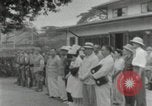
Filipino medics and nurses get into trucks during Japanese occupation of World War II.
Japanese occupation of Philippines during World War II. Filipino medics, nurses and doctors lined up outside a hospital. Medics and nurses get onto trucks. Sign on truck reads 'Lets work together'. Trucks pull away.