


 Francais
 Deutsch
 Italiano

Refine Your Search
+"Philippines" +1942 stock footage and images
- Showing 37 to 42 of 116 results more
 Hide
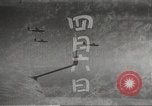
Japanese occupation of Philippines; infantry soldiers and armor advance (WW2)
Japanese occupation of Philippines during World War II. Film opens showing a formation of Japanese Nakajima Ki-67 (Army Type 4 Heavy Bombers, named "Peggy", by Allies) in flight. Japanese infantry soldiers are seen next, marching into the Philippines. Views of barbed wire fences and of stacks of artillery shells. View from rear of a column of infantry marching beside a road. Glimpse of abandoned sand-bagged defensive positions. A Japanese camp in the open with field artillery set up. Brief view of a Japanese Nakajima Ki-27 Type 97 Fighter (called "Nate" by Allies). Japanese infantry struggling through jungles. Brief view of a Japanese Aichi D3A Type 99 Carrier Bomber (Allied reporting name "Val") in flight. Scene shifts to Japanese infantry continuing past palm trees. A Japanese tank running over a slender tree. A Japanese open personnel carrier. Infantry carrying loads suspended from poles. Another view of a Nakajima Ki-67 heavy bomber in flight. A camouflaged Japanese type 97 tank moving forward. Japanese infantry moving single file across a bridge. Two Japanese soldiers riding atop a type 97 tank heading across the bridge heading toward the camera. Map showing the mountains of Bataan peninsula in Japanese. More views of infantry marching along the road. Horses are employed to move artillery pieces. More Nakajima Ki-67 bombers in flight. Japanese artillery firing. Japanese troops gathered and shouting "Banzai" on top of Mount Orion, Bataan.
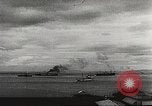
U.S. soldiers load and fire a disappearing gun and ammunition kept in a store room in the Philippines (WW2)
During timeframe of Japanese occupation of Philippines during World War II. Ships and landing craft underway at sea. United States Army General Douglas MacArthur shake hands with Manuel L. Quezon, President of the Commonwealth of the Philippines. President Quezon speaking with General MacArthur. A car exits a tunnel in Corregidor Island. Artillery shells in an underground storeroom. A fire control room in Corregidor Island. Soldiers walk inside a building. They discuss amongst themselves. United States and Filipino soldiers defending Corregidor Island from Japanese forces. United States prisoners of war walk along a field. The soldiers load and fire a United States Army disappearing gun.
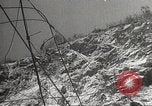
Activities of U.S. prisoners of war in Japanese prison camp in Malinta Tunnel on the Philippine Island of Corregidor.
U.S. Army prisoners of war on the Philippine Islands during Japanese occupation of Philippines World War II. View of Malinta Tunnel entrance that housed USAFFE headquarters. Prison camp operations within the Malinta Tunnel on Corregidor. A man works on a machine. A sign board on the machine reads: 'Emergency Equipment'. Bathrooms and shelves inside the prison camp. Men spread a bed sheet on a bed. U.S. prisoners of war are treated in an underground hospital. Medics carry a wounded on a stretcher. Sign under a wing of a tunnel says "Station Hospital Fort Mills". Patients lying on hospital beds. Army nurses seated at a table play cards. They eat food in a mess hall within the Malinta Tunnel complex.

General Masaharu Homma reviews Japanese troops and the troops in tanks and trucks enter Manila, Philippines (WW2)
The Imperial Japanese Army in Manila, Philippines during World War II. Japanese Military Commander of the Philippines General Masaharu Homma on horseback. He is escorted by other officials. The General salutes the soldiers. Japanese soldiers stand in a formation and the General reviews them. A Japanese tank in the foreground. Japanese troops, infantry and tanks enter Manila. Trucks and Jeeps loaded with troops drive past on the road during the parade. The General stands on a platform and reviews the troops in trucks, jeeps, and tanks. Japanese bicycle troops advance. An aircraft in flight overhead. A Type 95 Ha-Go light tank. The tanks move on a road and buildings in the background. People stand holding the Japanese flags. Japanese troops advance.
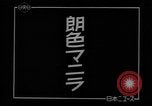
Scenes of Manila, Philippines, early during the Japanese occupation in World War II
Title card with title “Roaring color Manila” in Japanese. A street corner in Manila after the Japanese invasion and occupation in World War 2. Japanese flag in storefront as Filipinos walk pass store. Closeup of the statue of St. Anthony of Padua with a kneeling woman and child, in front of the Church of St. Francis (the former San Francisco Church, now site is occupied by Mapúa University), Church of Our Lady of Angels, Intramuros, Manila, Philippines. Camera pans down over the statue. View from above, at a short distance, of parishioners going in and out of the church. (This church was destroyed in the battle of Manila, 1945, but the statue survived.) A Japanese sign outside of a building. View inside the building, where many school children are seen walking through an exhibit of artwork and other displays of school projects. Closeup of one drawing on display, depicting a Spanish Toreador. Several displays of Japanese calligraphy. A model of two small structures. Closeup of several schoolboys interested in small objects on display. A group of schoolgirls at exhibits of clothing designs and patterns. A cartoon sign in the building, in Japanese but mostly in English. It shows two small girls and a boy in different exercise poses and two ducks walking past them near their feet. The sign announces in Japanese and English, "Radio Taisou Daily Calisthenics on the air." It also reads: "Health First" and "Mass exercise at Luneta Park." A man conducts calisthenics in the open in front of a rotunda. Jorge B. Vargas, chairman of the Japanese-sponsored Philippine Executive Commission, sits inside the rotunda observing a vast field filled with school children following the lead of the exercise director, as they perform calisthenics. The Rizal Monument (1225 Roxas Blvd, Ermita, Manila, 1000 Metro Manila) is seen far in the background. Some closeups of the children as they exercise. Wide view of the children organized in lines across the field. The French renaissance-style Luneta Hotel (414 Kalaw Ave, Ermita, Manila, 1045 Metro Manila, 1000 Metro Manila) is seen in the background.
Japanese Army General Masaharu Homma gets off an aircraft and is greeted by an officer in Manila, Philippines.
Japanese troops in Manila, Philippines during Japanese occupation of Philippines and Japanese colonial rule during World War II. Balloons support a huge sign "War Is Over". A truckload of Japanese troops, followed by a line of civilian cars, drives through Manila streets as civilians cheer. Flags flutter near a memorial. Japanese troops stand in formation. Soldiers blow bugles. The soldiers stand at attention. Japanese Army General Masaharu Homma gets off an aircraft and is greeted by an officer. General Homma talks to an officer seated in front of him at a desk. An aide stands nearby.