


 Francais
 Deutsch
 Italiano
Refine Your Search
+"Philippines" +1944 stock footage and images
- Showing 13 to 18 of 167 results more
more Hide
Hide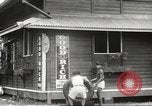
Filipino people working in different jobs, industry, and factories in the Philippines before World War 2
Activities of Filipino people in the Philippines before World War II. A horse-drawn calesa moves through Escolta, the business district of Manila. Billboards advertise Coca-Cola in the Philippines. Activities and quiet scenes at the siesta time. Buildings along the sides of a street. Sign boards outside the buildings read: 'Good Rich' and 'Coca Cola'. A Bahay Kubo (Nipa hut) in the countryside. A horse drinks from trough. A monkey hangs on bamboo pole. A water buffalo (carabao) laze in the mud. Timber trees are felled by men for lumber. Smoke from chimneys of factories. Wooden logs are carried on railroad wagons moving on rails. People work in a sugarcane farm and harvest the sugarcane. Men with Carabaos plow in a sugarcane field. Filipino workers transport sacks of sugar into a ship. Men climb up coconut trees and pick coconuts. The coconuts are loaded into carts. A Filipino man pours out a cup filled with sap from a rubber tree. Men cut tobacco. Filipino women roll tobacco into cigars inside a cigar factory. Men harvesting and slicing abaca (also known as Manila hemp). The processing of hemp. Men shredding Manila hemp into long strands. Shredded abaca are hung outdoors to dry. A machine twines hemp. (Pre war scenes, but from a 1944 film.)
Battle for Leyte Gulf between the Allied naval-air forces and the Japanese naval-air forces in region of Philippine island of Leyte during World War II
Documentary titled 'Battle for Leyte Gulf' depicts the battle fought between the Allied naval-air forces and the Japanese naval-air forces in Pacific waters off the Philippines, in World War 2. Montage of views chronicling the battle, opens with aerial views of pacific islands seen through clouds followed by glimpse of numerous ships maneuvering far below. Port bow views of U.S. New Mexico class battle ship, followed by the USS Pennsylvania (BB-38) of the 7th Fleet. Glimpse of troops on landing craft and charging across an island. Transport ships underway. Cruisers and battleships firing their guns. An Essex class aircraft carrier silhouetted against the horizon. An F6F aircraft comes up on elevator to flight deck next to the island on the USS Enterprise (CV-6). It has white triangle on tail containing its number. An F6F taking off from the Enterprise. Formation of U.S. aircraft in flight overhead. Gun crew firing twin bofors 40mm anti-aircraft cannon. Flak bursts and tracer bullets seen in the sky as a Japanese warplane falls. Gun camera footage of American aircraft strafing Japanese aircraft on ground at an airfield. View, from an aircraft carrier, of a Mahan class destroyer traveling to her port side. Glimpse of two ships close together during refueling operation at sea. Animated map dominates remainder of the film. It illustrates movement of Task Force 38 to Okinawa on 10 October 1944 and launching of aerial attacks. the map shows further maneuvers and activities of the task force. During these activities, Narrator notes that the cruisers USS Canberra and USS Houston are torpedoed and taken in tow. Animated propaganda cartoon depicts Japanese naval commander (speaking accented English) talking about Japanese naval prowess. Glimpse of Japanese sailors cheering. Animated map continues showing maneuvers of U.S. task forces. Narrator notes the Houston is again torpedoed. Animated map continues to illustrate movements and attacks against Luzon and amphibious landings on outpost islands in Leyte Gulf.
Naval combat in the Surigao Strait during the Battle for Leyte Gulf in the Philippines.
Animation shows Allied naval battle for the Surigao Strait in the Philippine island during the Battle for Leyte Gulf against the Japanese naval-air forces in October 1944. Shows U.S. Vice Admiral Thomas C. KinKaid. Allied naval fleet launch a preplanned attack against the enemy. U.S. Army personnel show their naval fleet's strategy against the Japanese on a blackboard. Officers read a map and shake hands. (World War II period).
Allied forces battle the Japanese for the Surigao Strait in the Philippine islands during the Battle for Leyte Gulf
Animated map shows Allied naval battle for the Surigao Strait in the Philippine island during the Battle for Leyte Gulf against the Japanese naval-air forces during October 1944. Shows advancement and attack of the Allied naval fleet. (World War II period).
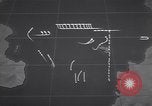
Ferocious battle for the Surigao Strait in the Philippines is seen during the Battle for Leyte Gulf.
Animated map shows Allied naval battle for the Surigao Strait in the Philippine island during the Battle for Leyte Gulf against the Japanese naval-air forces during October 1944. Shows the advancement and attack of the Allied naval fleet. Japanese Navy sailor survivors in water are rescued and taken aboard Allied ships. They are shown clinging to floating debris in the water. Narrator notes that some refused to take the rope lines that were offered. Distant smoke arises from destroyed enemy vessels. Results of the battle show, heavy damage inflicted to the Japanese fleet and minimal to the Allied. (World War II period).
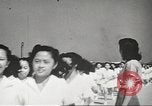
Filipino women work in houses and offices in the Philippines.
Activities of Filipino women in the Philippines shortly before World War II, from a 1944 film showing pre-war scenes. Filipino women in homes and offices. A Physical Education teacher watch a group of female Filipino students jogging in two straight lines. Faces of young Filipino women smiling. Pairs of dancers perform Filipino folk dance Cariñosa with handkerchiefs. Two women talk amongst themselves while shopping in a crockery shop. A woman stitches clothes using a sewing machine. Some of the women work in their houses. A woman practices archery. Women wearing various traditional Filipino dresses such as the Maria Clara dress of the Tagalogs and Batawi for Muslim Tausug women. Tagalog women wearing Terno dresses made of Piña or Pineapple cloth. A woman shows her Terno’s ‘Butterfly sleeves’. Filipino women working as soda fountain waitresses and Blues singers. Women doctors and nurses in a hospital. Young Filipino women and men dance the Jitterbug.