


 Francais
 Deutsch
 Italiano
Refine Your Search
+"Philippines" +1968 stock footage and images
- Showing 1 to 6 of 19 results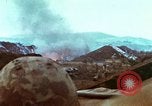
U.S. Air Force Military Airlift Operations in 1968 during the Vietnam War, and during 1976 border tensions in Korea
View from a U.S. Marine bunker as enemy shell explodes nearby, during the siege of Khe Sanh in 1968 during the Vietnam War. The United States Marines in the Battle of Khe Sanh firing mortars and a 105mm howitzer from their bunker. Enemy shells exploding on the tarmac, where American Air Force C-130 aircraft are parked. Marines rushing wounded comrades on stretchers, to C-130s for evacuation. Scene shifts to U.S. Marine Corps Lieutenant Colonel James P. Sheehan, standing at Camp Pendleton, California. (He was a company commander in the siege at Khe Sanh.) As he describes the C-130 aircraft support operations, a contingent of marines marches past, behind him. Scene shifts to a civilian narrator standing in the Military Airlift Command (MAC) Headquarters Command Center at Scott Air Force Base, Illinois. Among other things, he describes MAC support to the Tactical Air Command in Korea. Camera focuses on MAC air routes in the vicinity of the Philippines, Japan, and Korea. Next, is seen view of airfield at Mountain Home Air Force Base, Idaho, briefly at sunset, and then at night, as pilots of the 366th Tactical Fighter Wing and their F-111 aircraft prepare to depart for Korea, in response to border tensions, in August, 1976, after North Korean forces killed two American officers ("Korean Axe Murder Incident" and resulting "Operation Paul Bunyan"). Ground crewman directs a taxiing F-111 using lighted wands. The F-111s takes off. One of them is seen landing after the 7 thousand mile flight to Korea, as Major Paul Malandrino,Jr. (unseen) of the 366th Wing, speaks about MAC's airlift support. A C-141 MAC aircraft is seen landing. View of a C-141 with tail doors open and its cargo of military equipment on the ramp behind it. Glimpse of a marine with rifle and earphones, guarding equipment on the airfield ramp. Closeups of F-111 aircraft taking off.
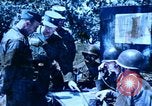
U.S. Military Advisors in Turkey, the Philippines, and other nations
The first scene shows United States Army soldiers conversing with Turkish officers. A sign reads: "Headquarters Joint United States Military Mission For Aid to Turkey." It displays the American and Turkish flags and U.S. Navy and Air Force insignia. Two stars are under the word Headquarters, indicating a Major General's Mission. A different sign reads: Headquarters Joint U.S. Military Advisory Group to the Republic of the Philippines. Closeup of a African Army officer and an American Army Advisor as they inspect a line of African soldiers standing next to their jeeps. A pair of American soldier advisors overseeing two African soldiers examining a jeep engine. Two United States advisors converse with several Filipino soldiers on a porch. An American Army doctor examines a Filipino child as a nurse and aide stand nearby. A United States Navy Hospital Corpsman and a Filipino counterpart treat the foot of child. A Corpsman examines ear of a Filipino child being held by his mother. A United States Army surveyor using a sextant as an Army Sergeant First Class stands nearby, wearing a white hard hat. Glimpses of a road grader and a dump truck being operated by U.S. Army personnel. An American advisor briefing Filipinos in an outdoor class setting and another leading a class indoors. American Army advisor working with Filipino soldiers replacing underground pipes. An advisor sawing a plank as a Asian farmer in a conical hat watch. Closeups of several advisors in one-on-one assistance with Filipinos. U.S. military advisors working with Filipino soldiers in military planning and training, including firearms instruction. American advisor points to a map in Taiwan.
United States Air Force Captain Jim Holt demonstrates survival techniques in tropical rain forests in the Philippines
Demonstration of survival techniques in tropical rain forests in the Philippines. Children row a boat in a river. Aerial view of a bridge over the river. Animated map of the Mekong River in South East Asia, the Congo River in Central Africa and the Amazon River in South America. Aerial view of inland water ways. Heavy foliage on either side of the river. United States Air Force Captain Jim Holt demonstrates basic survival tricks and techniques in tropical rain forest: he cuts bamboo and makes a jar from it. He fills stream water in the jar. He adds purification tablets in the water. He uses a probe stick to test water depth and avoids deep holes. The stick supports him while walking on a rocky path. He searches for food in rocks with the stick. He moves along the rocky path. He sits and rests.
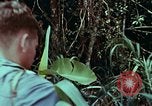
Jim Holt demonstrates transportation techniques in tropical rain forests in the Philippines
Demonstration of survival techniques in tropical rain forests in the Philippines. Air Force Captain Jim Holt demonstrates transportation techniques through inland water ways: Jim walks through a tropical rain forest. He selects wood which floats in water. He throws a piece of wood in a river. The wood piece floats. He cuts a tree into two logs and ties those logs. He moves in the river using the logs.
Jim Holt demonstrates raft building skills in tropical rain forests in the Philippines
Demonstration of survival techniques in tropical rain forests in the Philippines. United States Air Force Captain Jim Holt demonstrates transportation techniques through inland water ways: Jim cuts wood into medium size logs to build a raft. He drinks water from a jar. He collects long strips of strong bark. He makes aligned cuts in the raft. Then he drives hard wood pegs into the raft and ties them together with a strong bark strip. He makes oar from a wooden stick. He rows the raft and moves through tropical rain forests. He catches fish and cuts potato like roots for his food.
U.S. Air Force Captain Jim Holt demonstrates food collecting techniques in tropical rain forests in the Philippines
Demonstration of survival techniques in tropical rain forests in the Philippines. United States Air Force Captain Jim Holt demonstrates food collecting techniques: Jim rows a raft and moves through tropical rain forests. Plant food is the most available source of food. He chooses a campsite above the high water mark and ties his raft. He catches fresh water crabs and snails for food. He collects termites from a tree and throws them in river water during fishing. He catches fish using a t- shirt as a fishing net.