


 Francais
 Deutsch
 Italiano
Refine Your Search
+"Soviet Union" +1957 stock footage and images
- Showing 1 to 6 of 14 results more
more Hide
Hide
Space and aeronautics events in 1957 including Sputnik 2 launch with dog Laika, U.S. Vanguard rocket, and NATO missile diplomacy
Major "space race" and defense events of the year 1957. Laika, Soviet space dog prepared for the space flight. Laika takes off in Sputnik 2 in Soviet Union. An animation shows the spacecraft in outer space. In United States, Space Race efforts to launch a small "grapefruit" satellite on Vanguard TV-3 test rocket meet in failure as the rocket explodes at take off on December 6, 1957. View of the Eiffel Tower in Paris, France. President Dwight D Eisenhower arrives in Paris, France to talk about the development of missiles with other NATO leaders. The French Prime Minister Felix Gaillard with President Eisenhower. View of Atlas missile SM-65A Serial 12A launched successfully from Cape Canaveral pad LC-14 in Florida, United States, on December 17, 1957.
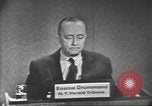
John Kennedy and Nixon debate over the prestige of America prior to the presidential elections in the United States.
Presidential election debate held between Democratic nominee Senator John F. Kennedy and Republican nominee U.S. Vice President Richard Nixon in the United States. New York Herald Tribune newspaper correspondent Roscoe Drummond asks Senator Kennedy that how can American prestige be measured abroad. Senator Kennedy responds stating that America is identified with the cause of freedom and if other countries have to choose between America and a Communist country, they would choose America. He further speaks that there are many indications that prestige of the United States is not as high as it once was. Kennedy summarizes some of these indications and relates to it by mentioning the example of Sputnik space program by the Soviet Union in 1957 (during the Space Race). Kennedy speaks about the economic development of the Soviet Union. He says the Soviet Union will be ahead of any other country scientifically and militarily by 1970. He mentions votes by different countries in the United Nations dealing with Red China. He says that Guinea and Ghana, two independent countries now are supporting Soviet foreign policy at the UN. NBC correspondent Bill Shadel asks Richard Nixon to speak on the topic. Vice President Nixon responds by speaking about the economic development of the Soviet Union. He speaks that the Soviet Union is a very primitive economy and that the United States is well ahead economically. He says that if the United States is going to maintain its strength and its prestige, they must not only be strong militarily and economically but must be firm diplomatically also. Bill Shadel says that an entire hour was devoted to answering questions from the reporters. He says that each candidate was questioned in turn and each had the opportunity to comment on the answer of his opponent. Shadel says that the reporters were free to ask any question on any subject, neither candidate was given any advance information on any question that would be asked. He says that the fourth debate is scheduled for Friday, October twenty-first.

World tensions after World War II. The Baruch Plan. The Berlin Airlift. The Korean War. The Cold War. The Atomic age. Ballistic Missiles
Speaking before United Nations Atomic Energy Commission (UNAEC) in its first meeting in June 1946, Bernard Baruch proposes international control of all atomic energy -- the so-called Baruch Plan. Low level aerial view of ruined post World War 2 European city. Goods including heavy equipment, locomotives, being loaded aboard ships to aid in the postwar recovery of Europe (The Marshall Plan). Workers in Western Europe making use of Marshall Plan materials to rebuild their national infrastructures. West European farmers restoring agriculture. View from overflying light airplane of parts of postwar Berlin in 1948. Blocked roads and empty railroad tracks leading from East Germany to West Germany, blocked by the Soviet Union. Barge traffic at standstill due to Soviet actions. U.S. C-54 transport aircraft flying supplies into West Berlin (The Berlin Airlift) during the Soviet blockade of that city. West Berlin citizens watching U.S. transport aircraft bringing fuel, food and other essentials into the isolated city. A C-54 flying low over empty railroad lines, as it prepares to land in West Berlin. Supplies offloaded from a DC-3 ( AKA C-47 or British Dakota) equipped with unusual set of rear cargo doors. Supplies being moved on Tegel Airport with many C-54 aircraft in the background. Numerous C-47 aircraft operating at Tempelhof airport. An East German official opening a barricade as Soviet blockade of West Berlin ends on May 12, 1949, and supply trucks begin to move over roads again. Flags of Western nations flying on high flagpoles. Glimpse of Allied warships underway during the Cold War. Formation of P-38 Lightning aircraft in flight overhead. NATO troops marching and NATO armor on parade. Flashes of heavy artillery firing at night. Korean refugees moving South in 1950 with the outbreak of the Korean War. View of UN Security Council meeting in the absence of Soviet representative. U.S. tanks firing guns and American infantrymen in conflict with North Korea in Korean War. American wounded on stretchers.Delegates of both North and South Korea signing the Korean Armistice Agreement in P'anmunjŏm, on July 27, 1953. A rocket is launched. Images of earth from inside a space craft in orbit. Narrator mentions the first satellite to circle the earth, the soviet Sputnik 1 in 1957. View of Soviet pilots in low pressure altitude chamber. A test subject in an aircraft making a maneuver that allows him to experience "weightlessness." Objects in his cockpit float about. A military rocket launch monitored by arrays of radar. An object being retrieved from space by means of a parachute. A nuclear powered submarine. Rockets on display during a military parade in Red Square, Moscow, the Soviet Union. A U.S. Air Force B-52 bomber taxiing. More views of rockets seen during a Soviet military parade in Red Square, Moscow.
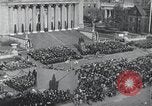
Life of U.S. President Dwight Eisenhower after World War 2; NATO; Columbia University; U.S. President; advisor to Presidents
Dwight D. Eisenhower during presidency of the Columbia University in 1948. Eisenhower walking at a Columbia University graduation ceremony in New York City and speaking to the group assembled. Two years later, views of Eisenhower as NATO supreme commander in Europe. Eisenhower seated in NATO Conference. Citizens in United States prepare signs and urge Eisenhower to run for President. He salutes a parade in 1952 as he begins a run for the Presidency. Pamphlets and posters read 'we need Eisenhower'. An animated cartoon shows a smiling and marching Uncle Sam with an "Ike for President" jingle song playing. Cartoon shows animated citizens and an elephant supporting Eisenhower. Scenes from Republican National Convention, and Nixon and Eisenhower holding their arms up together. Citizens voting, using ballot boxes, and voting machines. A nun votes. Eisenhower casts his vote. People hold U.S. flags and cheer. Signboards and neon lighting on a building track vote tally and proclaim Eisenhower victory in 1952 presidential election. Eisenhower in Korea after the election. He meets and eats with American troops in the field and studies the war effort. South Koreans wave flags on announcement of truce (cease-fire armistice) in Korean War Eisenhower takes presidential oath of office in Washington DC. He signs document for Civil Rights Act of 1957 (voting right act). View of African American students of the "Little Rock Nine" entering a military station wagon under armed troop escort during integration of Little Rock Central High School in Little Rock Arkansas. U.S. Army troops escort the African American students into school. Exterior view of United Nations building in New York. Eisenhower delivers speech on Atoms For Peace. Winston Churchill of Britain and Nikita Khrushchev of the Soviet Union visit Eisenhower in America. Scenes of John F Kennedy inauguration in 1961. Eisenhower with Kennedy and later with President Johnson. In 1968 address to Republican Convention Eisenhower notes risk of growth of Communism.
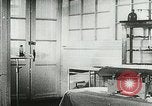
Space-related research using canines in the Soviet Union
Soviet research involving dogs being trained for high altitude and orbital missions in the Soviet Union. A researcher enters a room with two dogs on leashes. Weighing soviet space dog on a scale, dressing in harness and placing into a space cabin. Two other researchers place the space cabin into the nose of a rocket where another dog is already in place in her space cabin. The men close the door of the rocket. This video features space dog Kozyavka.
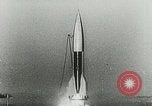
A dog is launched into near-orbital space on a rocket and then recovered by parachute, in the Soviet Union.
Soviet research conducted on dogs trained for high altitude and orbital missions in the Soviet Union. A rocket being launched. A dog inside the spacecraft. A loose nut is seen floating in the capsule. A cabin carrying the dog attached to a parachute on the ground. Soviet researchers arrive in a jeep. The dog is taken out of the space cabin. She shows no ill effects..