


 Francais
 Deutsch
 Italiano
Refine Your Search
+"United States" +1945 stock footage and images
- Showing 7 to 12 of 2149 results more
more Hide
Hide
Opening statement of the prosecution at the Nuremberg Trials; flashback scenes of Nazi crimes and starving civilians in 1945
Events related the Nuremberg Trials held at the Palace of Justice in Nuremberg, Germany. Flashbacks of a variety of Nazi crimes against humanity during World War II. Europe during 1945. War devastation: buildings and cities laid in waste, people in hunger and despair emerge from shelters searching for the causes of the war and of the immediate human suffering. Deprived children and adults weep, starve and beg on the streets. November 21, 1945, Nuremberg, Palace of Justice, seat of the International Military Tribunal. List shows the names of the convicted Nazi criminals. Chief prosecutor from the United States, Robert Houghwout Jackson, makes the opening statement of the prosecution. He presents Count 1 of the indictment a conspiracy to commit war crimes and crimes against peace and humanity. He makes the statement that criminals who have done injustice to the laws of humanity must be brought to justice. Stenographers wearing headphones take down notes. Defendants stand in their dock including Herman Goring, Rudolf Hess, Joachim von Ribbentrop, Wilhelm Keitel, Karl Donitz, Erich Raeder, Baldur von Schirach and Fritz Sauckel. Faces of the convicted criminals. Scenes from mass burial of victims from German bombing of Coventry, England. Scenes from the end of World War 2, with women weeping and civilian victims of war in Europe, including Germany, seen scavenging on streets for food. Women and hungry children scrape out trash cans and metal lids for bites of food. Desperate civilians cut down remaining tree stumps from formerly tree-lined streets to use for fuel. A group of men and women struggle in a food relief line in Italy.
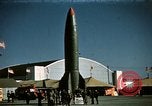
U.S. Army Air Forces Fair at Wright Field in October, 1945
Views of the U.S. Army Air Forces fair hosted at Wright Field, near Dayton, Ohio, in October, 1945.The highlights of the event were exhibits of captured German and Japanese aircraft, rockets, and equipment. A German V-2 Rocket Motor on display. Soldiers observe the rocket. A German Junkers Ju 388 Störtebeker multi-role aircraft on display. A German Messerschmitt ME-262 Schwalbe fighter on display. A German pilot's victories recorded on the side of a plane. Two soldiers take a look at a Japanese Kamikaze bomb. One of them gets into the bomb seat. American officers and soldiers view the exhibits. 'Alles Kaputt' written on the side of a German Junkers Ju-290 bomber (one of the candidate aircraft, with further development, in Germany's Amerika Bomber project for a long-range bomber capable of striking the United States). Soldiers walk under the plane. 'Transient Aircraft' written on the control tower building in the background. (World War II period).
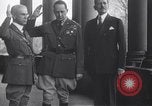
General Douglas MacArthur in 1930-1945; training of the Philippine Army; leading Allied troops against Japanese forces (WW2)
General Douglas MacArthur is appointed Chief of Staff, with rank of full General, in 1930. United States troops marching with the American flag. General MacArthur with two French military officers, during a tour of Europe. He is decorated by French Officials. MacArthur visits Germany and inspects German troops. U.S. President Roosevelt reappoints MacArthur as Chief of the Staff. MacArthur speaking to an audience in Washington DC. Scenes of MacArthur's headquarters in the Philippines. Filipinos walking outside MacArthur’s office. MacArthur at his office in the Philippines with Eisenhower at his side. MacArthur talks on the telephone. Flags of the United States and the Philippines. Filipino troops marching at Fort Santiago inside the walled city of Intramuros in Manila. MacArthur supervises the creation of a Philippine Army before World War 2. Philippine Army cadets perform outdoor calisthenics and attend a meeting. Philippine Army cadets train in knife fighting together with U.S. soldiers. View of Japanese attack of U.S. Navy ships and airfields at Pearl Harbor in December 1941. Japanese bombardment of the Philippines in December 1941 and into early 1942 as Japanese occupy Philippines during World War II. View of Corregidor Island. U.S. Army and Filipino soldiers on Corregidor load and fire artillery at the Japanese before the fall of Corregidor. U.S. soldiers in the Bataan peninsula. Face of MacArthur superimposed over a montage of American factory workers manufacturing ammunition and military vehicles. Start of the Bataan Death March. PT boat carrying MacArthur leaves Corregidor. War equipment prepared in factories. A battleship underway to Australia. MacArthur in Australia. U.S. convoy moves towards Japanese held islands in the Pacific. Allied soldiers land on the islands. A soldier lands on a beach and raises the American Flag. MacArthur points to the Philippines on a map and discuss war strategy. In accordance with the plan key positions in the Pacific are attacked. MacArthur looks on as United States soldiers land on the islands. MacArthur while smoking a pipe inspects the landing of Allied soldiers on islands behind heavy bombardment. Amphibious tractors land on the beach of Palo, Leyte. Allied paratroops make a landing. United States troops sail on rubber boats towards the beach of Palo, Leyte. Paratroopers on parachutes landing in Leyte. MacArthur confers with Allied Commanders. Allied troops walk past a destroyed Bahay Kubo nipa hut. Japanese soldiers are taken as prisoners in the Philippines.
Harry S Truman assumes office of President of the United States following death of Franklin D. Roosevelt during World War 2
Harry S Truman appointed President of the United States. The U.S. Capitol building in view. Trees in the foreground. President talks on the phone. Harry Truman attends the 1944 Democratic convention with his daughter, Margaret Truman. People gather holding boards and placards of Truman in hand. A board reads: 'Truman for Vice President'. Franklin Roosevelt seated in a car during his fourth inauguration parade, on January 20, 1945, with motorcade proceeding on Constitution Avenue in Washington DC, and then driving up to the White House. Past events show President Franklin Roosevelt talking to Vice president Truman. Flag at half staff on the U.S. Capitol following death of President Roosevelt. Truman addressing a joint session of the Congress. General Marshall, Admiral King, Secretary of War Stimson all arriving at the White House to meet with President Truman. Also seen are James Byrnes and Truman receiving Lord Halifax, Anthony Eden, Secretary of State Stettinius in the White House. Truman speaks to joint session of congress on April 16, 1945 and expresses desire to continue the efforts and direction set by Franklin Roosevelt, saying, "With great humility I call upon all Americans to help me keep our nation united in defense of those ideals which have been so eloquently proclaimed by Franklin Roosevelt...." He also states, "So that there can be no possible misunderstanding, both Germany and Japan can be certain, beyond any shadow of a doubt, that America will continue to fight for Freedom until no vestige of resistance remains. Our demand has been, and it remains, unconditional surrender. We will face the problems of peace with the same courage that we have faced and mastered the problems of war. In the memory of those who have made the supreme sacrifice; in the memory of our fallen president, we shall not fail."
Operation of United States Coast Guard in Okinawa and Iwo Jima, Pacific Theater during World War II
Overseas activities of United States Coast Guard in World War 2. February 19, 1945, U.S. Marines invade Iwo Jima in Pacific Theater. Naval guns and aircraft bombard Iwo Jima. Mountain in the background. Aircraft in flight. Marines and Coast Guardsmen aboard landing craft. Marines landing on Iwo Jima under heavy Japanese fire. Destroyed landing ships litter water's edge. Marines hunkered down and treating wounded, under fire. LSTs and other ships at established beachhead. Vehicles drive onto beach. April 1, 1945, Marines attack Okinawa. Navy warships bombard Okinawa with heavy guns and continuous rocket fire. Beachhead is established against light resistance. Japanese kamikaze aircraft attack American invasion ships. Several ships are hit and sunk. Surviving sailors are helped aboard rescue boats. Antiaircraft fire from American ships fills sky with smoke and flak. A kamikaze aircraft crashes in the sea. Sky filled with American bombers. Aerial view of Atomic bomb explosion over Nagasaki Japan on August 9, 1945. Raising American Flag on Japan homeland.
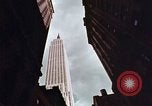
Views of the Empire State Building in New York City, including views during construction and after 1945 plane crash.
The Empire State Building (20 W 34th St., New York, NY 10001, United States) in New York City. Views of the Empire State Building in 1970. Views of the Empire State Building under construction in 1930 and 1931. A blimp passing near the Empire State building in the 1930s. People gathered in front of the Empire State Building for its grand opening in May 1931. Next scene shows the 79th floor of the Empire State Building engulfed in flames after a B-25 aircraft crashed into the building in 1945. Views of the fire from the ground and from the 79th floor areas as firemen extinguish flames. The final scene is street levels views of the Empire State building from a moving vehicle, again in 1970.