


 Francais
 Deutsch
 Italiano
Refine Your Search
+"United States" +1945 stock footage and images
- Showing 1219 to 1224 of 2149 results more
more Hide
Hide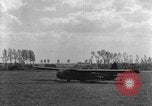
U.S. gliders parked on a field and buildings in the background in Brussels, Belgium.
Gliders parked on a field in Brussels, Belgium during world War II. A glider with an insignia of the United States on the field. Buildings in the background. A soldier enters a glider and other exits. A view of the gliders across the field. The wings of the gliders with the insignia of the United States.

Window cleaners clean windows of skyscrapers like the Empire State of Building and the Metropolitan Museum of Art in New York City.
Life of a Manhattan window cleaner working on skyscrapers in New York City, United States. The New York skyline. Views of landmark buildings and skyscrapers of Manhattan, New York City. Skyscrapers showing dirty windows. A window cleaner walks on Fifth Avenue, Manhattan. He enters the Empire State Building (20 W 34th St., New York, NY 10001). He enters an office in the building. He attaches a safety belt and steps out of a window. The window cleaner cleans the exterior of the window. Another window cleaner cleans a shop window and wipes the glass. Views of the Metropolitan Museum of Art (1000 5th Ave, New York, NY 10028, United States). A window cleaner places a ladder and climbs it up to reach a window. He cleans the window. A window cleaner cleans windowpanes. The window cleaner cleans exterior of the window and gets into office. He goes away after completing his work.
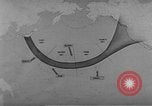
U.S. Navy personnel demonstrates balancing mechanism of fire balloon used to attack North America during World War II.
Diagram shows pattern of air currents that carried Japanese paper balloon fire bombs from Japan to America's West Coast, during World War II. The paper bomb balloon or fire balloon unit consists of the paper gas sac and an automatic balancing and firing control device. United States Navy personnel inspects the balloon as it descends to the ground. He looks at the paper bags filled with sand which provide balance and the central payload,incendiary and bombs. He holds paper material and inspects its strength. The balloon is filled with hydrogen gas. Pressure is exerted by a rubber ring. United States Navy personnel demonstrates the various parts: demolition block,aneroid switches,jacks,blow out plugs,incendiaries and central payload. He demonstrates the balancing mechanism: Balance bags,payloads and incendiaries are suspended by T-hooks switched between the blow out plugs on the balancing ring. A man unhooks the T-hook and releases balance bags.
U.S. Army 75th Infantry Division, 289th Regiment soldiers advance through snow covered forest in Commanster, Belgium.
United States infantry advance in Commanster, Belgium during World War 2. Soldiers of the United States Army 75th Infantry Division, 289th Regiment, 2nd and 3rd Battalions, advance through the snow covered forest area.
U.S. 7th Armored Division,48th Infantry Regiment,3rd Battalion,soldiers moves through snow covered roads in St Vith,Belgium.
United States infantry advance in St Vith,Belgium during World War II. View of the damaged buildings in the town. Soldiers of the United States 7th Armored Division,48th Infantry Regiment,3rd Battalion,moves through the snow covered roads. Soldiers watch the damaged trucks and jeeps. View of the snow covered field. Mountains seen in the background. Infantrymen behind tank,move from squat to standing position as they advance into woods. Some of the soldiers fire their rifles.
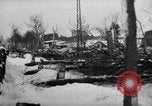
U.S. infantrymen search for German prisoners and soldier advance with bayonet rifle in St Vith,Belgium during World War II.
United States Army infantry soldiers attack St Vith,Belgium during World War II. View of the damaged buildings in town. Soldiers of the United States 7th Armored Division ,48th Infantry Regiment,3rd Battalion,search for German prisoners. Prisoner wears U.S. soldier's clothing and shoes. Captured German officer under guard. Soldier in a prone position fires Browning M1919A4 30 caliber air cooled machine gun. Soldier advances with bayonet rifle. Tank destroyers fire in support of advancing infantrymen.