


 Francais
 Deutsch
 Italiano
Refine Your Search
+"United States" +1945 stock footage and images
- Showing 1249 to 1254 of 2149 results more
more Hide
Hide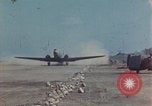
Douglas DC-3 transport plane takes off from Iwo Jima Naval Base; wounded patients are loaded on transport plane (WW2)
A United States Army Douglas DC-3 transport plane taxis and takes off at Naval Base Iwo Jima during World War II. Dust obscures the view from dirt airstrip takeoff. A badly wounded United States Marine lying on his side on blood-stained stretcher. His bandaged head is soaked in blood. House flies sit on bloodied bandage and stretcher. Soldiers loading patients and casualties on transport plane. The wounded Marine is placed aboard the plane for air evacuation. Douglas DC-3 “Peg o’My Heart” takes off from airfield.
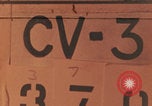
Men cleaning naval guns and shrapnel damage on the USS Saratoga (WW2)
View of the USS Saratoga (CV-3)’s bridge with shrapnel damage after a Kamikaze attack during the Battle of Iwo Jima in World War II. Guns in between the bridge. Soldiers climbing stairs. Sailors cleaning a Mark 12 5"/38 caliber dual purpose naval guns on USS Saratoga. A slightly damaged United States flag is seen over it. Men clearing debris from the damaged deck a day after Kamikaze attack. Dr. Edgar Maurice Cortright, United States Navy Lieutenant, narrates his experience on board the USS Saratoga at the time of its bombing by Japanese aircraft.
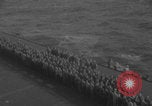
Burial at sea ceremony on board the USS Saratoga after a Kamikaze attack (WW2)
Burial at sea ceremony on board the U.S. Navy ship USS Saratoga (CV-3) a day after an attack by Japanese Kamikazes during the Battle of Iwo Jima in World War II. Full crew of the USS Saratoga attend the ceremony on deck. The crew pay their respects. Bodies of the casualties, sewn into sailcloth, seen on deck. Some of the USS Saratoga crew are seen wearing life jackets. The bodies are thrown overboard. United States Marines firing their salute after all the bodies are buried at sea. Thousands of crewmen saluting as they conclude the ceremony. The crew disperse before forming a line on deck. Dr. Edgar Maurice Cortright, United States Navy Lieutenant, narrates his experience on board the USS Saratoga at the time of its bombing by Japanese planes.
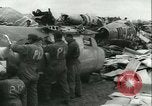
Reclaiming salvaged materials during and after World War II.
A United States post-war report about salvage and reclamation efforts to reuse supplies and reduce costs both during World War 2 and after the war. Technicians create aluminum plates for Army mess gear from salvaged aircraft parts during World War 2. Reclaimed parts used to make washing machine of gasoline drums, field telephone wires, air force tire trailer. The army salvaging and reclaiming cranes, chains, tents, tanks, shoes, axes, medical equipment, musical instruments, fire lamps, fire extinguishers. Technicians load crates of reclaimed materials on conveyor belts. An Army signal corps cameraman holding a motion picture camera. Films being picked up in bags from an Army van. Films being edited, cut, rebuilt and run on film projector equipment.
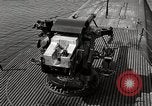
The 5-inch 25 Caliber gun on a submarine at sea is fired by the crew after surfacing.
The five-inch-twenty-five Caliber gun on a surfaced submarine at sea, United States. The submarine deck gun is operated by the crew. They fire the gun immediately after the submarine surfaces. A crewman uncovers the side of the gun and gets ready to fire. The pointer position on the gun allows for firing through a foot pedal system. The trainer position of the gun is also demonstrated. Use of a safety switch is explained. (World War II period).
U.S. Navy Flight Safety training about Dive Bombing Crashes
The United States Navy training film on flight safety, 'Dive Bombing Crashes'. Illustrates a dive bombing crash during training to point out the necessity of keeping aware of your altitude and using instruments on high speed dives. (World War II period).