


 Francais
 Deutsch
 Italiano
Refine Your Search
+"United States" +1945 stock footage and images
- Showing 2035 to 2040 of 2149 results more
more Hide
Hide
U.S.Marine Artillery battery loads up in amphibious DUKWs and drives them from beach into water and on to Landing Ships
U.S. Marine artillery battery loads up and boards amphibian DUKW vehicles. They drive the DUKWs over land and beach into the water. Some board a Landing Ship (LSM) in the surf. Others board an LSM Landing ship in deep water, off the coast.

Large naval convoy escorted by U.S. Naval warships including Battleships at sea.
Large U.S. navy convoy with Battleships at sea, Amphibious DUKWs leave LSM Landing ship in deep water and motor to shore. Some are loaded with 105mm howitzers. Other LSM (Landing Ship Medium) maneuvers to beach and DUKWs exit through the surf to drive away on hard ground..

U.S.Marine Artillery units in DUKWs drive to pre-planned battery locations and set up for operation
U.S.Marine artillery units leave beach in DUKWs and proceed to prearranged positions on land. They unload 155mm howitzers using an A frame on one of the DUKWs. Marines unload all the howitzers in the battery and set up communications and instruments.
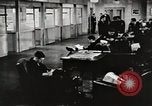
Postwar rehabilitation of U.S. Navy sailors -- sailor in a bar.
Rehabilitation of U.S. sailors. A dramatization: Sailors sit on chairs and read. Robert Benchley wears civilian clothes and a button to differentiate him from the civilians. He goes to a bar. The bar attendant asks him for his id-card. Security men stand near him. He depicts the good and the sour moments experienced by the sailors in civilian life.

Scenes from "Road to Home" starring Bob Hope and Bing Crosby. Navy Department film to help sailors returning to civilian life (WW2)
Hollywood actor and comedian Bob Hope appears in navy uniform and is joined by singer Bing Crosby, to introduce a movie called 'Road to Home.' Hope and Crosby play two sailors and use comical dialogue to explain the demobilization process of separating from the Navy and returning to civilian life in World War II. Comic scenes show Hope and Crosby in various costumes, times and circumstances, excerpted from their series of Road show films. They discuss the U.S. program to return 2 million army, navy, marines and military men back into civilian life, and emphasize the importance of waiting to be properly mustered out and not to go AWOL (absent without leave), just because the war is over.

Scenes from "Road to Home" starring Bob Hope and Bing Crosby. U.S. Navy film to facilitate return of sailors to civilian life
Hollywood movie stars Bob Hope and Bing Crosby play sailors preparing to return to civilian life after the end of World War 2. Includes comical sketches from the Hope and Crosby Road Show series of movies. They discuss sailors and soldiers receiving money for college and other benefits following separation from the military. Both, Hope and Crosby, turn serious at the end and exhort sailors to be patient and follow proper procedures in leaving active duty so they will each receive an honorable discharge and all benefits to which they are entitled.