


 Francais
 Deutsch
 Italiano

Refine Your Search
+"United States" +1945 stock footage and images
- Showing 205 to 210 of 4253 results more
 Hide
Color Sound
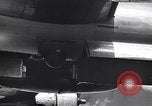
Bombing of Hiroshima, Japan, during World War II. B-29 in flight, bomb doors open, explosion on ground and devastation scenes
Bomb bay of United States Army Air Force B-29 aircraft opens. Interior view of aircraft shows bombardier in nose as he looks through bomb sight. Actual atomic bomb detonation over Nagasaki Japan as seen from B-29 aircraft on August 9, 1945. View of mushroom cloud rising rapidly from an atomic blast (a different blast; not Nagasaki or Hiroshima). Ground views of devastated city of Hiroshima following atomic bombing in World War 2.
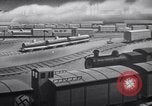
Allied bombing missions to destroy railroads and marshaling yards in occupied France and Germany during World War II
Cartoon representation of German rail yards and war factories, opens the film. Cities of : Anklam; Bremen; and Frankfurt are highlighted as critical factory and railroad junctions. Animated map shows Allied air strikes against French marshaling yards in Spring of 1944 in preparation for the invasion at Normandy. In February, 1945 Allied officers use large wall map to discuss and plan the destruction of all railroad operations in the Ruhr and surrounding areas. View of U.S. bombers in formation (with fighter cover overhead) on bombing missions in Operation Clarion, against all small and medium rail junctions in Germany. View from Allied bomber of Bombs falling and exploding at a rail junction. More aerial views of bombs exploding in numerous places during this operation. An American B-17 Flying Fortress bomber dropping bombs on a railroad marshaling yard. Aerial view of bombs exploding on targets in Essen. Views of wide destruction wrought at German railroad facilities. A US Army Air Forces P-51 fighter plane descending to strafe a target. Gun camera views of aircraft strafing lines of communication in Germany, including road and barge traffic. Closeup of runs firing from P-51 aircraft. Railroad trains being strafed and dramatic explosions at target rail sites.
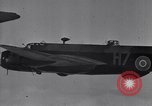
British Royal Air Force aircraft conduct 700-airplane bombing raid over Cologne during World War II
Narrator states that on March 2, 1945, during World War 2, 700 Lancaster and Halifax bombers of the British Royal Air Force fly over Cologne, Germany, to bomb roads and bridges leading across the Rhine River. Closeup aerial view of a British Halifax bomber with H7 painted on its fuselage, identifying it as belonging to No.346 Squadron RAF. (This is a Free French bomber squadron incorporated into the Royal Air Force and operating out of RAF Station Elvington.) View from one of the aircraft looking down on the city below as bombs fall from the plane. Narrator refers to U.S. 1st Army attacking Cologne and this bombing to strike German forces fleeing the city. Heavy smoke seen rising from bomb explosions below. A huge black cloud is seen in the air as a German scarecrow bomb hits a Lancaster bomber and destroys it (Narrator calls it a scarecrow bomb. Later analysis concluded that "scarecrow" bombs may have been attacks by Luftwaffe aircraft equipped with upward facing cannons, or so called "Schräge Musik" attacks.) Smoke rising from the city. Narrator emphasizes that the Cologne Cathedral is not touched.
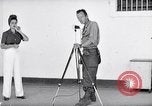
Interview with liberated female internee Georgette Kramer from the Los Banos camp in Manila, World War 2
Interview in Manila with freed female internee Georgette Kramer from the Japanese operated Los Baños internment camp (liberated 13 days before the interview). A microphone is set on a tripod stand for the interview. Ms. Kramer relates how she was wounded by a stray Japanese bullet during the February 23, 1945 liberation operation. During the firefight with Allied forces a bullet went through her mother's arm, through Ms. Kramer's abdominal wall, and into her friend's hand. Wounded, they were rushed to a tank. She says one other internee was also shot through the hip. When asked what she wants to do now that she is free she says she is not sure. A young girl, Ms. Kramer's sister, Aoife Kramer, runs up to the camera and says she wants to say something too. The interviewer lifts up the child in his arms. The girl says she wants to go to the United States. (World War II period).
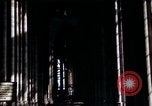
Cologne Cathedral; queue of German citizens in German town; Victor pontoon bridge and wrecked Remagen Bridge in Germany
View from a ground level entrance of the partially wrecked Cathedral of Cologne in Cologne, Germany during World War 2. Scene shifts to a town or village with U.S. Army trucks passing by and German civilians in a queue, a few doors down from the Konditorei (patisserie or bakery). Directional sign pointing toward 67th Medical Evacuation Hospital implies the location is in or near Bonn, as the 67th was located there until March 31, 1945. Scene changes to an elevated view of the Rhine River from the Northwest looking toward the Victor Bridge pontoon bridge, one other pontoon bridge, and the wrecked Ludendorff Bridge (also known as the Remagen Bridge), in the distance, at Remagen, Germany.
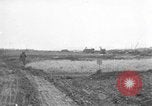
77th Infantry Division soldier looks at sign board at the commemorating spot in the Pacific Theater during Ryukyu Campaign.
U.S. Army 77th Infantry Division soldier looks at sign board in the Pacific Theater during Ryukyu Campaign of World War II. Soldier walks on field towards the commemorating spot. He looks at sign board which reads 'at this spot the 77th Infantry Division lost a buddy,Ernie Pyle,18 April 1945'.
CRITICALPAST.COM: About Us | Contact Us | FAQs - How to Order | License Agreement | My Account | My Lightboxes | Shopping Cart | Advanced Search | Featured Collections | Website Terms & Conditions | Privacy Policy ©2026 CriticalPast LLC.
License Agreement |
Terms & Conditions |
Privacy Policy
©2026 CriticalPast LLC.