


 Francais
 Deutsch
 Italiano

Refine Your Search
+"United States" +1945 stock footage and images
- Showing 49 to 54 of 4253 results more
 Hide
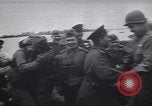
End of World War II and signing of UN charter in San Francisco, United States
United States and Soviet Union soldiers celebrate their victory as world War 2 comes to an end in Germany. "Elbe Day": Soviet and American soldiers meet at the River Elbe on 25-26 April, 1945. View of Nazi swastika being blown up at Zeppelinfeld in Nuremberg Germany in 1945. Scenes of celebration in the streets of Paris with French civilians cheering American and French soldiers and celebrating the end of World War 2. French women kiss soldiers. Crowd gathered in Times Square in New York City celebrating VE-Day (Victory in Europe Day). Foreign Ministers of fifty nations arrive at San Francisco to sign the United Nations Charter. United States President Harry S. Truman addresses the delegates at the closing ceremony of the conference on June 26, 1946. Ships bring American soldiers back home, including some wounded, after World War 2. Women and families on dock at harbor wave and smile at arriving troop ship with American soldiers returning home. Also seen are soldiers of other countries including Soviet Russian soldiers returning to their families at a train station, with smiling and tearful family reunions. Cemeteries with headstones honoring soldiers who died in the war. Military hardware being scrapped to make peacetime goods. Views of explosive charges being set and military aircraft being blown up for scrap. Piles of scrapped military vehicles. A woman in a factory organizes newly manufactured clothes irons. Workers in a factory perform final assembly on newly manufactured ovens and stoves for homes.
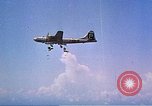
U.S. defeats Japan in Pacific through air power in World War II; multiple views of American combat aircraft in action in World War 2
From "The Last Bomb": The defeat of Japan through American airpower in World War 2. Mix of actual combat footage and a small amount of vintage, dramatized, pilot in cockpit footage. A single B-29 from the 39th Bomb Group (stationed at North Field Guam) drops clusters of incendiary and fragmentation bombs over Japan. Bombs away view of large number of bombs falling toward Japan. A formation of B-29s from the 498th Bomb Group, Isley Field, Saipan, in flight during a daytime bombing mission over Japan. Explosions and smoke rise from targets in Japan, including two Japanese aircraft plants and an airdrome as part of U.S. tactical plan 574. Color, low aerial view of massive bomb damage over Tokyo following U.S. air attacks of March 1945. Escorting P-51s from Iwo Jima engage defending Japanese fighter aircraft in dogfights. Aerial gun camera footage of Japanese airplanes being hit, exploding, bursting into flames, and falling from sky to crash. Later, P-51s conduct strafing attacks against Japanese ground targets, including: lines of communication; railroads; marshaling yards; factories; airfields; ships; and harbors. Color gun camera footage shows these strafing attacks. P-51s returning to land at Iwo Jima and performing celebratory rolls over the field. Crippled B-29s making emergency landings on Iwo Jima. A B-29 from 500th Bomb Group with an engine shutdown. A B-29 from the 29th Bomb Group. Bad weather over runway at Iwo Jima forces a P-51 pilot to bail out over the field. A B-29 from the 6th Bomb Group ditches in water near beach on Iwo Jima. A B-29 crashes and bursts into flames during landing at Iwo Jima (all crew escapes.) Firefighters douse the flames with foam. Formation of B-29s from 39th Bomb Group returning to Guam after bombing mission over Japan. A B-29 crashing on landing and bursting into flames. Sole surviving crew member being carried on stretcher, as firemen and rescue teams work at scene. Formations of B-29s from 498th Bomb Group and 9th Bomb Group, in flight. Good color view from B-29 of the atomic bombing of Nagasaki on August 9, 1945, which brought about the capitulation of Japan and end of World War 2. Large mushroom cloud rising into the air following atomic bomb explosion at Nagasaki.
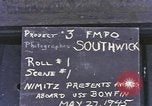
U.S. Navy Fleet Admiral Chester William Nimitz presenting awards to officers and sailors aboard USS Bowfin in Guam, during World War II
United States Navy Fleet Admiral Chester William Nimitz, aboard the USS Bowfin (SS-287) in Apra Harbor, Guam, during World War 2. He is there to decorate the Captain and crew of the boat. Admiral Nimitz is seen at a microphone, addressing officers and sailors. Cameramen taking the photographs of the event. Navy band playing in the background. Admiral Nimitz presents the Navy Cross to Commander Alexander Kelly Tyree, for extraordinary heroism in the line of his profession as Commanding Officer of the U.S.S. Bowfin (SS-287), on the Seventh War Patrol of that submarine during the period 25 January 1945 to 25 March 1945. Admiral Nimitz then proceeds to decorate more officers and sailors from the crew. Nimitz returns to the microphone, reads a citation, and decorates several more crew members. He and other officers hold long hand salutes as the ceremony is concluding. Admiral Nimitz then announces the end of the ceremony and walks away. Camera focuses on a sailor with medal pinned on his shirt.
Liberated United States airmen prisoners at Stalag 7A in Moosburg, Germany (WW2)
Liberated United States prisoners (mostly military airmen) at POW camp called Kriegsgefangenen-Mannschafts-Stammlager (Stalag) VII A, located just North of Moosburg, Germany during World War II. The airmen cook food. Several are seen sunning themselves. Airmen seen shaving, shining shoes and cleaning clothes. A group of airmen around sign 'I Wanted Wings' and 'Luft 3'. These are some of the prisoners who were originally held at Stalag Luft III, in German Province of Lower Silesia, near the town of Sagan (now in Poland). (Note: Stalag Luft III is famous because the "Great Escape" took place there in March, 1944. Prisoners were forced to march from Sagan to Spremburg during the coldest winter in Germany in 50 years. There, they boarded a train of boxcars for a 3 day trip to Moosburg in January 1945, because the Russians were closing in. The addition of these prisoners to Stalag 7A, at Moosburg, led to serious overcrowding of the camp. On May 1, 1945, the New York Times reported that "The Fourteenth Armored Division liberated 110,000 Allied prisoners of war at Stalag 7A at Moosburg." This corrected an earlier report that 27,000 prisoners had been liberated.)
Some U.S. Army soldiers focusing on leisure after World War 2, and some attend Army extension classes in the United States.
A post-war U.S. Army film (after World War 2) in 1945-1946 contrasts dice and pool playing soldiers with the soldiers who take Army extension classes to prepare for jobs in civilian life following demobilization and discharge from the Army. Group of U.S. Army soldiers in a room as they play pool at a billiards table. Soldiers in a barracks room seated on a bed and on the floor throwing dice in a game of craps. The soldiers play cards and smoke. Contrast is shown with U.S. Army students seated in a class. An officer takes lessons. A soldier takes notes. A young teacher or professor explains a concept with the help of a blackboard. View of the Hôtel Miramar in Biarritz, France (built in 1927 and demolished in 1978). Aerial view of a building with interconnected corridors. Street level view of the University of Calcutta Senate Hall in Calcutta (Kolkata), India (hall designed by Walter Granville; one time home to the Asutosh Museum of Indian Art; demolished in 1960). People walking in front of the Senate Hall as a car and a pulled rickshaw go by. In next scene, a sign reads 'Fox-Hole Campus'. An officer holds a mechanical model and explains a concept to students. A soldier works with equipment and an African American soldier stitches clothes at a sewing machine. A sign "Learn today; Earn tomorrow" as soldiers learn skills to help them in the civilian sector after separation from the armed forces. A solder works on a model. Pamphlets on a desk with the names of different subjects written on them that U.S. Army students can study to learn skills and jobs, including Automobile Repair Shop, Retail Bakery, Service Station, Grocery Store, Metal Working Shop, Shoe Repair Business, Small Sawmill Business, Beauty Shop.
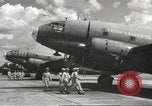
Chinese airmen board a U.S. troop carrier aircraft at Austin, Texas
United States and Chinese airmen at Bergstrom Field, Austin, Texas July 1946. The Neo-Classical building is the Texas State Capital at Austin, Texas and Austin Texas is noted on the graduate’s diploma “Bergstrom Field, Austin, Texas”. At this time the 349th Troop Carrier Group was based at Bergstrom and assigned to the Third Air Force, Tactical Air Command as noted on the diploma. Also “Air Force Combat Units of World War II” Edited by Maurer Maurer states this unit trained Chinese crews to operate C-46 aircraft. Film is very interesting in that it visually shows the transition from “Army brown to Air Force Blue” for the C-46s still carry the I TROOP CARRIER COMMAND insigne on the nose, with was disbanded on 4 Nov 1945 but they have the new AAF wide "Buzz Numbers" for all aircraft operating solely within the continental USA, by T.O. 07-1-1 of November 1945 and the graduate’s diploma is notating the new post-war air force type command reorganization of March 1946.