


 Francais
 Deutsch
 Italiano
Refine Your Search
+"United States USA" +1909 stock footage and images
- Showing 7 to 12 of 25 results more
more Hide
Hide
The Wright Air Development Center (WADC) in United States; early Wright aircraft flights.
'The Story of Wright Air Development Center' shows various activities at WADC in United States. Aircraft parked at Wright Patterson Air Force Base. Narration outlines the purpose of Wright Air Development Center. The Wright Flyer aircraft manually pulled out of a hangar. Two men climb into aircraft. A plane is catapulted by means of weight. Crowd stands in the foreground. The flight took place at Ft. Myer, Virginia. (This footage is a mix of 1909 footage where the aircraft shows two half-rounds of canvas in the front elevator at removal from the hangar, and 1908 footage, from the rear taking off, where the aircraft has a single half-round of canvas in the front elevator.) A Wright Brother Development Center. Wright field shows Massie Wind Tunnel, Aero-Med Lab, hangars etc. A book entitled 'Wright Air Development Center'. Hands turn back showing forward mission to complete research and development of aircraft, guided missiles, weapons, components and associated equipment etc. A technician pushes instrument on cart down hallway-interested along hallway are various types of gaging instruments. Technician opens vault door and places instruments in chamber. Entrance of the Massachusetts Institute of Technology. Two technicians work in office building.
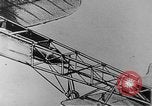
Events in the career of aviator Henry Harley("Hap") Arnold. Scenes from earliest history of heavier-than-air planes.
Sketch of 1909 aircraft that Louis Bleriot flew across the English Channel. Progressive views of airplanes from earliest to formations of B-52 bombers in flight. Picture of Air Force Five Star General Henry (Hap) Arnold. Views of Wright Flyer being pulled into a field and readied and launched with Orville Wright at the controls. Two DeHavilland DH4 airplanes in formation as wing walker climbs from wing of one to wing of the other. (Wing walker wears emblem of black cat and number 13, on his shirt.) Drawing of Wright flyer airplane with various parts labeled by Lieutenant Arnold. Letter, dated 13, May, 1911, from 2nd Lieutenant Henry Arnold, of the 24th Infantry, to Chief Signal Officer of the U.S. Army, reporting on his progress at the Wright flying school in Dayton, Ohio. First pilot's badge (wings) earned by Lieutenant Arnold. President Wilson at inauguration of airmail service, from Washington, DC.
Aviation history; historic early flight scenes; first hand accounts from persons who knew and worked with the Wright brothers.
Views of traffic on a city street around the turn of the 20th century. A mix of horse and buggies and motorcars and bicycles. People waiting for a trolley car. Reenactment of persons using an early telephone and of early filmmakers at work with camera on motion picture film. The Wright brothers home at 7 Hawthorne Street, West Dayton, Ohio. The Wrights' former housekeeper, Carrie Grumbach, recalls December 17, 1903, a telegram arriving about the Wright brothers successful first powered flight. Glimpse of Wright brothers machine shop. Charlie Taylor, who had worked in their shop, speaks of being pleased at their accomplishment. View of the Wrights flying gliders at Kitty Hawk, North Carolina. Charlie Taylor describing how he machined and built the motor for the Wright brothers airplane. Glimpse of that motor or a facsimile. Men positioning the Wright brothers airplane for launching, and French citizens gathered to watch a demonstration of their airplane in France. French aviation pioneer, Henri Farman with two other men in his Voisin-Farman I airplane. They begin takeoff. Closeup of Brazilian aviation pioneer, Alberto Santos-Dumont. Other early aircraft in flight. A Wright Flyer passing over the Fort Myer drill ground in Virginia. An Army balloon in the background. Retired United States Air Force Brigadier General, Frank P. Lahm, walks across the tarmac on an airport and speaks for interviewer (unseen). He speaks about the difficulty the Wright brothers had in convincing the U.S. Army of the value of their airplane. He tells that in December, 1907, Wilbur Wright was finally granted an interview with the Board of Ordnance and Fortifications, which led to a contract, in 1908, with the Signal Corps. Moving imagesof Orville Wright and assistants bringing a Wright Flyer to Fort Myer, Virginia, to conduct flight trials for the Army. Views of the airplane being flown all around the area, watched by spectators. (This footage is a mix of 1909 footage where the aircraft shows two half-rounds of canvas in the front elevator, and 1908 footage, taking off and flying, where the aircraft has a single half-round of canvas in the front elevator.) After landing on the 9th of September, 1908, then, Lieutenant Lahm, accepts Orville Wright's offer to fly with him. Lahm climbs aboard the airplane, sits next to Orville Wright, and they are seen taking off and flying about for six minutes and forty seconds. (Lahm is the first. military officer to ever fly in an airplane.) The next scene shows the wreck of a Wright Flyer, in which Army Lieutenant Thomas Selfridge was killed and Orville Wright injured, on September 17, 1908.
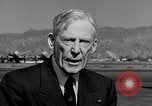
Lieutenant Law and Igor Sikorsky talk about their experiences and experimental aircraft in flight in the United States.
Part of a series of films about the history of aviation in the United States.Retired United States Air Force Brigadier General Frank P. Lahm is seen speaking about his aviation pioneering days, when Orville Wright taught him and Frederick E. Humphreys of Army Engineers (both Lieutenants at the time) how to fly the Wright Flyer airplane. Views of a Wright Flyer maneuvering in the air above Fort Myer, Virginia. Somewhat later, two are seen in flight at Fort Myer. An early Curtiss airplane.is maneuvered on the ground to face away from the camera. Russian, Igor Sikorsky in an early rear propeller airplane. Igor Sikorsky at a desk in a modern engineering office. Sketch of a helicopter on drawing board behind him. He talks about the early days of experimental flight in 1909 and 1910. View of Louis Bleriot sitting in the open cockpit of his airplane, and then of him flying overhead in his famous flight across the English Channel. Obeservers watching his progress through binoculars and a telescope. Sikorsky standing next to his first helicopter (which didn't fly).
Contributions of African Americans in various fields in the United States.
(See also clip 65675078146 from different film transfer). Famous African American men and women citizens in the United States. Clip opens with of Booker T. Washington at Tuskegee University. Scene in a laboratory with African American scientist and inventor George Washington Carver, as an elderly man, working with another scientist in the laboratory. African American judge of New York city court. African American explorer Matthew Henson is seen looking at a globe (he was with Admiral Peary planting the American flag at the North Pole in 1909), and an unnamed African American surgeon at work in an operating room in New York. Next scene shows famous "father of the blues" musician and composer W.C. Handy (William Christoper Handy) smiling. Next is seen the financier and publisher of the Amsterdam News, Dr. C.B. Powell (Clilan Powell) greeting three uniformed African American women during a World War 2 war bond drive, and handing them a check (close up is shown) for 25,000 dollars, dated January 4, 1942, for the war bond drive. It is from the account of the Victory Mutual Life Insurance Company which Dr. Powell also owned. The check is signed by C.B Powell and Philip M.H. Savory (Dr. Savory was co-owner of the New York Amsterdam News). The next scene shows Elise Johnson McDougald, better known as Gertrude Elise Ayer, who was the first black full-time public school principal after the consolidation of New York City schools in 1898. She was also a noted woman writer during the Harlem Renaissance. She is seated in her office at her desk, likely in P.S. 119 in Harlem, since this is approximately year 1945 and she was at P.S 119 at that time. Her name plaque is visible on the front center of the desk. Principal Ayer smiles as a woman delivers a document to her. Next is seen the African American historian, author, and professor, Lawrence D. Reddick, serving in his role as the curator of the Schomburg Collection of African American Literature. In an art studio is seen the famous African American sculptor and painter Charles Alston, at work on a sculpture. Next scene shows the famous African American contralto singer, Marian Anderson, receiving a bouquet of flowers and smiling after a performance. This transitions to a view of African American orchestra conductor Dean Dixon leading an orchestra in a performance of Beethoven's 9th Symphony. Several views of different sections of the orchestra performing under Dixon's direction. Clip closes with brief shots of campuses of several historically black colleges and universities in the United States like Howard University, Hampton, Tuskegee, Fisk, Prairie View. An American college football game underway at the stadium of one of the colleges.
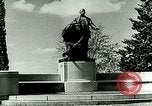
Achievements of African Americans in art, literature, music science, and medicine in the United States, in the late 1930s and 1940s.
A film about achievements of various African American men and women citizens in the United States. A statue of Booker T. Washington, founder of Tuskegee University in Alabama. View of African American scientist and inventor George Washington Carver, as an elderly man, working with another scientist in a laboratory. African American judge of New York city court. African American explorer Matthew Henson is seen looking at a globe (he was with Admiral Peary planting the American flag at the North Pole in 1909), and an unnamed African American surgeon at work in an operating room in New York. Next scene shows famous "father of the blues" musician and composer W.C. Handy (William Christoper Handy) smiling. Next is seen the financier and publisher of the Amsterdam News, Dr. C.B. Powell (Clilan Powell) greeting three uniformed African American women during a World War 2 war bond drive, and handing them a check (close up is shown) for 25,000 dollars, dated January 4, 1942, for the war bond drive. It is from the account of the Victory Mutual Life Insurance Company which Dr. Powell also owned. The check is signed by C.B Powell and Philip M.H. Savory (Dr. Savory was co-owner of the New York Amsterdam News). The next scene shows Elise Johnson McDougald, better known as Gertrude Elise Ayer, who was the first black full-time public school principal after the consolidation of New York City schools in 1898. She was also a noted woman writer during the Harlem Renaissance. She is seated in her office at her desk, likely in P.S. 119 in Harlem, since this is approximately year 1945 and she was at P.S 119 at that time. Her name plaque is visible on the front center of the desk. Principal Ayer smiles as a woman delivers a document to her. Next is seen the African American historian, author, and professor, Lawrence D. Reddick, serving in his role as the curator of the Schomburg Collection of African American Literature. In an art studio is seen the famous "Harlem Renaissance" African American sculptor and painter Charles Alston, at work on a sculpture. Next scene shows the famous African American contralto singer, Marian Anderson, receiving a bouquet of flowers and smiling after a performance. This transitions to a view of African American orchestra conductor Dean Dixon leading an orchestra in a performance of Beethoven's 9th Symphony. Several views of different sections of the orchestra performing under Dixon's direction. Clip closes with brief shots of campuses of several historically black colleges and universities in the United States like Howard University, Hampton, Tuskegee, Fisk, Prairie View. A football game underway in one of the colleges, and view on the field as quarterback throws a pass.