


 Francais
 Deutsch
 Italiano
Refine Your Search
+"United States USA" +1932 stock footage and images
- Showing 13 to 18 of 122 results more
more Hide
Hide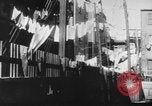
People suffering from the Great Depression, and the campaign of New York Governor Franklin Roosevelt for U.S. President
The Great Depression in the United States. (Most scenes circa 1932, but produced in 1967). A woman hangs out clothes beside a water pump. View of slum and tenement homes beside railroad tracks. A sad-looking child. Unemployed and homeless men in a queue wait to get food in a soup kitchen line. Men sorting through trash among shacks and tenements. Americans converse and read newspapers. A campaign parade and men holding a large sign, "Abolish Bread Lines Vote For Roosevelt." The Governor of New York, Franklin D. Roosevelt speaks to a large crowd. He encourages people during the Great Depression. While seated in his open car, Roosevelt pets a horse that is beside the car. Roosevelt at the Democratic National Convention in Chicago accepting the nomination of his party for President.
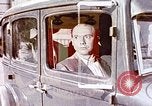
Reenactment of FBI agents battling against criminals in Washington DC. Also footage from Lindbergh kidnapping events and trial
An introduction of the Federal Bureau of Investigation in Washington DC. A reenactment of FBI agents during prohibition fighting against gangster criminals on the streets. Reenactment of the famous Kansas City Massacre. Next, newsreel scenes shows the Lindbergh baby with his mother. Lindbergh murder trial in session in 1932. Bruno Richard Hauptmann in a court and view of FBI commission under Hoover in session. Reenactment shows FBI agents firing at John Dillinger on a street and behind cars. Also reenactments of FBI agents firing at Baby Face Nelson, capture of Machine Gun Kelly, and a shootout with Pretty Boy Floyd.
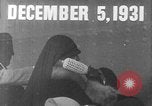
Flashbacks show USS Wakefield being christened as SS Manhattan, and famous passengers aboard in the early 1930s
Famous passengers aboard ocean liner SS Manhattan (later USS Wakefield during World War II) in the United States. Flashbacks show the USS Manhattan being christened by Mrs. Theodore Roosevelt on 5th December 1931. It is seen being launched from New York Shipbuilding Corporation in Camden New Jersey. View of maiden voyage on 10th August 1932, with passengers boarding the ship. It leaves a port for her first trip to Ireland, England, Germany and France. Couples dance aboard the deck of the SS Manhattan. Passengers including Babe Ruth, Jimmy Walker, Glenn Cunningham, and aviator Douglas Corrigan ("Wrong Way Corrigan") seen aboard the ship.
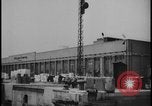
Film showing Ford Motor Company factories and Ford cars operating in various countries of the world
Film begins showing a waterfront Ford Motor Company factory viewed from a boat (unseen) moving past it A large freighter ship is seen nearby, with the name "Runstroom" on her bow. Closeup of waterfront crane and nearby flag labeled "Ford." Scene shifts to factory with sign on top in Dutch reading: "Nederlandsche Ford Automobiel fabriek" (Netherlands Ford automobile factory). Location shifts to cars driving on the Champs-Élysées in Paris, near the Arc de Triomphe de l'Étoile. One appears to be a 1932 Ford Roadster. heading toward the camera. Scene shifts to a large barge on a river, viewed from an overlooking domed structure. The next scene shows a European farmyard and horses with sheep circling around a Ford roadster. The remainder of the film shows Ford plants in the U.S. and abroad.
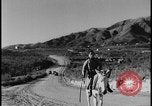
Ford cars being tested on rugged unpaved mountain road
Momentary opening scene shows a modern building on a rugged dirt road in low mountainous terrain. Two new Ford cars are passing in front of the building and , in the background, three more are traveling rapidly downhill on the dirt road towards the building. Several persons are standing in front of the building, watching the cars speed past. (Note: Because it is only about one frame, this scene is visible only in the first still photo accompanying this video.) Next, a man is seen riding a burro along the roadside, as the three cars coming downhill approach him. The scene shifts to a 1932 Ford Roadster climbing the dirt road now running uphill along the side of a mountain. It is followed closely by a sedan.

A dramatization about a young physician's training in obstetrics at a hospital in Chicago, Illinois
Film 'The Fight for Life' dramatizes experience of a physician in obstetric practice at a Chicago hospital. View of engraved stone reading: City Hospital, 1932, over archway, at entrance to a Chicago hospital. Medical staff walk in hallway. A nurse enters maternity center where doctors stand beside a woman in labor on a table.The principal doctor monitors the fetus heartbeat. The mother becomes stressed and the anesthesiolgist helps her. Physician places newborn infant on cart and nurse rolls it away. View of baby. Nurse and doctors attending the mother express alarm over her blood pressure.They administer oxygen and several doses of medicine by hypodermic. But the patient dies. One of the attending physicians (Dr. O'Donnell) is clearly moved by the event, and seems deep in thought as he leaves the hospital, not even noticing the receptionist who bids him good evening as he passes her.