


 Francais
 Deutsch
 Italiano
Refine Your Search
+"United States USA" +1942 stock footage and images
- Showing 163 to 168 of 520 results more
more Hide
Hide
The procedure of decontamination after a gas attack - a U.S. Army training film (WW2)
A U.S. Army Training film about Decontamination Procedures during World War II. The film is tilted 'Decontamination Procedures', 'equipment'. An aircraft attack with poison gas on trucks. The trucks go from the gas contaminated area to a safer place. The driver and the assistant driver of the truck, wearing gas masks, open the door and clean the steps and the door of the truck. Members of decontamination team arrive wearing protective clothes. They wash the truck with a solution of kerosene or gasoline. They remove the canvas cover from the truck and spread it on the ground. They put a warning sign board there. They spray the decontamination liquid all over the truck. Cans are refilled with non corrosive powder and chloride mixture, it is mixed well till it is transparent. It is then poured into cans and sprayed on the truck. Then truck is tested with a detector crayon. A 400 gallon apparatus is used to clean the truck. Then truck is washed with a mix of lime and water. It is mixed well and lumps are dissolved. It is then filled in cans. Then pressure pump is used to build pressure in the cans.
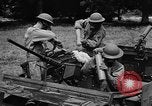
The procedure of decontamination after a gas attack on open vehicles and tanks in the United States (WW2)
A U.S. Army training film about decontamination procedures during World War II. Soldiers decontaminate an open vehicle like a half truck. They hand spray on the vehicle and rub it with a swab. They clean it on up wind side then turn it around and clean. Tanks are brought to a safer area and are turned facing the wind. A soldier opens a hatch and rubs the entrance with decontamination saturated rag. He then uses one o one half quarter sprayer. Then the soldiers clean the surface of the tank. They clean all the other parts of the tank especially openings air ways. A three gallon apparatus filled with non coronation and chlorinated lime is applied on the tank.
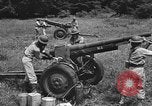
The procedure of decontaminating vehicles and persons in the United States (WW2)
A U.S. Army training film about decontamination procedures during World War II. A thick coat of contaminated solution is swabbed off with kerosene or gasoline. Then a solution of a non corrosive substance is applied. After it evaporates, the vehicle is washed with soap and water and is left to dry. The vehicle is then covered with a layer of oil. Machine guns and artillery are cleaned in the same way. Clothes and rags used for cleaning are then burned or buried. The land is covered with chlorinate lime. Men shuffle their shoes in the lime mixture. They then remove their shoes and clothes with the help of each other. The clothes are spread in air. They remove their socks and underwear and wash themselves in a stream. Then they wear fresh uniforms.

Men and members of different national societies discuss about Cancer in an awareness film about cancer in United States.
An awareness film about cancer by American Cancer Society, United States. Film titles 'Enemy X'. Man drops curtains. Takes a tray. Man plays piano. Another man reads magazine and asks the other man to stop playing piano. He answers. He tells about some mystery. They talk. Man lights a cigarette and tells him about his meeting with inspector Thorndike. Inspector Thorndike in his office talks with doctor about death of a Senator. Inspector says that he thinks the senator was murdered. He discusses deaths of 15 men and women. Inspector receives a call informing them about one more death. They leave the office. They reach there and see the dead body. Doctor says it Enemy X. He tells the statistics of Enemy X. men and women arrive. Man introduces a doctor. They discuss about cancer. Doctor tells men should consult doctors at least once a year. Doctor tells about cancer and its diagnosis. He tells about the fearful attitude of people about cancer detection. Doctor insists on public discussions. Members of the society including Director Clarence C. Little with other three men at table discuss about fighting against cancer. Managing Director of U.S. against Cancer Society discuss about problems in fight against cancer. Doctor Prinklay tells the awareness and development in cancer diagnosis. He tells about clinics and research laboratories Man asks National Commander of Women's Field Army Mrs. Marjorie B. Illig about their organization. Illig tells members about work of their voluntary organization. Man briefs the talk. Men talks about symptoms of cancer. Doctor tells the symptoms. Men thank the doctor. They shake hands. Lights switched on. Cameras and lights at shooting area. (World War II period).

Cancer awareness film includes dramatization of woman with cancer and describes early cancer treatments of surgery and radium.
An awareness film about cancer by U.S. Public Health Service, United States, titled 'Choose to Live'. Dramatization shows a woman's experience with cancer. Building of United States Public Health Service in Washington D.C. Thomas Parran, Surgeon General, U.S. Public Health Service speaks about cancer and victims of cancer. View of women work at telecommunications, man at farm and men in urban area -- anyone can be vulnerable to cancer. He tells the probability of death from cancer. He talks about a woman Mary Brown. Her family sits at a dining table and has a breakfast meal together. She waves goodbye. Brown finishes her household work and looks at a meeting note. Meeting for cancer awareness at a club. A doctor talks about diseases. He compares its hazards with deaths in the World War. He discusses scientific investigation and research against cancer. Scientists work in laboratories. Lab worker run experiments injecting mice with chemicals. Beakers, test tubes, distillation equipment, mouth suction tube seen. Scientist looks through microscope. Atom smashing machine in a laboratory. He talks about National Institute of Health, National Cancer Institute and the Capitol. Bill designating one month each year as Cancer Control Month signed by U.S. President Franklin D. Roosevelt. A doctor prepares for surgery. A team performs a surgery. An X-Ray machine. Control panel of the X-Ray machine. The third method of treatment is by the use of radium. Shows sand equal to all the radium available in the U.S. Man takes out radium from lock, he puts it on an applicator and takes it to a treatment room. Nurse measures the treatment area of patients body to apply radium treatment. Radon mercury forces gas. Man cuts pieces and collect it. Men sit at a cancer clinic. Man talks with a doctor. Doctors examine and treat cancer patients. Doctor observes X Rays. Doctor shows and explains the symptoms of cancer. Scientist study in a laboratory. Men women at a public meeting. Cancer awareness banners.

An officer shows picture and talks about the proper battle formations which can help in winning a battle (WW2)
A World War II film 'Battle Formations Rifle Squad' depicts the advantages of the formations during a war. The U.S. Army Sergeants stand around a desk and a model on the desk. Other Sergeants seated at a table in the background. A U.S. Rifle Squad officer enters and ask them to arrange the stools. Sergeants seated around a table and he talks about the last session that was taken regarding Squad Column and usage of formations. The officer asks question about the different formations. Two Sergeants get up and answer. The officer repeats the answers given by the Sergeants. The officer holds a picture showing the Battle Formation of Greece that helped them in winning the battle. Another picture shows British General fighting against the savage American Indians and talks about the formation. He also talks about the mass formation and making of a proper formation during the battle. Sergeants seated around a model listen to him.