


 Francais
 Deutsch
 Italiano

Refine Your Search
+"United States USA" +1942 stock footage and images
- Showing 199 to 204 of 520 results more
 Hide

Soldiers study aerial photographs to find out differences in terrain and to spot enemy positions (WW2)
A training film in the United States about the means and importance of camouflage in World War II. A soldier seated on a branch of a tree observes an area. View of an area as seen through binoculars. Soldiers move across a field. Aerial view of an area. A Jeep on a field. A landing strip on the ground. An observer studies the details of an aerial photo. He closely examines the terrain with a magnifying glass.
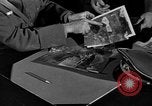
A film in the United States shows guidelines to prevent enemy detection of troops and equipment in an area.
A World War 2 training film in the United States about the means and importance of camouflage in a war. An observer studies an aerial photograph. Markings on a photograph. A drawing depicts the means of detecting an enemy installation as trucks leave marks on the road leading to the installation. It depicts how the traffic must be rooted past the installation. Soldiers at a map as they discuss and take down notes. A soldier puts up a sign on a tree that reads 'Keep on taped path', 'no smoking after sundown'. A soldier covers a truck with dry branches of a tree.
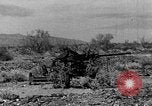
A film in the U.S. shows artificial camouflage being used to conceal equipment so as to prevent detection by the enemy.
A training film in the United States about the means and importance of camouflage in World War II. An artillery piece being covered with leaves and branches. Aerial view of an area. A camouflaged net is used to conceal equipment. A jeep is concealed under crates near a shed. A reconnaissance aircraft in flight. Low, close-up view of hand of a U.S. Army soldier loading a shell into an artillery gun, and then view of a different soldier pulling firing cord to fire the artillery from a camouflaged position.
Tanks are assembled as treads, motors, guns and turrets are joined in place in a factory in the United States.
A film titled 'Tanks' on the manufacture and uses of M-3 medium tanks in the United States. Exterior of a tank arsenal. An M-3 medium fighting tank moves along a street. Men work in a factory. They work on the production of tanks. Tanks are assembled. Mass production of tools and equipment in the factory. Men at work on different parts of tanks. A semi finished tank body being hoisted. The armor turret of the tank. The parts of the tanks are assembled. The tanks move along a track. Fire power being installed. Motors and guns being placed in the tanks. (World War II period).
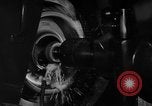
Men work on several equipment and machines in a factory in the United States.
A film on the manufacture and uses of M-3 medium tanks in the United States. Equipment and machines in a factory. Men work on the equipment in the factory. Several parts which are used in defense production in crates. A tank being hoisted. Tanks move along.

Assembly of liberty ships at Kaiser Shipyards, assembly of airplanes at aircraft factories in America during World War II
Opening scene shows U.S. Industrialist Henry J. Kaiser, demonstrating, on a scale model, how prefabricated parts are assembled into a Liberty Ship, in World war 2. Closeup shows each section of ship labeled by number and name, such as, “Transverse Bulkhead, number 44.” Scene shifts to Permanente Metals Corporation No. 2 shipyard in Richmond, California, where Liberty ships are seen in various stages of construction. Views of keels being laid, superstructures being raised into position, View from interior as skeleton of a ship is being completed. Sign atop the Liberty Ship, Robert E. Peary, as it is being launched, announces that it was completed from keel laying, to launch, in 4 days, 15 hours and 29 minutes. (This was a record for shortest time.) Camera view of the Robert E. Peary, from across the yard area where she was built. A brief view of shipyard activity at night, followed by camera panning over shipyard in daytime. Change of scene to an aircraft factory where B-17 bomber aircraft are being built. Women are seen riveting inside a plane’s fuselage. Other women work on a vertical stabilizer and still others work inside airplane structural members Men assemble an aircraft engine. Women fasten parts of engines together. Engines move through the plant on overhead cranes. An engine and propeller being placed into position on a wing with use of a crane. A right wing with two engines installed is moved into position for installation on a B-17 aircraft. Scene shifts to other aircraft factories building Martin Marauder B-26 aircraft; P-47 fighter aircraft;Navy Catalina aircraft; Douglas A-20 fighter bomber aircraft; and more B-17 bomber aircraft.