


 Francais
 Deutsch
 Italiano
Refine Your Search
+"United States USA" +1944 stock footage and images
- Showing 61 to 66 of 489 results more
more Hide
Hide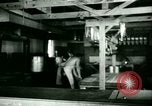
German and Italian prisoners cook meal and eat at a counter canteen in a POW camp, United States during World War II.
German and Italian prisoners of war (POW) cook a meal at a POW camp in the United States during World War 2. Prisoners of war prepare their meals in kitchen. American soldiers eat rice, chicken and noodles at a table. Prisoners eat their meal at a counter canteen.
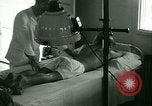
German and Italian Prisoners of War during World War II in U.S. operated POW camp.
German and Italian Prisoners of War receive treatment and massage at a POW camp in the United States during World War 2. Prisoner receives massage and Infra- red ray treatment in camp hospital or medical ward. Prisoner dictates letter to another prisoner. Doctor uses a stethoscope. Prisoner lies on a bed under mosquito net.
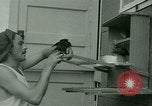
Prisoner of War trains birds at a POW camp in the United States during World War 2.
German and Italian Prisoners of War at a POW camp in the United States during World War II. Prisoner trains the birds. Other prisoners stand and look at him.
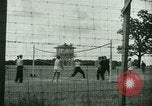
German and Italian prisoners play volleyball and soccer at a camp in the United States during World War II.
German and Italian Prisoners of War during World War 2 in the United States at a U.S. operated POW camp. The prisoners play games in the camp. Prisoners play volley ball. Other prisoners play soccer. Prisoners seated on bench watch them play.
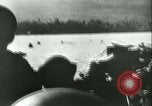
Signal Corps weekly film reports sent to Photographic Center and used in training films for U.S. troops during World War II.
The role and contribution of the U.S. Army Signal Corps in combat and war. Amphibious landings of the first wave of Allied troops including Signal Corps Units in Normandy, France on D Day during World War 2. The Joint Assault Signal Companies (a Signal Corps Unit that accompanies the soldiers on every beach landing) go ashore in Normandy. Soldiers in landing crafts approach the beach. Landing crafts anchored along the shore line. A U.S. flag on the beach. Crafts approach the beach. U.S. Army Signal Corps combat photographers using motion picture cameras to film the battle that ensues on the beach and in the fields. Gun fire and explosions in the battlefield, filmed by combat cameraman. Allied aircraft in flight. Airmen load weekly film reports of the war in all Theaters made by Signal Corps officers from a van into an aircraft. The films are sent to the Photographic Center in New York. A soldier assembles the films. Technicians organize and arrange the films. They place the film reels onto racks. The film content is used to make training and orientation films for the U.S. troops. Troops watch the films in order to cut down the training period, and stay informed about the order of event in other Theaters of Operation. The films include 'Why We Fight' and 'The Fighting Men' series. Clips and recordings from these films.
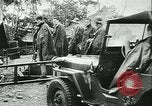
U.S. soldiers watch a film at a foxhole theater and films made for workers by the Signal Corps during World War II.
The role and contribution of the U.S. Army Signal Corps in combat and war. Army Pictorial Service films including screen magazines and GI movies are delivered to war fronts in all Theaters during World War 2. An officer arrives in a jeep with the films. Officers and soldiers around tents at the base. Soldiers in camouflage rain coats and hats seated at a foxhole theater. The soldiers watch the latest Joan McCraken Broadway hit Bloomer Girl. Scenes from the film. US: Pictures shown to workers depict the use of products manufactured by them at the war fronts. A poster reads 'B-52 Super Bombers, Bell Aircraft'. Men working inside the Bell Aircraft Corporation plant in NY. Huge machinery, equipment and aircraft parts being manufactured. Workers near stands piled with equipment and parts. A foreign version of the films made for Chinese allies. A U.S. officer talks to soldiers. The film dubbed in Chineese.