


 Francais
 Deutsch
 Italiano
Refine Your Search
+"United States USA" +1944 stock footage and images
- Showing 409 to 414 of 489 results more
more Hide
Hide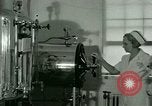
Prisoner of War Camp in Southern United states during World War 2: Prisoners receiving medical care including surgery, and dental care.
Doctor operate prisoner's ankle at Prisoner of War Camp for German prisoners in Southern United States during World War II. Nurse places instrument in sterilizer. Doctors performing a surgery operation. Other nurses assist the doctor. Technician takes X-ray of the prisoner's ankle. Several different POW patients are seen being treated by dentists in the camp dental clinic.
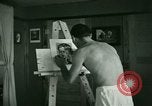
Prisoner of War Camp prisoners display handiwork like sketches, painting and lantern in Southern United States.
A prisoner of war Camp for German POWs in the Southern United States during World War 2. Prisoner draws a sketch. Prisoners display handiwork done like various drawings, sketches and paintings. A lantern displayed. Prisoner makes a sketch.
German prisoners of war in United States shovel snow and work in a shoe shop during a camp.
German prisoners work in snow and at a shoe shop in a prison camp in the United States during World War 2. Nazi German Prisoners of War at a camp in Northern United States. Wooden houses covered with snow. Prisoners dressed in black walk aligned. Prisoners remove snow with shovel. Nazi prisoners work in a shoe shop. Nazi prisoners eat in mess. Captains in recreation room play table tennis, chess and war prisoners play band.
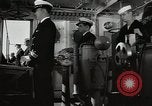
Merchant seamen ready to serve United States navy and voyage of Victory ship.
Bridge of a Merchant Marine cargo ship, captain's work domain. Captain views through binoculars. Captain talks about seamen working and traveling the world. A Shipyard of Consolidated Shipbuilding Large sign encouraging rapid work: "There's no speed limit on work. Every second counts." It has a clock face on the sign with a rapidly moving single hand. Victory Ship is constructed and assembled in a shipyard. Seamen from various parts of the country introduce themselves, officer checks their names. Merchant Marine Seamen board the ship. Airplanes for World War 2 parked on the ship deck. Seamen work on ship and sing song "Blow the men down". Ship underway at sea. Closeup view of the United States flag fluttering in the breeze.
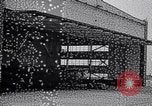
Ford Motor Company celebrating production of the 5000th, 7000th and 8000th B-24 bombers in World War II
A tug pulls the "Lucky 7," the 7,000th Ford Liberator bomber (B-24) from a hangar at the Ford Willow Run plant. Views of the "Lucky 7," on the tarmac with other B-24s. scene shifts to an earlier period, showing a B-24 with labeling on its fuselage, reading: "5000th Ford Built Liberator." Henry Ford, in a straw hat, handles some papers with a British officer, as his grandson, Henry Ford, II, and an American military officer, stand nearby. Plant manager,Mead L. Bricker, is seen momentarily, at left of the group. Henry Ford shakes hands with the British officer. Closeup views of aircraft's engine and propeller with Hamilton Standard logos displayed on propeller blades. View of the aircraft's leading edge deicers (boots) and the "Lucky 7" sign painted on its fuselage. Closeup shows signatures of Henry Ford and Henry Ford II, next to the large painted 5000th sign. Change of scene to a later time, showing the 8000th Ford built B-24 Liberator bomber. It is labeled: "Ford's 8000th Liberator,"and displays "8" intertwined with the letter "V." U.S. Army Air Forces officers and Henry Ford,II, along with Ford executives, including plant manager, Mead L. Bricker, pose in front of the B-24. Henry Ford,II (using his left hand) scribes a line with a pen, under the bottom of the "V," and poses for the camera.
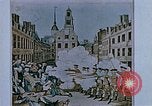
Pictures depicting war, harbor and a courtroom discussion in Virginia, United States.
Events in the life of Thomas Jefferson in Virginia, United States. A picture depicts the Boston massacre. Another shows the Boston Tea Party. Another picture shows people in front of a building. Tower of a building with trees in front. A picture depicts the Continental Congress meeting attended by Thomas Jefferson. Trees in background.