


 Francais
 Deutsch
 Italiano
Refine Your Search
+"United States USA" +1944 stock footage and images
- Showing 43 to 48 of 489 results more
more Hide
Hide
Plywood used to make crafts, boats and airplanes for the Invasion of Normandy during World War 2
Plywood used to make war material for the Invasion of Normandy. Birch, maple and mahogany logs are boiled for 24 hours. The logs are rounded on rollers and then peeled into long sheets of veneer. Women war production workers take out thin sheets of wood made from the logs. The sheets are then put into drying ovens to reduce the moisture. Women make an alternating wood and glue pile. These are stacked and put into a machine press to make the finished plywood. Workers put together and weld the prepared plywood. The plywood is used to make landing crafts, boats, pontoons, army holding boards, gliders and fighter planes. Men construct boats and crafts. A glider takes off. Worker under the plane. British de Havilland Mosquito bombers parked in a row. The plywood was a major component of the Mosquitoes .
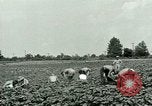
The Prisoner of War Camp prisoners work on a farm in Southern United States during World War 2.
A German prisoner of war camp in the United States during World War 2. Prisoners work in Southern United States. The prisoners work on a farm. A guard with a gun keeps a check on them. Prisoners pick beans and put them into the basket.
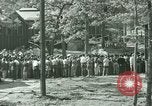
Religious services conducted outdoor for war camp prisoners in Southern United States in World War 2.
A prisoner of war camp in Southern United States (primarily for German prisoners). The prisoners stand in a group. Religious services conducted outdoor for the prisoners. Priest reads the prayer. Prisoners listen to him.
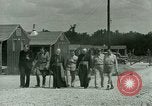
German Red Cross officer, priests and other officials enter the hospital of Prisoner of War Camp in Southern United States.
A prisoner of war camp hospital in Southern United States during World War 2. The religious clerics and prisoner officials walk around camp. German Red Cross officer talks to priests and other officials. They enter the hospital. Patients on bed. Doctor looks at the knee of the prisoner and nurses help him.
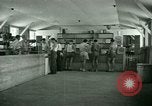
Prisoners purchase toiletries, soft drinks and cigarettes from a shop in.
A POW war camp in Southern United States during World War 2. German prisoners of war purchase toiletries, cigarettes and soft drinks. Toiletries displayed on shelves of store. Close-up view of hand of a man taking out a glass soft drink bottle from a refrigerator case.
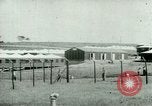
German Prisoners of War dig a ditch at a camp in United States.
German Prisoners of War being held in the United States in World War 2. Prisoners dig a ditch in the camp. The prisoners work in farm. Houses of prisoners in the camp. Prisoners carry mud in trolley. They use different equipment to dig. German prisoners unload the truck. Prisoners carry equipment and boxes. An officer keeps a check on them.