


 Francais
 Deutsch
 Italiano
Refine Your Search
+"United States USA" +1946 stock footage and images
- Showing 25 to 30 of 184 results more
more Hide
Hide
Private Snafu cartoon character promotes the U.S. Army infantry over other service branches
Private Snafu, an animated cartoon character tries out different branches of military but returns to infantry, thus proving its importance. He becomes an airman, a sailor but finally turns back to the infantry.
Models of houses on display as architects discuss the future trends in housing in United States.
' Tomorrow housing' about the housing trends in United States in years to come. An intersection of highways in the United States with flyovers and vehicles moving over them. Models of modern and futuristic buildings and roads of the future, seen just after the end of World War 2 during expansion of home ownership in America. Newspaper articles and headlines about the growing need to develop new houses. A woman steps away from a bank teller window after making a deposit. A sign in the bank reads 'Save for your future home'. A United States Navy sailor discusses about future houses with women. Architects look at a model of future houses and discuss. A sailor and his family look at models of various suburban house designs.
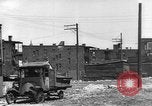
Slum dwellers move into newly and well constructed apartments in United States.
Urban renewal after World War II. Improvement in housing facilities in postwar era in the United States. Dilapidated slum and tenement housing dwellings in poverty stricken areas of the United States. Poor housing conditions in slums as children play outside houses. A woman throws dishwater out into back yard. Clothes being hung on clothes lines. A boy entering an outhouse at a home where there is no indoor plumbing. A man pumps water outside his house. A woman with her child in the balcony of an older city house. Slums being razed. Workers using crowbars to break down brick walls. Worker lifts hopper allowing demolition debris from gutted building to slide into his dump truck. Slum dwellers move out of older homes with help of horse-drawn moving wagons, and they move into newly constructed multi-story apartment buildings. Trucks loaded with household belongings outside the apartments. People move into their new and better houses. Belongings being unloaded from the trucks as a group of young boys gather outside and watch.
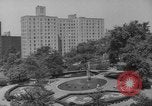
A new planned housing community with various amenities like drug store, theater, laundromat in United States.
Improvement in housing facilities in post war era in United States. A planned housing community in the United States with various facilities like children's parks, baseball fields, a Liggett's drug store, a movie theater and a laundromat laundry facility. The theater marquee advertises Allan Ladd and Loretta Young, "And Now Tomorrow", and "Our hearts were young and gay" with Gail Russell and Diana Lynn. Woman loading clothes into an early model laundromat washing machine. Children play about in the area around the houses and run down from a pedestrian bridge that crosses a road. Ice cream man pushes an ice cream cart with an Eskimo Pie advertisement on the cart. The man rings a bell as children run to the ice cream cart. A woman inside a well ventilated and well lit up house. Men and a woman conduct research about improving housing facilities in United States.
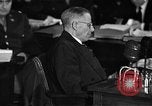
Retired Major General Walter Campbell Short testifying before Joint Congressional Committee investigating Pearl Harbor Attack
Retired U.S. Army Major General Walter Campbell Short testifies before a Joint Congressional Committee investigating the December 7, 1941 Japanese attack on Pearl Harbor. He talks about attack and defends himself. He says that he did not receive any information of the attack from the war department untill December 6, 1941 and all emphasis was on defending against sabotage. He makes a statement that he does not believe that he has made any mistake regarding this attack. Other officials seated around him listen to him.
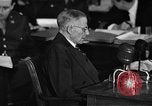
U.S. Army Major General Short defends himself in testimony about the Pearl Harbor attack,before a Joint Congressional Committee
Retired United States Army Major General Walter Campbell Short testifies before a Joint Congressional Committee investigating facts leading up to the Japanese attack on Pearl Harbor,December 7, 1941, and defends himself. Among the matters he mentions are the closely guarded secrets surrounding U.S. intelligence information concerning Japanese military and diplomatic communications (so-called "Magic"). At the end of his remarks, he gives thanks to the Committee for bringing out facts. Other officials seated around him listen to him. Some of those present applaud General Short, at the conclusion of his testimony. The officials stand after his testimony. (World War II period).