


 Francais
 Deutsch
 Italiano
Refine Your Search
+"United States USA" +1968 stock footage and images
- Showing 19 to 24 of 200 results more
more Hide
Hide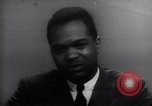
Events following the assassination of Martin Luther King in 1968
Speaking after the assassination of Martin Luther King, Walter Edward Fauntroy pastor of the New Bethel Baptist Church in Washington, D.C makes an appeal for mourners to honor him in silence and in the spirit of non-violence. He appeals to people to remain in their homes and to pray for a spreading of the spirit of this great man. He adds that those who respond violently in their grief, do Dr. King and his memory, dishonor. Next, a front loader is seen clearing smoking debris from riots, looting, and destruction that occurred in major cities of the U.S. during protests after the death of Martin Luther King, Jr. A fire truck on a city street sprays water on a burning building. Street sweepers clean a city street. View of cars parked in front of one of several churches set up as emergency centers in Atlanta. Inside the church, tables are seen filled with all manner of food, clothing, and other necessities to help persons in need. Views of people availing themselves of the needed item. Workers outside bringing supplies to the emergency centers. View inside an emergency center of people helping those in need. Closeup of two Catholic Nuns providing meals to those in need. Children seated at tables eating meals. U.S. President Lyndon Johnson broadcasts an appeal for citizens to reject violence and calls for unity and understanding. He states that he has just conveyed his and Mrs. Johnson's sympathy to Mrs. King. Glimpse of American flag at half staff on the White House. Still photo of Martin Luther King.
Political advertisement for Richard Nixon during the 1968 presidential campaign states Nixon is best to speak for America
Richard Nixon political commercial on television in the United States. Voice over states that Nixon is the best candiate to speak for America. Still image scenes include a crowd of Americans gathered. The crowd marches. Leaders of several foreign countries including Leonid Brezhnev of the Soviet Union and Fidel Castro of Cuba . Two telephones on a table. Many microphones on stands. The President's official seal. The White House in Washington DC.
Prior to presidential election of 1968, a Nixon political advertisement shows confrontations between police and protesters
In a political advertisement narrated by Richard Nixon, the presidential candidate assures viewers of the right of every American citizen to dissent and to be free from domestic violence. Still images showing violent confrontations between police and antiwar protesters. Various views of burning buildings, aftermath of racial rioting and antiwar demonstrations. Antiwar protesters bleeding on streets. Nixon closes saying"I pledge to you we shall have order in the United States."
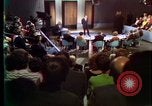
Richard Nixon answers question about Ambassador Paul of the UN during a Question and Answer panel prior to 1968 election.
Presidential candidate Richard Nixon's answers to a panel during a special television program in Michigan. A panelist questions about Ambassador Paul in the General Assembly session of United Nations. The whole house of audience breaks into laughter as Richard Nixon replies to him. Pat Nixon sits among the studio audience.
Senator Edward Brooke of Massachusetts talks about Richard Nixon in United States.
Richard Nixon and Spiro Agnew election campaign TV advertisement for the 1968 Presidential campaign in the United States. Senator Edward Brooke of Massachusetts talks to a man about Richard Nixon. They sit in an office. Brooke indicates that he favors Richard Nixon for the Presidential election. Edward Brooke states that Richard Nixon will restore law and order in United States coupled with justice and he will create jobs for the unemployed citizens.
Governor of California Ronald Reagan talks about Richard Nixon in United States.
During the 1968 Richard Nixon-Spiro Agnew election campaign for the Presidency in United States. Governor of California Ronald Reagan talks to an interviewer about Richard Nixon. They sit in an office. Reagan favors Richard Nixon for the Presidential election. Ronald Reagan states that people should not waste a vote by voting for a 3rd party or splinter party candidate, but that they should vote for the Republican Party candidate Richard Nixon in the U.S. Presidential elections. Reagain states that the Republican Party "is where the action is."