


 Francais
 Deutsch
 Italiano
Refine Your Search
+"United States USA" +1970 stock footage and images
- Showing 103 to 108 of 137 results more
more Hide
Hide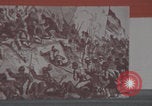
Black Americans struggling to fight for equal rights after the American Civil War during the 19th century
Artist impressions of African Americans fighting during the Civil War. Images of African American soldiers during civil war. Illustrations of men holding the Confederate flag during the Civil War. Headline of newspaper announcing, Surrender of General Lee!" and "The Year of Jubilee has come!" Artist impression of Black American congressmen being mocked inside the United States Congress during the 19th century. Artist impression of Ku Klux Klan members holding rifles near a ballot box and hanging ( lynching ) a black American man.
Burglar breaks into home and attacks man, policemen investigate, question injured man.
Exterior view suburban home at night with moon. A couple asleep in bed. A burglar outside the house. Burglar with gloved hands and flashlight filing a door opening to gain entry. Burglar flashlight illuminates silver set in living room. Burglar steals a silverware set. The woman in bed awakes, wakes up her husband to check the house, saying, "I think I hear something downstairs." Husband puts on shoes and leaves. Burglar hides behind curtain. Burglar attacks man from behind. Shoe stepping on glass and breaking it. Burglar running out of house. Footing stepping in soil as burglar leaves. Woman with shocked expression. Woman comforting and helping her husband lying on the floor. Policeman guarding living crime scene as detectives take pictures, write down notes and gather evidence at the scene of the crime. View of sketch of the crime scene and pencil writing out word, "Glass." Detective questions man recuperating in bed while woman places an ice bag on her husband’s neck. Camera zooms in on a white robe on chair.
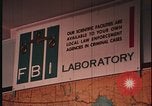
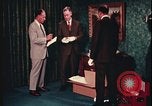
FBI laboratory technician opens forensic evidence package.
Pan from sign reading "FBI Laboratory" to a scientist in lab coat standing in front of a geographical map of the United States. In front of the forensic expert is a package. Forensic expert shows an FBI pamphlet titled “Suggestions for handling of physical evidence: identification, preservation, wrapping and packing, transmittal”. FBI forensic expert cuts paper packaging using a letter knife. Forensic expert opens flap to show that all packages containing physical evidence are double-wrapped and sealed. Forensic expert opens letter using a letter knife. View of a letter from the Seat Pleasant, Virginia Police Department. FBI forensic expert explains that "physical evidence is the most important clue in this investigation.
Police officers gather evidence from crime scene, FBI technician explains fingerprints.
Police detectives wearing white gloves gather evidence from a suburban living room crime scene. A police officer takes down notes. Close up of officer examines the bottom of a flashlight and inscribing his initials on back for record keeping. Detective packs flashlight in a plastic bag. FBI laboratory forensic technician standing before a table with a flashlight that has been dismantled for examination. Close up of battery that he has found fingerprints on. Close up of FBI laboratory technician as he explains, "fingerprints provide a positive means of personal identification and form an indisputable link in the chain of evidence." Close up of a fingerprint on photo held by technician.
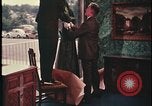
Policeman gather crime scene evidence, FBI laboratory technicians explain fiber and blood analysis.
Police officers remove a curtain as a piece of evidence at a crime scene. Detective writing initials on lining of curtain gathered as evidence. FBI forensic technician from the hairs and fiber division standing in front of a robe suspended in laboratory to prepare to gather fibers. He notes, "this bathrobe, worn by the victim, is first searched for obvious hairs or fibers adhering to it." FBI technician scrapes robe to dislodge fibers. demonstrates how hairs and fiber are extracted from a cloth using a bloodied bathrobe. Forensic investigator scrapes the garment to dislodge unwanted particles. Closeup finger pointing to blood stains on bathrobe. Police officer scrapes up dried blood from carpet in crime scene. Policeman places powdered dried blood in pill box with tight-fitting lid and marks with pen. View of pill boxes containing blood samples as evidence from crime scene. At FBI serology laboratory, a forensic investigator points to robe with blood stains and notes that, "while a blood grouping alone is not sufficient to identify a person, it does lend weight to an identification, and it may well be sufficient to eliminate a suspect."
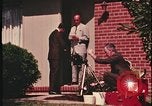
Detective make plaster cast of shoe print at crime scene, FBI lab examines door strike plate and plaster casts.
Police detectives outside home examining crime evidence. Detective with camera on tripod photographs a shoe print. Detectives examine a wooden door. Close up of metal striker plate from door as it is marked by detective as evidence. Close up view hands of forensic expert examining door strike plate. Technician at Tool Marks Unit of the Federal Bureau of Investigation (FBI) laboratory with comparison microscope behind him. Forensic expert notes that "tool mark identifications are similar to the identification of a bullet that has been marked by the barrel of a gun. In both cases, a comparison microscope is used." Forensic expert uses a comparison microscope. Police detectives create a plaster cast of a shoe’s footprint at crime scene. Plaster cast placed in box containing other evidence to be sent to the FBI laboratory. At the FBI Tire and Shoeprint Unit, a tire print cast is displayed. Technician removes shoe print cast from forensic package.