


 Francais
 Deutsch
 Italiano
Refine Your Search
-Cebu,-Philippines stock footage and images
- Showing 12601 to 12606 of 58885 results more
more Hide
Hide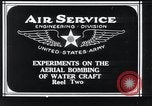
Aerial bombing experiments on the battleship Ostfriesland and Brig Gen Mitchell with Secretary of war John Weeks.
Experiments on the aerial bombing of water crafts off Virginia Capes in the United States. July 20 and 21, 1921: Latest type First Line battleship, the heavily armored Ostfriesland at sea. Specifications of the ship. Handley Page 0/400 bombers in flight. The Ostfriesland under bombing attack. Explosions on and around the ship. Three 1,100 bombs hit the ship directly. View of the deck and bow. A 2000lb bomb caves in the starboard quarter. The ship tilted to one side and sinking. A final bomb dropped on the ship. Brigadier General William Mitchell congratulates the pilots and bombers. Secretary of War John W Weeks and U.S. Army General John J Pershing inspect Langley Field with other officers. Brigadier General Mitchell explains the NBS-1 bomber to Secretary Weeks. The group of Air Service pilots pose for a photographer in front of hangers.
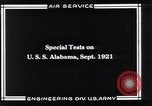
Special tests on USS Alabama and Brig Gen William Mitchell with a group of Air Service officers.
Special tests on USS Alabama off the United States coast. September 1921: USS Alabama at sea. 50 lb Navy type smoke bombs used to obscure the attack by heavy bombers. Smoke trails all around the ship. Phosphorus bombs explode around the ship. 100lb high explosive bombs dropped on it. The ship under attack of 300lb demolition bombs. Smoke clouds over damaged parts. Three NBS-1 in flight over Langley Field. Bombers drop four 2000lb bombs in the final attack. Ship tilted to one side. Three Martin Bombers drop two 1,100lb bombs to finish the attack. A mushroom cloud rises from the explosions. The ship lies half submerged in water due to anchoring in shallow water. Wrecked hull, damaged deck. Soldiers inspect the damage. Brigadier General William Mitchell stands with a group of Air Service officers.
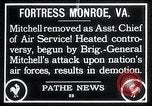
Aerial bomb tests and antiaircraft firing tests at Fort Monroe, Virginia, testing ideas of Brigadier General Billy Mitchell
Brigadier General Billy Mitchell smiling, standing in field, wearing an overcoat. Glimpse of aviator in helmet and goggles, behind him. Members of Congressional Committee and U.S. Army and Navy officers in field to observe tests of antiaircraft fire efficacy. Martin MB2 biwing bomber parked in field behind them. Army officers, stand in front of a biwing bomber, holding ends of "sleeve target" to be used in gunfire test. Airborne scene of sleeve target being towed by airplane. Aerial bomb tests lead by General Mitchell. General with other officials. Army artillery batteries firing at the sleeve target. View of sleeve target. Battery of Army machine gunners firing at sleeve target. General Billy Mitchell with another officer, examining the sleeve target after the test, and smiling because only one bullet penetrated it. General Mitchell and another officer inspecting bombs to be used for demonstration. Dive bombers attack target of battleship outlined on the ground. Bombs bursting on target. Views aboard bombers, showing bombs falling from the aircraft and hitting targets below.
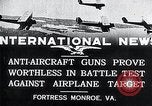
Antiaircraft firing tests,fort Monroe, Hampton Virginia, United States. DH-4 bombers in flight. Antiaircraft batteries firing.
Flight of DH-4 biwing bombers aloft in loose formation. Group of observers behind battery of antiaircraft artillery firing at sleeve target towed by aircraft. shells bursting behind the sleeve target. Batteries of machine guns being fired at "toy" balloons. Brigadier General Billy Mitchell, with another officer, smiles as he points at the single bullet hole sustained by sleeve target after having been fired at by batteries of antiaircraft artillery and machine guns.
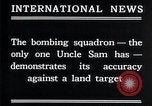
Aerial bomb tests,using Army DH-4 bombers, at Fortress Monroe, Hampton, Virginia, United States.
Army DH-4 biwing bombers in bombing demonstration against an outline of battleship on ground at Fort Monroe, Hampton, Virginia. The airplanes dive at target and release their bombs, which explode on the ground.
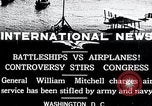
Bombs dropped on German Battleship Ostfriesland cause it to roll over and sink
Group of men standing across the street from the U.S. Capitol building in Washington DC. Two hold newspapers reporting about General Billy Mitchell and airpower controversy. View from an airborne bomber,as four bombs fall and explode in the water at the port side of the German battleship Ostfriesland, causing it to roll over and sink..
CRITICALPAST.COM: About Us | Contact Us | FAQs - How to Order | License Agreement | My Account | My Lightboxes | Shopping Cart | Advanced Search | Featured Collections | Website Terms & Conditions | Privacy Policy ©2026 CriticalPast LLC.
License Agreement |
Terms & Conditions |
Privacy Policy
©2026 CriticalPast LLC.