


 Francais
 Deutsch
 Italiano

Refine Your Search
-Cebu,-Philippines stock footage and images
- Showing 28369 to 28374 of 58987 results more
 Hide
Color Sound
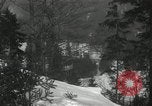
United States soldiers explode a bridge as a part of their training in Europe.
Training of the United States soldiers in Europe during the Cold War. The American soldiers train for a demolition mission as they advance in a snow covered area. A bridge on a river in the foreground. A train passes on the bridge. A soldier watches through binoculars. Another soldier loads his rifle. The soldiers hiding from the enemy come near the bridge. A security guard walks on the bridge. A soldier fires a gun. The guard comes down a hill to watch the enemy. The soldiers in the training mission fix dynamite on rails and other places on the bridge. A soldier watches through binoculars. They give the signal, a soldier detonates the TNT, and the bridge explodes. The "enemy" stand outside a house and begin to pursue. The groups have German Shepherd dogs, snowshoes, and skis as they leave the scene and are pursued by the "enemy." The skiers advance on the snow.
Member of the U.S. Army Parachute Team demonstrates free-fall (sky diving)
A U.S. Army AT-19 aircraft seen in flight, as viewed from another airplane. Scene shifts to cabin of the AT-19, where a soldier in helmet and parachute leans out of the doorway. He steps from the aircraft and begins a long free-fall, photographed from several different viewpoints. Narrator states such free-fall activity is routine for members of the U.S. Army Parachute team. The parachutist opens his chute and maneuvers skillfully. View, from camera on the parachutist, shows rapid approach of the ground.
United States Army Parachute Team demonstrates sky diving techniques
Portion of film titled: 'The Big Picture' about the U.S. Army Parachute Team. Captain James M. Perry, Commander of the team, explains that, as an Agency of the Continental Army Command, the Team represents the Army in Sports Parachute Competition (AKA Skydiving). He talks about the achievements of U.S. Army parachute team. He states that the team has represented the country in International Sports Parachute competitions. He discusses history of the parachute, showing a model of earliest parachute design attributed to Leonardo Da Vinci, noting it was never tested. At a blackboard, he points out illustration of a parachute used successfully by French balloonist, Andre Jacques Garnerin in 1797. He notes that Benjamin Franklin witnessed that event and was influenced to conceive the idea of its military use. Change of scene shows Captain Perry reviewing the members of the Army Parachute Team on the tarmac in front of a C-123 aircraft, which they then board by way of the rear cargo ramp. View of the team inside the aircraft cabin. At altitude, team members exit via the rear cargo door and sky dive toward earth. They execute maneuvers, including some in formation while in free-fall. Smoke seen from smoke grenades as they descend. The team members open their chutes at just above the 2200 foot altitude, and maneuver their checkered chutes to precise landings.
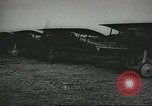
Examples of parachute use in first half of 20th Century
Brief history of the use of parachutes early in the 20th Century. Allied Spad aircraft taxi from flightline in World War 1. One pilot pursuing another in their respective World War 1 airplanes. Numerous World War I airplanes in dogfights. Post-war "barnstormer" being pulled by parachute from wing of a Curtiss JN-4 (Jenny) airplane. Soviet soldier jumping from a parachute training tower in 1930s. Infantry, cargo and weapons being airdropped from Soviet Tupolev R-6 bombers in flight. A Soviet manned vehicle being airdropped from a few feet by airplane. (The soldier jumps up unhurt after landing.) German paratroopers jumping from Junkers Ju-52 trimotor aircraft early in World War 2.
U.S. Army airborne infantry training in 1941, before U.S. entry into World War II.
U.S. Soldiers undergoing airborne training prior to the attack on Pearl Harbor. Soldiers seen on an obstacle course; training on a parachute tower; and jumping from C-47 aircraft. Several views of airborne troops jumping, descending in parachutes, and landing.
U.S. Army airborne infantry training before and after World War II
U.S. Airborne forces in World War 2. U.S. Army Air Forces C-47 aircraft, painted in invasion stripes, take off as darkness falls, on June 5, 1944 (night before D-Day) and assemble in large formation headed toward France. Airborne troops seated inside cabin of a C-47. Some smoke cigarettes. One has "Rocky" stenciled on his helmet. One smokes a cigar. An officer stands in doorway of plane and then jumps, followed by his "stick" of troopers. View from ground of parachutes filling the sky overhead. Momentary view of troopers on the ground in Normandy. German troops, taken prisoners of war, marching in a town under guard, with their hands on their heads. Scene changes to post war training of U.S. Army airborne troops. They are seen practicing how to hit the ground. They practice use of static lines in wooden mockups of aircraft; and jump from towers, and engage in actual airborne exercises, at Fort Benning, Georgia. View of war materiel being airdropped from rear of an aircraft. Special parachutes being used to drop jeeps and artillery pieces.
CRITICALPAST.COM: About Us | Contact Us | FAQs - How to Order | License Agreement | My Account | My Lightboxes | Shopping Cart | Advanced Search | Featured Collections | Website Terms & Conditions | Privacy Policy ©2026 CriticalPast LLC.
License Agreement |
Terms & Conditions |
Privacy Policy
©2026 CriticalPast LLC.