


 Francais
 Deutsch
 Italiano

Refine Your Search
-Cebu,-Philippines stock footage and images
- Showing 34909 to 34914 of 58987 results more
 Hide
Color Sound

Stunts performed by a tightrope artist with two women balanced on his head at the Moscow State Circus in Moscow, Russia.
U.S. First Lady Pat Nixon at the Moscow State Circus in Moscow, Russia. A tightrope artist performs a stunt. He carries two women on his head and walks on a rope with a pole to maintain his balance. Pat Nixon walks out of the auditorium with dignitaries. Press reporters and cameramen follow her.

President Richard Nixon delivers "Nixon Shock" speech dealing with the economic crisis in the United States.
President Richard Nixon gives a speech on the economy from the White House in the United States. Nixon addresses the nation on the need to create more jobs, stop the rise in the cost of living, control price inflation, relieve economic stagnation, and control speculation. He announces the Job Development Act of 1971. He talks of eliminating excise taxes on automobiles and speeding up availability of some exemptions in personal income taxes. He charges Congress to introduce incentives for research and development. He orders federal spending cuts including a postponement of pay raises, a 5 percent cut in government personnel, and a 10 percent cut in foreign economic aid. He notes need to open ways for the young people entering job markets. Nixon orders a freeze on all prices and all wages in the United States for 90 days, and he calls on corporations to extend the freeze to dividends. He announces a Cost of Living committee within the government. He calls for voluntary cooperation of all Americans to control price increases after the 90 day period ends. He talks of the need to protect the strength of the American dollar and prevent international money speculation. He announces that the dollar will be defended. He announces the suspension of the convertibility of the dollar to gold, except in certain circumstances. (Later this speech was called the Nixon Shock and also the speech closing the gold window.) He says he wants to "lay to rest the bugaboo of what is called devaluation." He states the goal is stability in the dollar. Regarding trade balances, he announces a temporary 10 percent tax increase on goods imported into the United States, valid until unfair exchange rates are eliminated. He reflects on success of post World War 2 relief measures offered by the U.S. to foreign countries, increased competition with those nations, and need for less U.S. relief to them. He asks the public of America to work together to crush unemployment and economic problems.
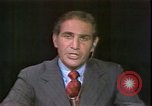
Irving R Levine and Paul Duke report and discuss the proposals stated by U.S. President on economic problems.
News analysis following Richard Nixon's speech on economy crisis from Washington DC, United States. Reporter discusses the speech with journalists Irving R. Levine and Paul Duke. Group reviews the proposal of President Nixon to end unemployment and economy crisis. The proposals to end unemployment by Nixon are 90 day wage-price freeze, additional action on wages and prices, temporary suspension of full convertibility of dollar into gold (later called the "Nixon shock"), investment of tax credit, temporary surcharge of 10% imports, repeal of excise tax on automobiles, speeding of personal tax exemption to get more money in pocket and reduction of federal expenditure. Journalists Irving and Paul Duke also question why the President made the proposal now when the graph of dollar and unemployment begins to fall after sitting on President's seat for two years.

Paul McCracken, an American economist, comments on the economic speech by U.S. President Nixon in the United States.
Discussion and analysis following U.S. President Nixon's speech on the economic crisis from the White House, United States. Reporter Bill Gill sits with Bob Clark, a White House correspondent, and economic advisor Paul McCracken. Both the reporters ask Paul McCracken to make a comment on the proposals of President Nixon dealing with the American economy (a speech later known as the "Nixon shock" speech). Paul McCracken speaks on the advantages of the 90 days wage-price freeze. He tells how to secure cost price level, how to control unemployment and inflation. He states the 90 days wage-price as the strongest economy program and how it will give foundation to more companies. He also speaks on dollar rate and foreign exchange and how to maintain its position, and the closing of the gold window.

U.S. President Nixon announces the resignation of William Rogers as the Secretary of State at a press conference in San Clemente.
U.S. President Richard Nixon holds a press conference in San Clemente. He makes an announcement about the resignation of the Secretary of State William Rogers. Nixon appreciates the quality work and time given by Roger. He addresses Roger as his close friend and advisor. President Nixon appoints Henry Kissinger as the new Secretary of State. Nixon speaks on the well known qualifications of Henry Kissinger to be appointed as the new secretary.
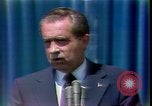
U.S. President Richard Nixon responds to a journalist's question regarding the Watergate tapes in San Clemente.
U.S. President Richard Nixon talks about the Watergate tapes during a press conference in San Clemete, California. He is questioned by a journalist on the exposure of the tapes, and a survey which revealed that he was wrong to make the tapes. President Nixon responds stating that he isn't surprised since Americans do not approve of recording conversations. He talks about the recording capacity in the White House and Camp David, and dismantling and resetting of the system for national security reasons. He also states that the system has existed during the time of President Lyndon Johnson and President John F. Kennedy.
CRITICALPAST.COM: About Us | Contact Us | FAQs - How to Order | License Agreement | My Account | My Lightboxes | Shopping Cart | Advanced Search | Featured Collections | Website Terms & Conditions | Privacy Policy ©2026 CriticalPast LLC.
License Agreement |
Terms & Conditions |
Privacy Policy
©2026 CriticalPast LLC.