


 Francais
 Deutsch
 Italiano
Refine Your Search
1941 hong kong stock footage and images
- Showing 235 to 240 of 1627 results more
more Hide
Hide
Role of metals in Japanese war against China during 2nd Sino-Japanese Conflict
Scenes of Second Sino-Japanese War, circa 1938. Japanese soldiers observing battlefield from a ridge. Japanese artillerymen firing field pieces. Flight of two Mitsubishi Ki-15-1 light bombers in formation, later called "Babs" by the Allies and known as a C5M in Japanese Navy usage. Aerial view of Japanese bombs falling on Chinese cities. Chinese citizens, including an injured woman, seeking shelter from bombing. Aerial view of Chinese ship being strafed by Japanese aircraft. The ship explodes. Downed Japanese warplanes burning. Scenes of destruction from bombing of oil facilities. Iron ore being moved in Japanese rail cars. Steel plants around Yawata, Japan. Numerous containers of molten steel inside a steel plant. Hot Steel ingots being moved. Animated map shows locations of iron ore deposits in Japan. Scrap steel being imported that, narrator states, helped boost Japanese wartime production to 12 million ingot tons in the Sino-Japanese war. More views of open rail cars moving alloying elements to a steel mill. Open mining using explosives. Mining operations for copper and bauxite (aluminum ore). Japanese miners shoveling ore by hand into open rail cars. Open rail cars moving in both directions on parallel tracks. (Note: Although some narration refers to 1941 Japanese production, the images are from earlier period.)
Battle of Changsha in China during the Second Sino-Japanese War (WW2)
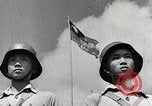
Closeup of two Nationalist Chinese soldiers with their flag flying on tall flagpole in background. Next, countless numbers of Chinese soldiers are seen marching along the Great Wall during the Second Sino-Japanese War (World War II). Newspaper article reads: "52,000 Japanese fall at Changsha." Animated map depicts China and environs, with major cities. Areas of Japanese occupation are shown in black. The city of Changsha is highlighted by a circle. Japanese force is shown massing at Yueyang (Yochow), near Dongting Lake (Ting Tung Hu Lake), and advancing on 24 December 1941, toward Changsha. The map shows Chinses forces putting up token resistance and retreating to the East (rather than toward Changsha) and Japanese forces beginning assault on Changsha, New Year’s Day, 1942. Map shows the Chinese forces from the East attacking and cutting the Japanese supply lines. Japanese forces besieging Changsha are forced to retreat under counterattack by the Chinese. A field artillery piece being fired by Chinese forces and explosion and smoke from its shell striking. More field artillery being fired. Japanese forces carrying their Rising Sun flag as they retreat under fire. Chinese infantry firing from a berm A Japanese soldier falls to gunfire. Japanese soldiers retreating across a narrow-improvised bridge across a swamp. Chinese soldier next to a building, firing a Czech ZB vz. 26 light machine gun. Japanese running with horses through a village. Chinese gunner firing Japanese Type 92 machine gun down on Japanese troops retreating across a bridge below. Another Chinese soldier firing a Czech 26 light machine gun, from hill overlooking retreating Japanese troops, below. Victorious Nationalist Chinese troops parading in celebration along a road high above buildings of a town below in background. Men in Khaki pants and white shirts parading. Girls in white dresses, carrying Chinese flags. Soldiers marching (without weapons) celebrating.
Scenes of professional, working American women in the post-war early 1950s
Film "American Working Women" Clock above Exit sign in Sonotone factory. Women, including Hazel Kennedy, assembling hearing aids. Women in wash room checking hair in mirror and applying lipstick. Women clocking out at Sonotone factory. Wide shot workers leaving Sonotone hearing aid factory, 2269 Saw Mill River Road Elmsford, NY 10523. Bank teller at White Plains Federal Savings and Loan, 182 East Post Road White Plains, NY 10601 puts away money at end of day. Man in suit who is bank Vice President looks at his watch and says goodbye to his secretary as he leaves the office. Secretary Joan Morgan applies lipstick while looking into her compact mirror and then puts on her coat. A man paces outside bank building, looking at watch. He greets his girlfriend Joan and the couple hold hands. Cancer researcher Martha Hanson puts white mice into a cage in her lab at the Sloan-Kettering Institute for Cancer Research, 1275 York Ave. New York, NY 10065. View of numbers on elevator at Sloan-Kettering as doors open. Martha passes through lobby at Sloan-Kettering. Wall engraving in background reads, "Within these walls a few labor unceasingly that many may live" Ann Maloney puts away Silver Slipper hosiery boxes at Marie's Lingerie shop. Sign on wall reads, "First Quality 54 Gauge Nylons". A tall model of a woman's leg is on the counter top. Ann puts money into cash register drawer. Woman (Hazel) driving her 1941 DeSoto Custom automobile. She picks up her husband in front of the hardware factory where he works. Husband and wife kiss in automobile. Close up honking car horn. Children run out of house and into car. Hazel parks car at 12 Curry Road Hastings-on-Hudson, NY 10706 at the intersection of Curry Road and Ronny Circle and the family enters front door of house.
Japanese and Japanese American civilians at school, and working in offices and banks in Hawaii
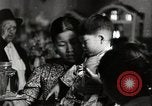
School, office and bank in Hawaii in approximately 1941-1942 showing people of Japanese descent around the time that relocation centers for Japanese civilians were opened in the USA. A woman sits with a child. A woman shows cloth to other women. Man points to a diagram of building to other men. A Teacher in a school writes on a blackboard. Men in an office discuss. Man at bank counter gives a packet. A man and woman work in office. Exterior view of the Iolani Palace in Honolulu.
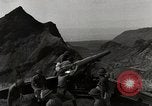
Japanese people worship in temples and salute the United States flag in Hawaii.
American soldiers practice with anti-aircraft artillery in Hawaii circa 1941-1942. People of Japanese descent visit a Shinto shrine and show respect to the United States flag. Flags of United States and Japan on display at entrance of a shrine or temple. Japanese civilians visit a Shinto shrine. They walk through a torii gate. Girls in kimono worship at the Shinto shrine. Priest bows in temple. A family of Japanese descent worships in shrine together. Japanese children carry the United States flag and hold hands over their hearts as the flag passes by during a civic ceremony. Woman serves punch at a social gathering. Men stand and talk. (World War II period, just before time of opening of internment camps and relocation centers for civilians iof Japanese descent).
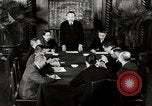
Japanese elders at a meeting table in the United States.
Men of Japanese descent at a meeting in the United States, circa 1941-1942, near time of opening of relocation centers and internment camps for Japanese citizens. Men sit at a meeting table. A man stands and speaks. A man wears glasses. A man smokes.