


 Francais
 Deutsch
 Italiano
Refine Your Search
2nd-Rangers-D-Day stock footage and images
- Showing 7663 to 7668 of 13612 results more
more Hide
Hide
Eddie Mathews homer lifts Milwaukee Braves over New York Yankees, game 4 of the 1957 Baseball World Series
Newsreel clip on game four of baseball's 1957 World Series between the New York Yankees and the Milwaukee Braves at County Stadium in Milwaukee. Exterior view of the stadium, surrounded by big 1950s style cars. Shots of Braves' teepee and Indian logos. Closeup of Elston Howard, the first African American man to play for the Yankees. Howard hits a three-run homer in the top of the ninth inning to tie the game. Medium shot of fans in the stands. The Yankees go ahead in the top of the tenth but Braves third baseman Eddie Mathews blasts a three-run homer in the bottom of tenth to win the game and even the series at 2-2. Mathews mobbed by jubilant teammates at home plate.
Philippines President Jose Laurel and members of his cabinet celebrates 1st Anniversary of Philippines Republic.
From a Japanese propaganda newsreel, in English, released during World War 2: Philippines President Jose Laurel and members of his cabinet kneel at prayer in a church, to celebrate 1st Anniversary of the Second Philippine Republic (while the Philippines was under Japanese occupation during World War 2). Philippine soldiers march on street. President Laurel gives a brief speech. Officials and civilians listen to his speech. People on street with banner reading 'Independence Anniversary'. Leaflets given to civilians by Filipino stage and movie stars. Performers read poetry and sing, including Norma Blancaflor (birth name Lydia Jurado Velasco) and Corazon Noble (Ms. Patrocinio Abad). The Philippines flag. (World War II period).
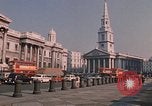
Hippies in London, England
View of the National Portrait Gallery (St. Martin's Pl, London WC2H 0HE, United Kingdom) and Church of St. Martin-in-the-Fields (St Martin-in-the-Fields Trafalgar Square, London WC2N 4JJ, United Kingdom), near Trafalgar Square, London, England. Among pedestrians seen are two young hippie men with long hair and dressed in hippie fashion. The camera focuses on them and their attire.
Montage of scenes during World War II on the Western front during January 1945
January, 1945, on the Western front during World War 2. Troops of the U.S. 8th Infantry Division test new white camouflage coveralls for use in snow. They patrol in snow covered forest areas on the Western Front. A sergeant makes outdoor field adjustments to the coveralls using a knife and captured German sewing machine. He helps a soldier who tries on his new coverall. The material used is from old mattress covers. Several soldiers are seen putting on the camouflage coveralls. Scene shifts to U.S. troops with a jeep towing a 20mm Italian dual purpose gun for use in Germany. On January 2, 1945, they set up and fire the gun at targets a half mile away. In Belgium, U.S. Army engineers of Company B, 238th Engineer Battalion, improvise remote controlled bazooka shells as road blocks. They set them up on fence posts and fire them by ordinary flashlight batteries. U.S. soldiers from a Signal Company of the 99th Infantry Division are seen using a Weasel vehicle (officially designated an M29C light cargo carrier) to lay communication cables through snow in the 1st Army Sector, Belgium. Views of the wire spool on back of the weasel, and soldiers pulling wire from it.
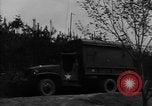
Smaller U.S. Army dispersed forces using better communications and aerial transport in the atomic age
A communications center setup in a U.S. Army GMC CCKW 2 1⁄2 ton 6X6 truck. Army radio operator at work inside the truck. Soldiers operating communications equipment on the roof of a vehicle. Soldiers at work inside the vehicle. U.S. army gun crews firing Howitzers; M1919 Browning .30 caliber medium machine guns; Browning M1917A1 Caliber .30 Heavy Machine Guns, and rifles, from positions hidden in foliage. U.S. troops manually rolling artillery pieces through the underbrush. Infantry being dropped off and picked up by Sikorsky H-19 Chickasaw helicopters. An artillery piece being transported by helicopter. About 10 helicopters in flight low over the ground.
The salvage crew team works on ships after the attack on Pearl Harbor in Hawaii.
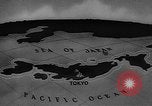
Aftermath of attack on Pearl Harbor, Hawaii, during World War 2. An animated map shows Japan in the Pacific Ocean. Nagasaki, Kobe and Otaru in Japan. U.S. propaganda scenes with caricature voice of a fictional "Mr. Tojo" of Japan declaring various U.S. Navy ships destroyed after the Pearl Harbor attack. Scenes of various capsized and damaged ships in Pearl Harbor following the Japanese attack. United States naval personnel and civilian personnel work on salvage and repair. Engineers and personnel recruited. Navy divers get into scuba diving suits and helmets and go under water to collect salvage and make repairs. Destroyed USS Nevada, USS West Virginia, USS California. Salvage crew work aboard these ships. Refloated and refitted U.S. Navy ships departing Pearl Harbor in the war effort. View of the Aloha Clock Tower. Sailors stand with Lurline ship in background. View of people enjoying Waikiki Beach in 1940 or 1941 before the attack. Later scene of the same beach with two young boys playing in the sand, but barbed wire between the beach and the ocean, following America's entry into World War 2. Empty streets of Honolulu at dusk as blackout time hours begin. Narrator speaks out against Japan and states that all they that take the sword shall perish the sword, and text "This is not the End" appears at the end of the film, following by text, "This is but the Beginning!"
CRITICALPAST.COM: About Us | Contact Us | FAQs - How to Order | License Agreement | My Account | My Lightboxes | Shopping Cart | Advanced Search | Featured Collections | Website Terms & Conditions | Privacy Policy ©2026 CriticalPast LLC.
License Agreement |
Terms & Conditions |
Privacy Policy
©2026 CriticalPast LLC.