


 Francais
 Deutsch
 Italiano
Refine Your Search
2nd-Rangers-D-Day stock footage and images
- Showing 8467 to 8472 of 13612 results more
more Hide
Hide
The March on Washington. Roy Wilkins makes a speech at the Lincoln Memorial in Washington DC to promote Civil rights
African Americans and white Americans gather in large numbers at the Lincoln Memorial (2 Lincoln Memorial Cir NW, Washington, DC 20002, United States) in Washington DC during the "March on Washington for Jobs and Freedom" to promote Civil Rights. Dignitaries wave at the crowd. Crowd cheers. Black American singers of the Eva Jessye Choir, directed by Eva Jessye, sing before the introduction of Civil Rights activist and leader Roy Wilkins, who delivers his opening remarks.
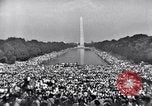
Dr. Benjamin E. Mays delivering benediction prayer at conclusion of "March on Washington for Jobs and Freedom"
Dr. Benjamin E. Mays, President of Morehouse College, leads crowd in benediction prayer at closing of the official program of the March on Washington for Jobs and Freedom in Washington DC, during the Civil Rights movement. Dr. Mays speaking at the Lincoln Memorial (2 Lincoln Memorial Cir NW, Washington, DC 20002, United States). Large crowd of white and African American participants seen near White House.
British worker and his American counterpart in labor exchange program visit the Lockheed aircraft plant in Los Angeles, Calfornia
A British guest on labor exchange program visit to the U.S. during World War 2. He leaves the home of his counterpart American host in Los Angeles, California. They leave in the American's car and drive a considerable distance to the Lockheed Aircraft Company facility. View of Honor Roll listing 15, 174 Lockheed affiliated members of the U.S. Armed Forces. The British-American pair walk past a Lockheed Ventura airplane under construction. View of a room filled with P-38 Lightning fighter planes completing final construction, outside the plant. A film clip of the maiden flight of the Lockheed Constellation aircraft (Later designated C-121 by the Army Air Corps) is inserted at this point. It shows the Constellation taking off from the factory airstrip in 1943, and climbing without raising its landing gear. View of aircraft fuselage under construction, where the British worker is inquiring about the manner of its assembly. Next he is seen observing a turntable press operation being run by men and women workers. View of workers using pneumatic hand tools to remove wrinkles from edges of pressed products. A woman punch operator is seen with safety straps on her hands that pull them away each time the punch comes down. Another woman worker demonstrates an electric spot welder. (The observing visitors are required to wear safety goggles in case sparks are created by the process.) Closeup of the aircraft part being spot welded. More workers operating similar machines in the plant, including an African American man and woman. Workers placing a large sheet of aluminum into a machine that fabricates wings for the P-38 fighter plane. Closeup of the British worker and his American counterpart on a balcony overlooking the production line for the Lightning aircraft. View across the production line floor. The two look into the factory first aid station available to workers and also see the transportation section where worker carpools can be formed. Employees are seen obtaining ration books and driver licenses from government clerks working in the plant itself. Employees are seen eating outdoors under foliage camouflage and others gather at an indoor eating site. Next, a section of a B-17 flying fortress wing, is seen moving out of a manufacturing jig. New components are immediately placed into the empty jig for construction. View of final installation area for B-17s, An overhead crane moves a finished wing, including engines, to be mated with its fuselage. Glimpse of numerous B-17s being assembled. A finished B-17 bomber being towed out of the factory.
New construction taking place in Dayton,Ohio, to accommodate influx of war workers during World War II
The city of Dayton, Ohio working to deal with its housing shortage during World War 2. Influx of World War II war production workers causes many workers to live in group homes and shelters. Women in an open common area of a shelter with many bunks and cots for beds. Men and women are seen in shared living quarters, doing ordinary thing, such as reading , conversing, sewing, and ironing clothes, and preparing food in a common kitchen. A billboard in a field, announces "Hartman Homes, developed by the Dayton Metropolitan Housing Authority. A victory Housing Project of the Federal Public Housing Authority." Camera pans to show a wide expanse of ground being worked with a steam shovel, as construction begins. Engineers and builders look over plans at the job site. Scene shifts to another housing project site with some attached houses already constructed. At another location several fairly large single family dwellings are seen in mid-stage of construction. A low apartment house is seen under construction as well as various new streets with newly built homes. A large building in downtown Dayton displays a sign reading: "This property is being remodeled to house War Workers."
City of Dayton Ohio takes numerous measures to improve transportation and amenities for war workers during World War II
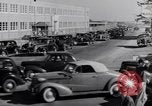
Opening scene shows workers arriving for a shift at a war plant in Dayton, Ohio, during World War 2. The arrive in cars and public transport (not seen) to stream across the road in front of the defense plant, as they enter. Others are seen leaving defense plants, in large numbers as their shifts end. A sign at a war plant advocating ride sharing or car pooling to conserve resources shows a cartoon of Adolf Hitler riding in the empty back seat of a man's car. It reads, "Hitler rides in the empty seat. Double Up!" Men and women are seen standing at a designated Transportation Center to arrange for sharing rides with others. A man steps from a sidewalk, in town, to get into a car that stops to pick him up as part of that activity. People gathering for buses under newly built shelters. A sign on a bus reads: We deliver the war workers. They deliver the goods." Buses moving through the city. One stops and many workers exit, in a town center. Other workers are seen lined up to board rail road trains. Workers entering their private cars in a crowded parking lot at a war plant. Workers crowd into the entrances of a defense plant, where their identification badges are evident on their work clothes. Large numbers of workers leave at the same time others arrive when a shift change occurs. Plant managers discuss ways to minimize absenteeism. View of workers in a crowded cafeteria providing hot meals. A sign reading: "Ladies Dining Room." outside a room filled with women workers having a meal. Men at work in a National Cash Register (NCR) factory assembling 60 pound magazines for 20mm Oerlikon anti-aircraft guns, used by the U.S. Navy, and built by National Cash Register in Dayton Ohio. A factory steam whistle blows, signaling a rest period, as workers take a break for a snack or a smoke. Worker eats an apple and other smoke cigarettes. Narrator describes health and logistical services offered on-site at production plants for workers to minimize time away from work. A sign on a door identifies the "Ladies Health Department." Hours posted on the door correspond to various shifts operating at the plant. Another worker health service is that of a dentist on the premises. View of dentist and nurse working on a patient. Another service area in a war plant shows clerks helping workers to obtain ration books, auto and driver licenses, dealing with Selective Service (draft) matters, income tax questions, ride sharing, and telephone and light utilities. Scene shifts to the Headquarters Building of the National Cash Register Company in Dayton. Ohio Inside, a company manager is interviewing a worker who plans to quit. They discuss the workers reasons and seemingly resolve some problem, because they shake hands and the film narrator implies that the worker is going to remain on the job. A factory building lit up at night. Inside men and women night shift workers are seen performing war work on machines, just as in the daytime. Next, a group of plant managers are seen being trained in particular skills required at their jobs. A view of the city from across a river. A radio announcer with station WHIO. A montage of newspaper clipping related to war workers.
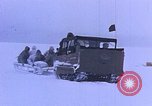
Admiral Richard Byrd and his party visits an old buried U.S. base camp on Antarctica.
Relates to the U.S. Antarctic expedition,Operation High Jump. Admiral Richard E. Byrd and his party ride Weasels visits an old buried U.S. base camp of "Little America" #1 and #2, from the 1930's on Antarctica. Captain Vernon Boyd of U.S. Marine Corps enters inside a ventilating hatch. Food and supplies preserved for several years beneath the ice are taken out. Admiral Byrd exits the hatch.
CRITICALPAST.COM: About Us | Contact Us | FAQs - How to Order | License Agreement | My Account | My Lightboxes | Shopping Cart | Advanced Search | Featured Collections | Website Terms & Conditions | Privacy Policy ©2026 CriticalPast LLC.
License Agreement |
Terms & Conditions |
Privacy Policy
©2026 CriticalPast LLC.