


 Francais
 Deutsch
 Italiano
Refine Your Search
2nd-Rangers-D-Day stock footage and images
- Showing 1363 to 1368 of 13612 results more
more Hide
Hide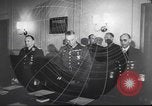
German surrender, UN founding, and Chiefs of Counsel meet before conducting Nuremberg and other trials after World War 2.
A film on preparations that are made for prosecution of axis war criminals following World War 2. Ratification of the surrender documents (from surrender two days earlier at Reims) held at Soviet headquarters in Karlshorst, Berlin, on May 9, 1945. German officers Colonel-General Hans-Jürgen Stumpff as the representative of the Luftwaffe, Field Marshal Wilhelm Keitel as Chief of Staff of OKW, and Admiral Hans-Georg von Friedeburg as Commander-in-Chief of the Kriegsmarine enter room and are seated. View of Keitel signing the surrender document. Scene change to Hall of the United Nations Conference, held in San Francisco from April 25 to June 26, 1945, with delegates from 50 Allied nations creating the United Nations. This was officially the United Nations Conference on International Organization (UNCIO). Leaders of various United Nations countries address delegates present in the War Memorial Opera House of San Francisco, including Edward Stettinius Jr of the United States. Next: A meeting of the military tribunal Chiefs of Counsel of many nations, including France, Russia, Great Britain and the United States, held in London, England, United Kingdom. They sign the International Military Tribunal Charter governing how the major war criminals from World War 2 would be tried.

Americans in New York City celebrate the surrender of Japan in World War II, at Times Square.
Film opens showing aerial view of a United States B-29 Superfortress bomber aircraft in flight, then scenes of numerous U.S. Army Air Forces warplanes and bombing (partially obscured by on screen newsreel text). Next, crowds are seen jamming Times Square in Manhattan, New York City, celebrating victory over Japan in World War 2. (Known as V-J Day or Victory over Japan day, marking the end of World War 2, on 14 August, 1945.) A facsimile of the Statue of Liberty has been set up in the square. Moving lights on Times Building motograph news zipper or ticker announce Japanese surrender. Jubilant celebrations and smiling Americans wave American flags. Closeup of the Statue of Liberty facsimile. A woman dances the Lindy Hop with a U.S. Navy sailor, as others (including many servicemen in uniform) watch.
Improvement of miners, condition of mines and factories and civilians of war affected countries of Europe, by Marshall Plan.
Film titled 'Me and Mr. Marshall' depicts developments of coal mines in Germany and aid to other European nations affected by World War II. German coal miners dig deep in a coal mine soon after the end of World War 2. Volunteers awarded at a ceremony. Volunteers board a train and proceed for work at coal mines. Volunteers eat food, give their shoe size, under go training on mine machinery. Miners on lift move underground. Miners at end of the day walk out tired and blackened by coal dust, from a mine. Miners take hot showers after work and get clean clothing hung high on ropes. Salary given to workers for a day's work. Headlines of German newspapers about Marshall Plan. General George C. Marshall speaks his plans at a meeting in Washington DC, America. Aerial views of ruined buildings and factories, wrecked harbor, refugees in tenements in Europe after World War II. Buildings, monuments and bridges in London and Eiffel Tower and other buildings and civilians on roads in Paris, and view of Kremlin in Moscow, Soviet Union. Map shows countries under Marshall recovery plan. View of meeting in progress of Conference for European Economic Cooperation in July 1947, in the Grand Dining Room of the French Foreign Office. Meetings of leaders of nations adopting Marshall plan. Ruins of industries of Germany. Ruins on the ground after war in London, with Big Ben in the far distance. Workers at a factory. Miners take a horse inside a coal mine. Empty coal cars at a German coal mine. Men push coal cars full with mined coal out from mine, on rails. Views of buyers in suits at a German trade show and conference, promoting German products and industries to potential buyers in other countries, a few years after the end of World War 2. U.S. Congress and President Harry Truman in Washington DC approve the Marshall Plan and provide monetary aid to other European countries. Scenes in Germany as it recovers economically after the war: Workers in a factory. Harbor, fruit and vegetable market; customers in a bakery; coal cars and machinery at a coal mine under normal operation under the plan.
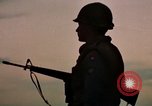
Visual saga of the American Soldier from 1945 to 1970: WWII; Korea; Berlin Crisis;Cuban Missile Crisis; Red China
Review of conflicts involving U.S. from World War 2 to 1970. A U.S. soldier with rifle and binoculars, on guard. German Chancellor Adolf Hitler speaks in Germany to mass audience. German mobilization and blitzkrieg. U.S. troops firing small arms on island in Pacific, battling Japanese. U.S. soldiers on half-track firing artillery. Explosive destruction of Nazi swastika and Eagle symbol on top of building in Zeppelin Field, Nuremberg, Germany. General Douglas MacArthur stands as Japanese General signs surrender documents aboard USS Missouri, ending World War II. Times Square in New York City on Victory over Japan Day (VJ Day) marking end of World War 2. American troops firing artillery and small arms in Korean War. Soviet leader Nikita Khrushchev speaking at the United Nations. Newspaper headlines about postwar Berlin Crisis. Soviet missiles on display in military parade in Red Square in Moscow, Russia, Soviet Union. Soviet General Georgy Zhukov and Nikita Khrushchev, at Kremlin, reviewing the parade. Cuban President Fidel Castro giving a speech. A newspaper headline reading: "Khrushchev orders removal of missiles" ending the Cuban Missile Crisis. Soviet cargo ship with covered missiles on its deck. Red flag with image of Lenin and message: 'Partido Communista Dominicano' and a crowd chanting support for the Communist party in the Dominican Republic. Communist Chinese people marching with massed flags in the People’s Republic of China. Chairman Mao Zedong waving to a crowd of young supporters and Red Guards in China as they chant. A United States soldier in South Vietnam during Vietnam War looks through binoculars and then walks carrying his M-16 rifle. A map of Vietnam.

People gather for the launch of U.S. ships during World War II in Maine, United States.
Christening ceremony of 6 cargo ships and 2 U.S. Navy Destroyers at a shipyard in Maine, United States, during World War 2. A sign reads '48 days' representing a new record achieved in building a ship in only 48 days. People gathered for the christening ceremony. Women stand holding flowers. The crowd gathered at the shipyard cheers. Men and women open champagne bottles. Various ships slide down ways into the water during launch.
Berlin Germany in the first hundred days of Soviet Blockade during the Cold War
Film opens showing Russian Bear covered by iron gate and slate reading 100 days Blockade. Camera pans over war-damaged areas of the city of Berlin, Germany. Narrator refers to the Berlin Airlift by the Allies and the Berlin residents not giving up. Views of several buildings undamaged by World War 2, including Kammergericht, the Headquarters of the Allied Control Council. Streets crowded by pedestrians going about ordinary business in Berlin. Among them is seen a German soldier, missing a leg and using a crutch. Some Berlin industry activity is seen in a factory where welders are at work. Blockade fences are seen separating the Soviet zone of east Berlin from the allied sectors of West Berlin. Trams are seen that cannot travel between the zones. A person trying to use a gas stove to cook, but has no gas pressure. The city grows dark at night due to electricity shortages, resulting in blackout conditions. Berliners trying to manage simple things at home such as exercising on a fixed bicycle. A man planting a garden in sight of the Brandenburg Gate, at the boundary of the Soviet zone. A police officer using a radio in an automobile in the free part of the city. View of the City Council meeting in West Berlin. This is contrasted with view of East Berlin where members of the Socialist Unity Party of Germany (SED) backed by the Soviet authorities are seen meeting in a separate city council of East Berlin, not long before the formal founding of East Germany in 1949. Next, Dr Ferdinand Friedensburg, Mayor of West Berlin, addresses the West Berlin City Council.
CRITICALPAST.COM: About Us | Contact Us | FAQs - How to Order | License Agreement | My Account | My Lightboxes | Shopping Cart | Advanced Search | Featured Collections | Website Terms & Conditions | Privacy Policy ©2026 CriticalPast LLC.
License Agreement |
Terms & Conditions |
Privacy Policy
©2026 CriticalPast LLC.