


 Francais
 Deutsch
 Italiano
Refine Your Search
2nd-Rangers-D-Day stock footage and images
- Showing 1411 to 1416 of 13612 results more
more Hide
Hide
The Philippines gains independence from the United States on July 4, 1946; also scenes from 1941 Japanese invasion WW2
The Philippines are established as an independent nation. Crowds of Filipinos gathered at Rizal Park (Luneta Park) in Manila on the July 4, 1946. View of Independence Grandstand (a temporary structure built in front of the Rizal Monument) with American flag and Philippine flags on tall flag poles.. View looking down on General Douglas MacArthur at a podium, speaking into microphones. Camera pans over various segments of the audience. A map shows the Philippine Islands in context of its neighbors in the Pacific Ocean. Camera pans closeup across faces of many Filipinos gathered at the independence event. View of the Jones Bridge over the Pasig River in downtown Manila. Heacock’s Department Store on the Escolta. The Legislative Building. (later the National Museum of the Philippines). Ocean going ships in a harbor. Cargo being offloaded from a ship onto smaller boat. An industrial complex with eight tall smoke stacks emitting smoke. Steel and petroleum plants. Filipino workers in an assembly plant. The Legislative building with people coming and going. Air raid sirens sounding and people running in streets of Manila at onset of Japanese invasion of the Philippines in December, 1941, at start of World War 2, in the Pacific. People running across the Jones Bridge, seeking shelter. Others boarding a bus. Smoke rising from Japanese bombing. Glimpse of Japanese tanks entering Manila during attack and invasion. Japanese infantry climbing a hill. Bodies of persons killed during the Japanese invasion. Glimpse of Japanese troops occupying Corregidor. U.S. General Wainwright negotiating the surrender of Corregidor with Japanese General Homma. View of an American warship firing during the U.S. campaign to defeat the Japanese on islands in the Pacific. An American landing ship carrying U.S. troops who storm ashore. General Douglas MacArthur striding ashore with a retinue of officers, at Leyte, Philippines, on October 20, 1944. as he keeps his promise to return to the Philippines. Views, back again, to MacArthur speaking at the Independence Day ceremony in Manila on July 4, 1946. Also seen at the ceremony are: U.S. Senator Millard Tydings, (co-sponsor of the 1934 Tydings–McDuffie Act, which provided independence to the Philippines after a 10-year transition under a limited autonomy), and Paul V. McNutt, U.S. High Commissioner of the Philippines, who read President Truman's proclamation of Philippine Independence to the assembly. Camera pans over the gathering which includes many U.S. Service personnel in uniform. The oath of office is administered to the elected President of the Philippines, Manuel Roxas. At the conclusion, the American flag is lowered by Paul McNutt, as President Roxas raises that of the Republic of the Philippines. A celebratory parade in Manila includes a float with signs reading: "Let's Produce and Rebuild," among other things. Other floats represent "Mountain Province," and "The City of Manila," "The University of the Philippines," and "The Division of City Schools." One float, sponsored by the Chamber of Commerce, contains a huge replica machine gear, and models of an aircraft and a ship. It's message is about turning the gear that helps make the nation great. American and Filipino soldiers march, carrying their respective national flags. A white-helmeted military band plays for the marchers. Final scene shows large loose formation of military aircraft in flight very high above the Independence Grandstand, at Rizal Park.

American citizens walking in towns and cities during World War 2, with ration song "It's up to you" in background.
Rationing of food in the United States during World War 2. Propaganda song jingle heard on film soundtrack with words "It's up to you, mister, what do you say? It's up to you, sister, starting today." Other lines include "You can fix that shoe and you can wear it. And you can cut down food, and you can share it. Mister, sister, it's up to you." American citizens walking in American towns. A woman passes a storefront. Poster in window says "Your blood may save your next of kin" (encouraging blood donations). Another sign recruits woman SPARS for military service. Women exiting a church. A woman working tilling a victory garden. Men and women pedestrians and workers crossing city streets during a work day. A large crowd gathers in an open square.
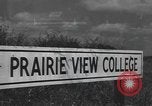
African American students gain knowledge of medicine, economics, chemistry at Prairie View College and Howard University in the United States (WW2)
African American colleges in the United States during World War II. College curricula adjusts to war needs as they prepare students for various military and civilian occupations including war material production at factories and manufacturing. A sign reads ' Prairie View College' (Present day Prairie View A&M University, 100 University Dr, Prairie View, TX 77446) in Prairie View, Waller County, Texas. College campus with students milling about. Students at an agriculture class learn to maintain farm equipment, animal husbandry. African American students work in forges and machine shops making vital parts for the war effort in World War 2. They work on machines helping to meet war production worker manpower requirements. A building at the Howard University (2400 6th St NW, Washington, DC 20059) in Washington DC. Students in a mechanical design class learn to make designs of tanks, guns, and other war equipment. Students in a meteorological class study celestial navigation to guide airplanes. Students in a laboratory study the chemistry of a powder. At Howard University medical school students being taught the use the gravity of blood plasma in the battlefield by noted pioneer in blood plasma, Charles R. Drew. At the Howard University College of Liberal Arts, students learn the economics of war. An African American professor teaches a class on Industrial Accounting.
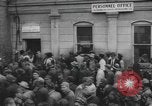
After solving problems related to housing, war production goes up at a shipyard in Mobile, Alabama in World War 2.
War industry leads to problems in Mobile, Alabama during World War II. A large number of people gathered outside the Personnel Office in Mobile. Congress provides 2 million dollars for housing of war workers (building tanks, guns, ships and other war material in factories, manufacturing plants, and shipyards for the war effort). Shows racially segregated housing and facilities for African American workers versus white workers. Views of a cleared slum area where African Americans had been living been living in poor quality homes before the war. Shortage of housing is addressed with new housing for African American war workers, "Certified Colored War Workers". African American children play and eat at a nursery. Dormitory units for single war workers equipped with gymnasium and other basic facilities. Government owned trailers built by the Maritime Commission near a ship yard. The problem of providing a day nursery is undertaken. Modern permanent homes for war workers who can afford them. After meeting the problems like housing and sanitation, production goes up at the ship yard. A new ship being launched at the ship yard. A sign on the ship reads ' Cedar Mills'.
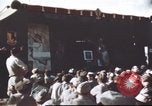
Commander of the 376th Bomb Group Libya, North Africa, briefs air crews for mission against Nazi aircraft production complex, WW2.
U.S. Army Colonel Keith K. Compton, commander of the 376th Bomb Group in Libya, North Africa briefs his Army Air Force aircraft crews for the first Allied bombing mission against the Nazi German ME-109 (Messerschmitt Bf 109) aircraft manufacturing plant south of Vienna at Wiener-Neustadt, Austria, in World War 2. The map that Colonel Compton is using shows the air routes to and from the target. The mission will commence early the next day, on 13 August 1943. An unrelated scene shows U.S. Army and Army Air Force men conversing with an Australian soldier in a summer uniform.
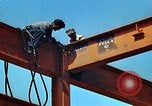
American people working, enjoying recreational activities, and voting in the United States after World War 2
A film about contribution of the U.S. Navy personnel for better life of Americans in the United States after World War II. Scenes of former soldiers, sailors, and military personnel returning to civilian life after the end of World War 2. Men drill on metal structure erecting a new building. Men load sacks in a cart. A man works on a typewriter. People worship in churches. A couple sits on a swing. A man plays chess. People read newspaper sitting outdoors. A man fishing in a river. Men play golf. People on a sailing yacht. Paintings displayed on a wall. A statute in a garden. A man sits on his front porch, plays guitar and sings. A jazz band of African American musicians plays music including piano, drums, clarinet, bass, trumpet (playing part of song "Pop goes the Weasel."). Piano player is smoking a cigarette while playing. Audience watching an orchestra play on stage. A man speaks and presents his view to a gathering. Exteriors of a church. People walk out of the building. Children play on swings in a school playground. Children inside a house run down stairs to the Christmas tree on Christmas morning. A woman drops her completed ballot in a ballot box on voting day, as a man waits to receive his ballot. He enters a voting booth and a uniformed police officer closes the curtain behind him. View shows him marking a check box on the ballot document.
CRITICALPAST.COM: About Us | Contact Us | FAQs - How to Order | License Agreement | My Account | My Lightboxes | Shopping Cart | Advanced Search | Featured Collections | Website Terms & Conditions | Privacy Policy ©2026 CriticalPast LLC.
License Agreement |
Terms & Conditions |
Privacy Policy
©2026 CriticalPast LLC.