


 Francais
 Deutsch
 Italiano
Refine Your Search
2nd-Rangers-D-Day stock footage and images
- Showing 1435 to 1440 of 13612 results more
more Hide
Hide
President Richard Nixon delivers "Nixon Shock" speech dealing with the economic crisis in the United States.
President Richard Nixon gives a speech on the economy from the White House in the United States. Nixon addresses the nation on the need to create more jobs, stop the rise in the cost of living, control price inflation, relieve economic stagnation, and control speculation. He announces the Job Development Act of 1971. He talks of eliminating excise taxes on automobiles and speeding up availability of some exemptions in personal income taxes. He charges Congress to introduce incentives for research and development. He orders federal spending cuts including a postponement of pay raises, a 5 percent cut in government personnel, and a 10 percent cut in foreign economic aid. He notes need to open ways for the young people entering job markets. Nixon orders a freeze on all prices and all wages in the United States for 90 days, and he calls on corporations to extend the freeze to dividends. He announces a Cost of Living committee within the government. He calls for voluntary cooperation of all Americans to control price increases after the 90 day period ends. He talks of the need to protect the strength of the American dollar and prevent international money speculation. He announces that the dollar will be defended. He announces the suspension of the convertibility of the dollar to gold, except in certain circumstances. (Later this speech was called the Nixon Shock and also the speech closing the gold window.) He says he wants to "lay to rest the bugaboo of what is called devaluation." He states the goal is stability in the dollar. Regarding trade balances, he announces a temporary 10 percent tax increase on goods imported into the United States, valid until unfair exchange rates are eliminated. He reflects on success of post World War 2 relief measures offered by the U.S. to foreign countries, increased competition with those nations, and need for less U.S. relief to them. He asks the public of America to work together to crush unemployment and economic problems.
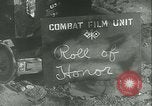
828th Engineer Aviation Battalion rebuilds airfield at Munda Point, New georgia, solomon islands, in World War II
American Army's 828th Engineer Aviation Battalion (African American) reconstructs airfield, at Munda Point, New Georgia, Solomon Islands, in World War 2. Originally constructed by the Japanese and captured by U.S. Forces, the airfield is unusable and requires rebuilding. African American bugler blows reveille and the Battalion begins a day of work reconstructing the field. Battalion engineers pile into trucks, as their names are called, and head from their bivouac area to the airfield work area. They climb aboard and begin to operate heavy construction equipment, such as graders, tractors, steam shovels, and dump trucks. Surveyers seen using a level in the midst of the field. A machinist steps into a shop contained in a truck, and begins turning a part on a lathe. One engineer steps into a shed containing heavy equipment. Team of men in an excavation pouring concrete. Grading equipment seen smoothing the field surface, and steam rollers packing down the surface. A plane takes off in background. View from above, of Douglas Dauntless SBD aircraft all over the field. A C-47 transport plane in foreground. A B-24 Liberator bomber taking off. Engineers climb aboard a truck at end of work shift. Back at their encampment, the men gather around as mail call is in progress. They enter a mess tent, go through a chow line and eat together at tables. Another tent is seen with sign outside reading: "Munda Cotton Club." Inside, the men relax, playing cards, smoking, playing checkers, and writing letters. Change of scene shows Chaplain leading singing during church service. As a day ends, the bugler blows taps. A sentry stands at ease with rifle. (Note: Sound is very poor and undiscernible in much of the clip.)
The end of WWII and U.S. President Harry Truman's role in immediate postwar actions
Opening scene shows some German infantry surrendering with hands raised. Next scene shows people thronging Times Square in Manhattan, New York City, celebrating VE Day, or Victory in Europe Day, on May 8, 1945, when Germany surrendered to end World War II, in Europe. Image of the first atomic explosion (Trinity) on July 16, 1945, in New Mexico, United States. Scene shifts to deck of the U.S. Battleship, USS Missouri, where Japanese foreign minister, Mamoru Shigemitsu, is seated and signing the instrument of surrender., on September 2, 1945. Closeup profile of General Douglas MacArthur. Another glimpse of Mamoru Shigemitsu signing. Next, MacArthur is seen signing the document. He turns and presents the pen to Lieutenant General Jonathan M. Wainwright , who is standing behind him alongside British Lieutenant-General Arthur Ernest Percival. Brief glimpse of the San Francisco War Memorial and Performing Arts Center with flag appearing to be at half staff and a long awning extending from its entrance to the sidewalk. View of representatives at the first United Nations meeting there . Views of audience in auditorium shows many notables. Closeups of Soviet Ambassador, Andrey Gromyko and Soviet Foreign Minister, Vyacheslav Molotov.. Next, President Harry S. Truman is seen broadcasting a greeting to the delegates, from the Capitol, Washington, DC, on April 25, 1945. The delegates are seen listening to the broadcast and then applauding.
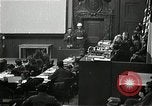
Colonel Amen questions Alois Hoellriegel during War trial in Nuremberg, Germany.
Colonel Amen questions Alois Hoellriegel during Nuremberg Trial after World War 2 in Nuremberg, Germany. A court room scene. Men sit at tables with documents and papers. Alois Hoellriegel, stands near the witness box. He takes oath and then sits in the witness box. A guard stands behind him. Colonel Amen stands at a dais and questions Alois. Men wearing head sets sit in the court room. A translator translates the questions in German. Alois speaks on microphone. He tells of his service in Mathausen concentration camp and visits paid to the camp by Kaltenbrunner and Von Shirack. Colonel Amen asks him if he could recognize Von Shirak in the room. He looks around the room and nods his head in affirmation. Colonel Amen moves to a men, converse and comes back to the dais.
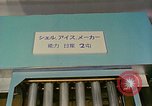
Shell Ice Maker machine demonstrated and and model of Pepsi Cola bottling plant exhibited in trade fair, Osaka, Japan.
Trade fair in Osaka, Japan. Sign written in Japanese (katakana characters) saying “シェルアイスメーカー” (“Shell Ice Maker” in English). Shell Ice Maker machine is demonstrated. Water flows over chilling columns on which it freezes and then cracks and falls into collection box. Crushed ice falls into the ice maker collection box. Sign at exhibit states its capacity is 2 tons per day of ice. A Japanese man working for Japan Pepsi Cola Company (present day Pepsi Japan franchise now under Suntory) shows a scale model of a Pepsi Cola bottling plant. Japanese man explains the Pepsi Cola bottling plant model. Bottles of Pepsi products are seen behind the man. Logo of Pepsi Cola is displayed on the Pepsi Cola booth in the trade fair
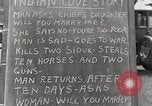
American "Indian Love Story" translated into Indian sign language by Richard Sanderville
A story called,"Indian Love Story," is written out in chalk, on a blackboard. Scene shifts to Richard "Dick" Benedict Sanderville, interpreter at the Blackfeet Agency in Browning, Montana,seated on a chair,outdoors. He translates the story into Native American Indian sign language, as follows, while the camera records his movements: Man asks chief 's Daughter Will You Marry Me? She Says No. You're too Poor. Man Is Sad. Goes To War. Kills Two Sioux. Steals Ten Horses And Two Guns. Man Returns After Ten Days. Asks Woman Will You Marry Me? She Says-Yes! Man Says-No!! You Don't Love Me-You Love My Horses'. The signs: 1. MAN ASK CHIEF HIGH (head-chief) CHILD WOMAN , YOU ME MARRY; which translates to: A man asks the head-chief's daughter: "Will you marry me?" 2. WOMAN SAY , NO YOU POOR; which translates to her saying: "No, you are too poor." 3. MAN SAD (heart heavy), GO-TO-WAR; which translates to: The man is sad (his heart is heavy, falls on the ground). He goes to war. 4. KILL TWO SIOUX (3 missing sign), STEAL TEN HORSE, TWO BOW; which translates to: He kills two Sioux, steals ten horses and two bows. 5. GO-TO-WAR COME TEN NIGHT; which means: The man returns (from war) after ten days. 6. SEE WOMAN, SAY YOU ME MARRY; which means: He (visits and) asks the woman: "Will you marry me?" 7. WOMAN YES, MAN SAY NO; which translates to her saying: "Yes!" The man says: "No!" 8. YOU FOND HORSE , YOU HEART FOND (love) FINISHED. Translation: You love (my) horses, ( I ) don't love you anymore. Editor Commentary: The second GO-TO-WAR sign is much shorter because it is part of a compound sign, and the emphasis is now on COME. The actual going to war has already happened. Also, in the last sentence the first YOU is the subject, but the second YOU is the object, and the subject is missing. Finally, in the first sentence the HIGH sign (index finger pointing up above head) is almost unnoticeable, and means "standing high above all others" or "above all, superior, high above the others".
CRITICALPAST.COM: About Us | Contact Us | FAQs - How to Order | License Agreement | My Account | My Lightboxes | Shopping Cart | Advanced Search | Featured Collections | Website Terms & Conditions | Privacy Policy ©2026 CriticalPast LLC.
License Agreement |
Terms & Conditions |
Privacy Policy
©2026 CriticalPast LLC.