


 Francais
 Deutsch
 Italiano
Refine Your Search
2nd-Rangers-D-Day stock footage and images
- Showing 3169 to 3174 of 13612 results more
more Hide
Hide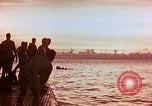
Australian prisoners of war at sea rescued and the survivors helped aboard by U.S. submarine crew members in Philippines (WW2)
Rescue team members on the deck of a U.S. submarine (both USS Sealion (SS-315) and USS Pampanito (SS-383) participated in the rescue) . Crew members carry Australian survivors found clinging to wrecked parts of the Rakuyo Maru, a Japanese prison ship, that had been carrying the prisoners, during World War II. The Rakuyo Maru had been torpedoed by U.S. submarines including these same rescue ships, days earlier. Exhausted survivors pulled on deck with the help of rescue line. They are covered with fuel oil. Men help the survivors aboard. Crew members with other survivors on the submarine.
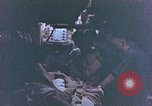
Australian survivors from wreckage of Japanese prison ship Rakuyo Maru rest inside U.S. submarine near Philippines after rescue (WW2)
Australian prisoners of war rescued by crews of U.S. Navy submarines USS Sealion (SS-315) and USS Pampanito (SS-383) days after sinking of the Japanese prison ship Rakuyo Maru at sea in Philippines, during World War II. The rescued survivors rest on beds in the submarine. Crew members talk to them.
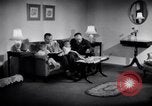
Four British labor exchange visitors return home after several weeks visiting war plants and labor organizations in America (WW2)
A British guest on labor exchange program visit spends his last day as a house guest of his counterpart American's family, in Los Angeles, California. He is seen with the father in their living room with two children, while the mother prepares dinner in the kitchen. The children are sent to bed and the men and the wife, named Ellen sits down to dinner with the two men. The British guest waves goodbye to the family at their doorstep. Scene shifts to another of the British labor exchange visitors leaving the family where he had been hosted in a different city. Next, the four British labor exchange visitors are seen seated opposite representatives of American labor organizations including the American federation of Labor (AFL), the Congress of industrial Organizations (CIO) and the Railroad Brotherhood. They had met them a few weeks ago when they first arrived in the U.S. One of the labor representatives asks them about their impressions of America. They uniformly praise the effectiveness of the U.S war effort, extolling the efficiency and productivity of her war plants. One of the commenters calls for more international unity in the labor union movement. A spokesman for the American labor representatives expresses need to support the United Nations movement. Film closes showing the four British exchange visitors boarding a U.S. Army Air Corps C-54 transport plane to fly them home to England. They are checked in by an airman who wears a leather jacket with the Air Transport Command logo on it. The aircraft is seen taking off and climbing out over hangars at the airfield. (World War II period)

Dayton, Ohio plans to increase the number of persons employed in its war plants (WW2)
Film opens showing large factory building with all its lights on at night. Smoke stacks at industrial plant emitting white smoke against dark sky. Sparks flying outdoors from a steel plant at night. War production workers inside a fabricating plant drawing a ribbon of hot steel from a roller and dragging a newly made sheet of metal across the floor. Two men with shovels stoking a furnace. Men shaping parts on forging machines. A group of men using sledge hammers to drive down pipe supports under a large piece of sheet metal. Women employees at work inspecting U.S. Army helmets on an assembly line. Workers in a crowded machine shop. A sign reading: "500 workers needed NOW Training on the job." A display of job recruitment announcements in newspapers. A room full of idle manufacturing machinery (ostensibly due to labor shortages). Sign on iron fence outside a building, reads: "Essential WAR WORK Day or Night Men and Women" and "We have a war job for you. Apply here." Some more similar signs. Animated chart of Labor Needs with Labor supply lagging behind, superimposed on a drawing of a defense plant. Map of the USA highlighting areas of industrial might where labor shortages exist. Camera zooms in on Dayton, Ohio on the map. Aerial views all over the city of Dayton, Ohio. View from a tall building overlooking a major Dayton commercial street. The Gem City Savings building, with clock tower on top, at the corner of Third and Main streets. On April 7, 1943, two hundred leading citizens of Dayton are seen attending a meeting at which Stanley C. Allyn, President of the National Cash Register Company, is speaking. He speaks about the danger of Dayton falling behind its war production goals because of manpower difficulties. View of the audience, which includes several military officers in uniform. Allyn speaks of the potential for war work being moved elsewhere because of this, and challenges Dayton's leaders to solve the problem without requiring action from Washington. Next, an emergency committee of community leaders is seen around a table. Camera pans over attendees, including labor leaders from AF of L and CIO; Government officials present, including Area Director and Deputy Regional Director of the War Manpower Commission, and Chief of Program Requirements for the Region; leading industrialists and retailers are shown. Local officials seen include the Mayor of Dayton and Secretary of the Chamber of Commerce as well as the Commanding Army Air Forces Generals of Wright Field and Patterson field. In final scene, Stanley Allyn is seen at the head of the table, speaking to the group. He outlines three ways to obtain more war workers from the Dayton population during World War II.

General MacArthur visits the Philippines and Borneo (WW2)
General Douglas MacArthur meets President Sergio Osmena of the Philippines in Nichols Field (present day Villamor Air Base), Manila during World War II. Senator Millard Tydings of Maryland accompanies General MacArthur. Jean MacArthur, wife of General MacArthur, visits wounded soldiers in makeshift hospital. MacArthur and his wife visit Mindanao in a Jeep. Dive bombers bombard Japanese positions in Ipo Dam, Norzagaray, Bulacan. Bodies of dead Japanese soldiers found near Ipo Dam. View of soldiers killed and their remains. General MacArthur also accompanies a task force in the invasion of Labuan, off the coast of Borneo. General MacArthur is seen smoking a corn cob pipe. General MacArthur and General George Kenney inspect Australian troop operations in Borneo. They meet Bornean civilians and Australian soldiers. General MacArthur watch the body of a dead Japanese sniper (World War II period).

Admiral Jean Francois Darlan presenting arms at ceremony (WW2)
Admiral Jean Francois Darlan in younger days in North Africa during World War II. Darlan presenting arms at ceremony. Darlan receiving award. French sailors at attention. Officer kissing Darlan as part of ceremony. Charles de Gaulle reviewing Free French Troops. De Gaulle addressing troops. De Gaulle presenting awards.
CRITICALPAST.COM: About Us | Contact Us | FAQs - How to Order | License Agreement | My Account | My Lightboxes | Shopping Cart | Advanced Search | Featured Collections | Website Terms & Conditions | Privacy Policy ©2026 CriticalPast LLC.
License Agreement |
Terms & Conditions |
Privacy Policy
©2026 CriticalPast LLC.