


 Francais
 Deutsch
 Italiano
Refine Your Search
2nd-Rangers-D-Day stock footage and images
- Showing 5305 to 5310 of 13612 results more
more Hide
Hide
Gliders are retrieved by 9th Troop Carrier Command C-47s in Eindhoven, Netherlands (WW2)
Gliders are retrieved by TCC C-47s in Eindhoven, Netherlands during World War II. Animated map of Eindhoven. Gliders at Eindhoven, Netherlands. Men are in operation to overhaul the plane. 9th Troop Carrier Command C-47 lands. General P.L. Williams inspects the military operation. Men prepare for picking up gliders. Gliders are towed and ends of the ropes are tied to gliders and C-47's. A man gives signal for take off of C-47. Men use the gliders pick up device. Glider is ready for pick up. C-47 pick the glider up and flies with glider.
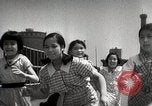
Japanese children practicing sports including martial arts like Kendo and swimming (WW2)
Small school girls play. Japanese children practice and compete in traditional Japanese martial arts Kendo with bamboo sticks. Japanese school children play tug of war and run through a line of showers on the way to a swimming pool to swim and play with a ball. (World War II period)

Japanese adult and children in volunteers work corps toil in Japan (WW2)
Children and adults volunteer and are recruited to work for ammunition factories and community work in Japan during World War II. Japanese schoolchildren with brooms head to a Shinto shrine. Children and adults worship at the Shinto shrine. They bow in front of the shrine. Japanese volunteers salute the Japanese flag. Volunteers cut grass in the field. Schoolchildren carrying buckets. Middle school students pile up rocks, cut grass and bushes on the hillside and clean up the temple. Japanese student volunteers march in a parade on the beach.1945.

Japan's possible shortages of material for clothing in World War 2. Japanese domestic production of cotton, wool, and silk
Illustrated discussion of Japan's limitations in natural resources prior to World War II. Workers shown in textile mills which employed more than half of Japan's factory workers prior to the war, satisfying domestic and export needs. Analysis of the natural resources. Cotton thread is rolled on the spindles in the Textile mills in Japan. Textile mills produce fabric in Japan. Japanese women work in the textile mills. Bales of raw cotton imported from Japanese possessions in Korea and Formosa, and from the United States,India, Brazil and China. They are transported via horse carts and manually pushed on small rail carts to storage buildings for stockpiling. People cultivating some of the small amount of cotton grown in Japan. Horses and cattle used to pull plows in rice paddies. Pigs used as scavengers. Woolen fabric is produced from wool. Some of Japan's very few sheep being sheared for wool. Women working in fields of mulberry trees where silk worms flourish on their leaves. Views of the silk being spun onto spindles in a factory. Silk fabrics being stacked. Illustrated summary highlights Japanese domestic shortages of cotton, wool, and leather needed for clothing.
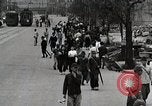
Demolished Office Buildings and Stores in Tokyo, Japan seen a month after the end of World War 2.
Shows Japanese crowd along street in Tokyo and demolished department stores and office buildings. Demolished safety deposit vault. Demolished buildings. Demolished Shinbashi theater.13 September 1945.
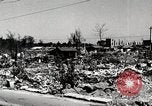
Demolished Warehouse in Shiba District of Tokyo Japan, soon after end of World War 2
Demolished warehouse in Shiba district, Minato Ward, Tokyo, Japan. B-29 in flight to the ruins of Shiba district. Bomb damage and devastation from aerial bombardment in World War II. Damaged Buddhist club. Demolished residential district.13 September 1945.
CRITICALPAST.COM: About Us | Contact Us | FAQs - How to Order | License Agreement | My Account | My Lightboxes | Shopping Cart | Advanced Search | Featured Collections | Website Terms & Conditions | Privacy Policy ©2026 CriticalPast LLC.
License Agreement |
Terms & Conditions |
Privacy Policy
©2026 CriticalPast LLC.