


 Francais
 Deutsch
 Italiano
Refine Your Search
Adak Alaska USA 1943 stock footage and images
- Showing 811 to 816 of 27381 results more
more Hide
Hide
Montage of World War 2 scenes from all theaters of Allied operations and scenes of the U.S.A.
Peaceful scenes of pre-war England, showing a church with sheep grazing on its lawn, and a college building with ivy growing on the walls. In contrast, explosion and results of German bombing is shown, with buildings collapsing and ruined from the German blitz over England. A long line of Chinese soldiers marching along the Great Wall of china. Shadows of three Japanese bombers flying over Chinese landscape. On May 4, 1942, Madame Chiang Kai-Shek decorates American fliers who made the first attack on Tokyo in World War 2. Wearing a Chinese decoration around his neck, Lieutenant Colonel Jimmy Doolittle, who led that raid by U.S. B-25 bombers from the Aircraft Carrier USS Hornet, poses with Madame Chiang and others of his group. Scenes of Moscow, Soviet Russia, including a T-70 light tank moving rapidly along a city street. A Soviet Petlyakov Pe-2 dive bomber taking off in a snow storm. U.S. troops on a halftrack in North Africa. British artillerymen firing a 25 pounder in the desert. Glimpses of smoke rising from enemy strikes at cities in England, Russia, and China. Scenes of destruction from bombing. Brief street scenes of unharmed and intact towns and cities in the United States, including brief New York City scene of pedestrians and traffic in Times Square. Defense workers in America going to work at Ranger Aircraft Engines factory (later part of Fairchild Aircraft and Engine Corporation), and a star flag showing war service by worker families. Farmers in Western U.S. harvesting grain. Railroad trains and river barges carrying harvest from U.S. farms. Herds of cattle and sheep being raised for the war effort in Western U.S. Aerial view of orchards and farms in America. A mining bucket filled with iron ore. Barge carrying the ore. A steel mill in operation. Scrap iron being recycled. View from production floor of U.S. bomber aircraft being built in a defense plant. Countless freight cars in a railroad marshaling yard at a port, where a tug boat and a freighter are seen in the water. War materiel piled up at the port. A convoy of supply ships underway.

Indian Prime Minister Jawahar Lal Nehru, and daughter Indira, visit Disneyland Park during visit to the U.S.A.
United States Marine helicopter, carrying Indian Prime Minister Jawaharlal Nehru and his daughter, Indira Nehru (Indira Gandhi), lands at the Disneyland heliport in Anaheim, California. Prime Minister Nehru and daughter meets Walt Disney (Walt Elias Disney), who conducts them, personally, on a tour of Disneyland Park. Tomorrowland rides and attractions are seen. Prime Minister Nehru rides beside Walt Disney in a small open train that conveys them past waterfalls high on Matterhorn Mountain, and a recreation of an American Indian encampment. Nehru is seen waving to crowds at the park. Later, (on his 72nd Birthday) the Prime Minister and his daughter are feted at a reception by Mr. Eric Johnston, President of the Motion Picture Association of America (MPAA), and wife Ina Harriet Hughes. Hollywood actors Edward G. Robinson and Charlton Heston are among the persons seen conversing with the Prime Minister.
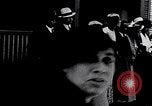
African American men and women wearing their Sunday Best as they wait at a public school inTennessee USA.
Well-dressed black people waiting at a public school near a Tennessee administration emergency relief camp. Some Some of them are chatting as they wait outside the building.
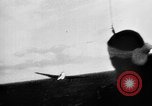
Japanese planes attack Pearl Harbor in Hawaii, USA.
Events related to the bombing of Pearl Harbor. Japanese crewmen shout. Japanese planes take off from deck of an aircraft carrier. Japanese planes drop bombs on Pearl Harbor. USS Arizona explodes. Ship burns in the harbor. Thick black smoke rises from the burning ships. View of wrecked U.S. aircraft. (World War II period).

Philip Hauser briefs George Stone on U.S. census from 1820 to 1931 in USA; also some Wall Street depression scenes
George Stone and Dr Philip Hauser at the presentation of U.S. census around 1960. A slide of U.S. map appears on the screen. 1820 and population figures are marked on part of the map inhabited at that time. The reasons for the increase in the population are discussed by George Stone and Dr Philip Hauser. In the next slide census figures of 1830 appears. Concern for the handicapped lead to including of deaf, dumb and blind category in this census is shown. Dr Philip Hauser shows cartoons appearing in newspapers of that time to George Stone. In the next slide, census figures of 1850 and 7 classes of occupation of people are seen. A percentage representation of various occupations in the population is given in the next slide. The stress on accuracy of 1850 census is seen in the next slide. A comparison of number of occupations of males and females from 1840 to 1870 is shown in the next slide. Census of 1930 is mentioned in the next slide. 1931 is shown as a Special Unemployment Census. Newspaper headlines about stock market crash is seen. Around clip timecode 8:13 are images of Wall Street New York Stock Exchange floor near time of stock market crash. Wall Street region in New York City filled with people and views of lines or queues for homeless, unemployed, or food relief during the Great Depression.
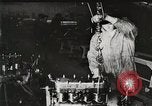
Ford Model T cars and trucks being manufactured and used in various aspects of life, in the U.S.A.
Men work at ford car and truck assembly line. Workers fit engine into Ford Model T car chassis. Workers fit Model T car wheels and body onto its chassis. New Model T cars drive out of Ford Factory. Model T cars at a ford Sales and service store. Man drives a Model T car onto road. Farmer feeds chickens as his wife steps into Ford model T and drives away on errand. Man loads milk drums onto a Ford Model TT flatbed truck. Ford trucks drive on road. Ford trucks as mail vans for United States Postal Service. Fleet of model T cars driving away, one at a time from parking area of a company.
CRITICALPAST.COM: About Us | Contact Us | FAQs - How to Order | License Agreement | My Account | My Lightboxes | Shopping Cart | Advanced Search | Featured Collections | Website Terms & Conditions | Privacy Policy ©2026 CriticalPast LLC.
License Agreement |
Terms & Conditions |
Privacy Policy
©2026 CriticalPast LLC.