


 Francais
 Deutsch
 Italiano
Refine Your Search
Adak Alaska USA 1943 stock footage and images
- Showing 1309 to 1314 of 27381 results more
more Hide
Hide
U.S. soldiers in amphibious assault training on the Chesapeake Bay, during World War II
Officers inspect Thompson submachine gun aboard the USS Elizabeth C. Stanton, AP-69 during landing maneuvers exercises on the Chesapeake Bay, in World War 2. Soldiers crouched in a Landing Craft under way towards a beach. Landing craft from the USS Elizabeth C. Stanton, arriving at the shore. Soldiers on beach advance towards the woods. Soldiers take cover in prone positions and dry fire their weapons.
U.S. amphibious landing exercises in the Chesapeake Bay during World War II
U.S. soldiers lower equipment over the side of the USS Elizabeth C. Stanton, AP-69, during amphibious training on the Chesapeake Bay in World War 2. They then descend a rope net to landing craft below, as a photographer takes pictures. Next scenes show several landing craft from the USS Elizabeth C. Stanton, arriving at the beach and soldiers leaving them to charge the beach. Some soldiers are seen briefly in the background, assembled in formation on the beach.

A U.S. Army training film on Rifle Marksmanship with an M-1 for Rapid Fire.
A U.S. Army training film on Rifle Marksmanship with an M-1. Rapid Fire: An officer takes a training session for soldiers seated on the ground. An M-1 rifle on the table nearby, and a board in the background reads 'Preparatory Marksmanship Training'. The officer gives instructions about rapid fire exercises. Soldiers in prone position with M-1 rifles at a firing range. Soldiers in bushes. Soldiers in supply detail walk on a path through the jungle. They run into an ambush, take position and fire from behind trees. Soldiers in a defensive position, enemy soldiers charges towards them. A soldier dives into a shell hole, gets into the kneeling position and shoots straight. (World War II period).
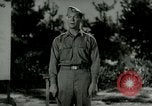
A U.S. Army training film on Rifle Marksmanship with an M-1 for various firing positions.
A U.S. Army training film on Rifle Marksmanship with an M-1. An officer instructs soldiers about calm handling of an M-1 rifle which comes with practice. An instruction board in the background. The officer instructs and a soldier demonstrates the prone, sitting and kneeling firing positions. Soldiers demonstrate: Prone position rapid fire with counts in 9 seconds. The officer talks about the importance of time and smooth movement while taking firing position. He talks about the need to get into a firing position in a hurry. Soldier demonstrates: Getting into position, aiming and firing with counts in 7 seconds. (World War II period).
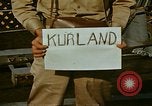
V-mail procedures including cutting, microfilming, transport, photographic enlargement, and processing during WWII.
The use of V-mail (Victory Mail) by the United States during World War II. V-mail procedures including cutting, microfilming, transport, photographic enlargement, and processing of V-mail letters and post. A poster promoting the use of V-mail. Women in a line at a post office. The post office staff at counter windows serves the customers. A woman collects a V-mail letter, writes her message and then addresses the letter. The preferred use of a softer pencil in V-mails. Cutting: Specially trained soldiers unpack the V-mails and use a cutting machine to open each mail. Processing: The experienced staff sorts mails into the respective destination groups at sorting tables. Soldiers open mails to photograph them. A soldier sorts mail that can't be photographed and are to be sent back. These mails include stamps, enclosures, snapshots and bad writing. The correct mails are then sorted into given numbers in bundles. Microfilming: Women use Airgraph machines to photograph each mail on 16mm films. 1600 mails on 100 feet of film. The complete reels are sent for developing. Women put in new reels of negatives into the cameras. Developers dry the film reels. Stacks of reels on a table containing images of thousands of letters. Soldiers packing and stacking many hundreds of sacks filled with V-mail letter microfilm images. A Boeing 314 Pan American Clipper flying boat sea plane (military designation C-98) is seen taking off to transport V-mail to major destination points. A bag of microfilm reels is delivered to an officer. He unpacks the reels and sends them to the printing room. Enlargement: Enlargement machines are used to enlarge the snapshots. Men and women operate the printing machines. Soldiers with the printed facsimiles on tables. Processing: Women slice the prints into separate letters. Machines used to insert facsimiles into V-mail envelopes and seal them. The mails are then sent to the exact destinations by ordinary post. Soldiers gather around as a comrade distributes mail at a U.S. military base in the combat area.
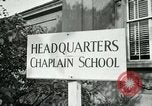
White and African American Chaplains perform a drill at Harvard University Chaplain school in Cambridge, Massachusetts.
Chaplain school at Harvard University in Cambridge, Massachusetts during World War 2. A sign reads 'Headquarters Chaplain school'. White and African American Chaplains come out of the school building and march. Chaplains perform a drill.
CRITICALPAST.COM: About Us | Contact Us | FAQs - How to Order | License Agreement | My Account | My Lightboxes | Shopping Cart | Advanced Search | Featured Collections | Website Terms & Conditions | Privacy Policy ©2026 CriticalPast LLC.
License Agreement |
Terms & Conditions |
Privacy Policy
©2026 CriticalPast LLC.