


 Francais
 Deutsch
 Italiano
Refine Your Search
Adak Alaska USA 1943 stock footage and images
- Showing 17755 to 17760 of 27381 results more
more Hide
Hide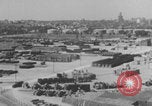
Shipment of war materiel from U.S. ports, scrap metal collection (WW2)
War materiel and construction items to be shipped to United States soldiers and Allied nations fighting during World War 2. Stacks of metal frames in port. Rolls of chain link. Men arrange stacks of rolled barbed wire. Light tanks on flatbed rail cars readied for transport. Men load fuel steel drums into train box cars. Men drive Ford GPA "amphibious jeeps" onto train platform. Jeeps, artillery and war materiel on docks. A field gun is lowered to a ship by a crane. Sign says “Iron SCRAP Steel”. A crane moves a box of scrap metal. Man shears scrap metal. A wrecking ball falls, breaking scrap metal. Men performing use cutting torches and chains inside a factory to break down scrap metal. An obsolete WWI tank is carried by a crane and lowered onto a pile of other WW1 scrapped military equipment. Man uses cutting torch to dismantle a very large artillery cannon. Junkyard magnet crane unloads two obsolete shells onto scrap metal pile.
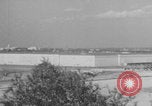
Major General Lucius D. Clay speaks of importance of scrap metal for war production (WW2)
Exterior view of the Pentagon building in Washington DC. Entrance facade of The Pentagon. Inside the Pentagon, sign says “Director of Materiel Army Service Forces Major General Lucius D. Clay”. Major General Lucius D. Clay, Director of Materiel speaks about the importance of steel in the production of US war materiel for World War 2. A secretary writes down his speech. “However our contribution to the collection of scrap can in no way meet the demand. We must depend on our home front, to exert its best effort, to collect the huge tonnage of scrap. The steel industry must have the scrap if our arms services are to obtain the high quality of steel needed for invasion. The collection of steel scrap is a vital part of our war supply program” Major General Lucius D. Clay says as he concludes his speech.
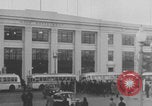
Rear Admiral Edward L. Cochrane speaks about United States Navy shipbuilding steel needs during WW2.
View of the Navy Department building, also known as the Main Navy and Munition Buildings (now demolished and turned into Constitution Gardens. Constitution Ave. NW, Washington, DC 20024, United States). Sign says “Bureau of Ships”. Rear Admiral Edward L. Cochrane speaks about the United States Navy’s shipbuilding and maintenance program during World War 2 and great needs for steel. To underscore his point, he notes that, "A single salvo of the main battery guns of such a ship as the South Dakota, for example, will take 10 tons of finished steel." He goes on to say, “Our job in the Navy until the war is over is using steel to build and to fight. We must continue to rely on the Homefront efforts to collect the big tonnage of heavy industrial scrap which is needed to make a fine quality steel in huge quantities which we need in the Navy” concludes Rear Admiral Edward L. Cochrane.
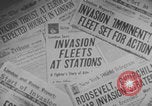
United States and British military officials convene for a high-level meeting (WW2)
Front pages of various American newspapers such as the New York World Telegram and Journal American reporting World War 2 related news with headlines such as “INVASION FLEETS AT STATIONS”, “INVASION “IMMINENT”! FLEET SET FOR ACTION” “ROOSEVELT, CHURCHILL MAP INVASION STRATEGY”, and “INVASION THRUST AT EUROPE EXPECTED HOURLY IN LONDON”. United States and United Kingdom senior military officers gather for a meeting. Two officials read a report together.

Interview with General Omar Bradley about Operation Cobra (WW2)
"The Big Picture” host Alexander Scourby interviews General Omar Bradley, the architect of Operation Cobra in Normandy during World War II. General Omar Bradley recounts his experience with handling Operation Cobra in Normandy. Omar Bradley attributes several factors for Operation Cobra’s success such as the aggressive and strong fighting spirit of the American troops, the teamwork displayed by the combat armies and air force, the alertness of subordinate commanders such as General Collins. On Martin Blumenson’s book, “Breakout and Pursuit”, General Omar Bradley says that reading the book sounds like “traveling down the road in the daylight than is the time you had taken it in the dark. It is generally familiar, which is always interesting to see the whole picture- part of which is hidden before”. General Omar Bradley gives a positive review on the historicity and veracity of “Breakout and Pursuit”. General Omar Bradley speaks about the value of military historians studying the events of World War 2. “Despite the fact that the weapons of war changes, the principle of war remain the same” said Omar Bradley. “War was a big thing in all our lives. We’ve been reading about the Revolution, the Civil War for a long time, to get a clear picture of ourselves as a nation. The Army is giving us the ability to do that now. The greatest war we have ever fought in our history” said General Bradley as he concludes the interview.
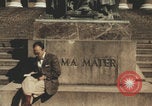
Students reading books on Italian heritage in the Casa Italiana Library at Columbia University, New York City
Italian studies and heritage of the Columbia University in New York City. A man reads a book while sitting under the statue, Alma Mater, in front of the Low Memorial Library of the Columbia University. People walking outside the Low Memorial Library and the grounds of the Columbia University (2960 Broadway, New York, NY 10027, United States). View of the Casa Italiana building (1151–1161 Amsterdam Ave., New York, New York) of the Columbia University. Entrances to the Casa Italiana and its library. Entrance reads “CASA ITALIANA LIBRARY DONATED BY CHARLES V. PATERNO M.D.”. Students and visitors study and read books inside the Casa Italiana Library. A teacher approaches a young woman reading a book. A bespectacled young man reading a thick book inside the library. A young man flipping through the pages of a book. A young woman reads a book about Italian historical figures such as Dante Alighieri and Giuseppe Garibaldi. A professor holding a lecture on Giuseppe Garibaldi at Columbia University. Male students listen to a lecture. Students viewing a portrait of Lorenzo Da Ponte, the first professor of Italian literature at Columbia University. Students passing through the Morgan Gate of Harvard University. Widener Library (1 Harvard Yard, Cambridge, MA 02138, United States) is in the background. A woman admires a vespa scooter parked outside Harvard University. Students walking on the grounds of Harvard University. Professor Charles S. Singleton, an American scholar who specializes in medieval Italian literature, speaks about Dante Alighieri in Italian. Professor Singleton talks about Italian culture in America while surrounded by many books.
CRITICALPAST.COM: About Us | Contact Us | FAQs - How to Order | License Agreement | My Account | My Lightboxes | Shopping Cart | Advanced Search | Featured Collections | Website Terms & Conditions | Privacy Policy ©2026 CriticalPast LLC.
License Agreement |
Terms & Conditions |
Privacy Policy
©2026 CriticalPast LLC.