


 Francais
 Deutsch
 Italiano
Refine Your Search
Adak Alaska USA 1943 stock footage and images
- Showing 367 to 372 of 27381 results more
more Hide
Hide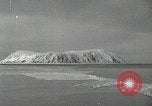
The USS Burton Island (AGB-1) arrives at King Island, Alaska on U.S. Navy cruise to assess ice conditions in Alaskan waters.
View from the icebreaker, USS Burton Island (AGB-1) as she approaches the two-square-mile King Island, at the Western most tip of Alaska. A village of simple dwellings is seen on the sharply sloped rocky side of the island. Local inhabitants gather at the shore to greet the arriving icebreaker. The crew lowers a gangway and villagers accept the invitation to come aboard the ship. The local Priest, Village Leader, and two school teachers are among several local people seen on the ship's deck during their visit. Eskimo women and children wait on shore with their children until being assured by their leaders and men that it is safe for them to visit. Several of the ship's company are invited to visit the village and are seen climbing up the steep way upward. View of house perched against steep mountainside, with skin boat laid up for winter, underneath. Clothing on washline. A larger building with a short wave radio. View from high up in village toward the icebreaker. Sailors climbing down the steep stairs from the village at the end of their visit. Some of them slip and slide down the hillside. Crew try hand at catching king crab through a hole in the ice. A large catch of king crab. View from the icebreaker as she departs Southward away from King Island.
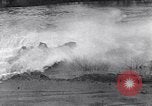
Ford motor Company GPA amphibious jeeps are demonstrated and tested by the U.S. Army during World War II
Several Ford Motor Company GPA amphibious jeeps driven by U.S. Army soldiers, cause big splashes as they drive into a river during a demonstration and test.in World War 2. They are a sample of so-called "Seeps" or "Sea Jeeps," assembled at the company's River Rouge complex, near Detroit, Michigan, from 1942-1943. View from behind a soldier driving one of them. Various views of the Sea Jeeps navigating singly and in groups and formations in the water. The soldiers in them are dressed in battle gear with weapons and steel helmets. One by one, the Sea Jeeps are seen driving out of the river up onto the river bank. Scene shifts to an area with military trucks and other vehicles parked. Three Army soldiers on motorcycles lead a long line of Sea Jeeps filled with soldiers through that area and along a highway
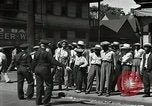
Police and U.S. military patrol streets to control the crowds and extinguish burning auto during race riots in Detroit Michigan
Detroit Race Riot in Detroit, Michigan in June 1943, during World War 2, and early in Civil Rights movement. Police disperse crowd from the street. Army patrol walks down the street in section of city. Two soldiers in front of the "HH Bowles Radio Service" store, with paint marked sign "colored" written on the store window, consistent with Jim Crow segregation practices, to identify it as an African American run business and discourage whites from patronizing it. Five U.S. soldiers holding light machine guns patrol on the street. Soldiers cross street. White youths exit from patrol wagon or paddy wagon and appear to be joking around. The youths pose in front of the patrol wagon. Police bus being driven. Views of U.S. Army tent camp in a field in Detroit. Firemen spray water on a burning automobile set on fire during the racially motivated riot. Smoke all around the burned vehicle. People stand on street and watch.
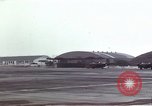
The Memphis Belle, B-17F, buzzes an airfield on War Bond Drive Tour during World War II
The famed B-17F, "Memphis Belle," seen during its June 1943 tour of the U.S. to promote War Bond sales, during World War 2. A group of onlookers watch as the Memphis Belle, piloted by Major Robert Morgan, flies only a few feet above the runway at an Air Base in the United States. (Several A-26 aircraft are seen parked on the field.) A civilian announcer stands on a bunting covered platform on the tarmac beside the runway.
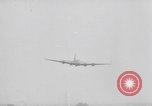
Crew of U.S. AA Force bomber B-17F Memphis Belle greeted and welcomed by Secretary of War and General Arnold in Washington DC
United States Army Air Force bomber B-17F Memphis Belle lands at Washington National Airport, Washington DC, during a War Bonds tour in the summer of 1943, in World War 2. Washington Monument and Jefferson Memorial seen in the background. B-17F No. 24485 lands at the airport and taxis to a parking position. People approach the Memphis Belle as it is parked. The pilot looks out from the window of cockpit. The Secretary of War Robert P. Patterson and General Henry H. Arnold and Barney Mc Giles greet the crew and pose in front of the aircraft.
British Prime Minister Winston Churchill in many meetings before and after America's entry into World War II
Opening slate reads: "Quebec Conference August 1943." The English battleship, Prince of Wales, is seen in fog off the Coast of Newfoundland, in August 1941. View of sailor on fore-deck of the British ship. View inside engine room of the ship where sailor manipulates her power. Closeup of engine crankshaft stopping as she drops anchor in Placentia Bay. View of Prime Minister Winston Churchill, greeting U.S. President Franklin D. Roosevelt aboard the Prince of Wales. He proffers a letter to the President, from the King of England. View of Roosevelt and Churchill seated on deck with their respective military leaders standing behind them. Admiral Ernest King, U.S. Chief of Naval Operations converses with U.S. Army Chief of Staff, George Marshall, as they stand behind Churchill and Roosevelt. Wider camera view shows the larger military entourage accompanying the Prime Minister and the President. Glimpse of prisoners and enslaved workers taken by Nazi Germans in Europe. Glimpse of bombs falling from an airplane. Classic film views of the Japanese attack on Pearl Harbor in December 7, 1941. Bombs exploding along "Battleship Row." Heavy smoke rising from the bombed ships. The USS Arizona tilted heavily and burning. Camera pans along the path of destruction, as the voice of President Roosevelt is heard in the background, asking the Congress to declare that the Japanese attack created a state of War between the United States and the Japanese Empire. View of President Roosevelt speaking to the U.S. Congress. Seated behind him are Vice-President Henry Wallace and Speaker of the House, Sam Rayburn. Glimpse of Congress members applauding. Change of scene shows President Roosevelt and Winston Churchill meeting in Washington, DC, in December of 1941, during World War 2. Views of war preparations in the United States, including the building of new war production plants and facilities. A large steel ingot being forged into an artillery gun barrel. Machinist at work turning a gun barrel on a lathe in a munitions factory. Views of manufacturing plants in operation and steel being made. A railroad train carrying new Army trucks. Another meeting of Churchill and Roosevelt in Washington, D.C. June, 1942. Standing behind them is President Roosevelt's special assistant, Harry Hopkins, a British naval officer, and an American navy Captain. American soldiers boarding a troop ship, and closeups of them as they enter the ship, looking out of portholes, and waving from the ship's deck. Glimpse of Washington Monument and its image in the reflecting pool in Washington DC. Closeup of a book entitled, "Time Table for Invasion." General George Marshall with several of his generals doing preliminary planning. Series of scenes involving senior military officers engaged in war planning. A convoy of warships is seen at sea during the Operation Torch Allied invasion of French North Africa during 8–16 November, 1942. Views of Allied Navy ship guns firing. Allied troops riding in landing craft, and advancing from beached craft on shore of Algiers. Aerial view of a flight of Douglas Dauntless bombers in formation. "Bombs away" view from Allied airplane dropping bombs. Allied troops firing camouflaged antiaircraft guns from sandy positions near shore. Enemy shells or bombs exploding nearby. Two U.S. Army soldiers holding a document in French entitled, "Message from the President of the United States.
CRITICALPAST.COM: About Us | Contact Us | FAQs - How to Order | License Agreement | My Account | My Lightboxes | Shopping Cart | Advanced Search | Featured Collections | Website Terms & Conditions | Privacy Policy ©2026 CriticalPast LLC.
License Agreement |
Terms & Conditions |
Privacy Policy
©2026 CriticalPast LLC.