


 Francais
 Deutsch
 Italiano
Refine Your Search
Adak Alaska USA 1943 stock footage and images
- Showing 4465 to 4470 of 27382 results more
more Hide
Hide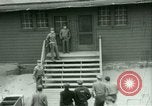
German prisoners at a POW camp in the United States play cards, read books and view pictures of Allied leaders.
German Prisoners of War at a POW camp in the United States during World War 2. German prisoners enter barracks. American Soldier keeps a watch on them. Prisoners seated on bunks play cards, write letters and read books. Three Prisoners of War at a table view picture of President Franklin Roosevelt and Winston Churchill and salute.
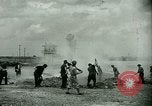
German and Italian prisoners clean up ground, cut lawns and draw German eagle with pebbles at a POW camp in United States.
German and Italian Prisoners of War at a Prisoner of War camp in the United States during World War II. Prisoners of War clean up ground, remove tree trunks by using crane and cut lawn. American soldier keeps a watch on the POWs. A stone with Swastika and inscription 'Es Lebe Unser Fuhrer'. German eagle is drawn with pebbles on ground.
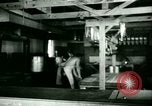
German and Italian prisoners cook meal and eat at a counter canteen in a POW camp, United States during World War II.
German and Italian prisoners of war (POW) cook a meal at a POW camp in the United States during World War 2. Prisoners of war prepare their meals in kitchen. American soldiers eat rice, chicken and noodles at a table. Prisoners eat their meal at a counter canteen.
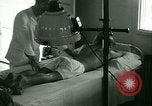
German and Italian Prisoners of War during World War II in U.S. operated POW camp.
German and Italian Prisoners of War receive treatment and massage at a POW camp in the United States during World War 2. Prisoner receives massage and Infra- red ray treatment in camp hospital or medical ward. Prisoner dictates letter to another prisoner. Doctor uses a stethoscope. Prisoner lies on a bed under mosquito net.
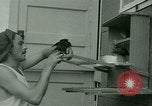
Prisoner of War trains birds at a POW camp in the United States during World War 2.
German and Italian Prisoners of War at a POW camp in the United States during World War II. Prisoner trains the birds. Other prisoners stand and look at him.
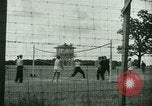
German and Italian prisoners play volleyball and soccer at a camp in the United States during World War II.
German and Italian Prisoners of War during World War 2 in the United States at a U.S. operated POW camp. The prisoners play games in the camp. Prisoners play volley ball. Other prisoners play soccer. Prisoners seated on bench watch them play.
CRITICALPAST.COM: About Us | Contact Us | FAQs - How to Order | License Agreement | My Account | My Lightboxes | Shopping Cart | Advanced Search | Featured Collections | Website Terms & Conditions | Privacy Policy ©2026 CriticalPast LLC.
License Agreement |
Terms & Conditions |
Privacy Policy
©2026 CriticalPast LLC.