


 Francais
 Deutsch
 Italiano
Refine Your Search
Adak Alaska USA 1943 stock footage and images
- Showing 535 to 540 of 27381 results more
more Hide
Hide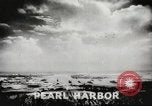
Japanese air attack on Pearl Harbor blows up U.S. battleships and destroyers in Honolulu, Hawaii during World War II.
A 1943 film about the December 7, 1941 Japanese air attack on Pearl Harbor in Honolulu, Hawaii during World War II. Film blends dramatized scenes with actual historic footage from the event. Formations of Japanese bombers approach Pearl Harbor. USS Arizona (BB-39) bombed. U.S. personnel aboard USS Arizona as the ship is bombed. Smoke billows up from the explosion. U.S. sailors aboard USS Oklahoma (BB-37). USS Oklahoma and USS California (BB-44) are bombed by Japanese aircraft. U.S. troops fire machine guns at Japanese aircraft. USS Cassin (DD-372), USS Downes (DD-375), and USS Pennsylvania (BB-38) bombed in the dry dock of Pearl Harbor. Ships in flames. USS Oglala CM-4 sinks after being attacked. Air raid alarms sound in Honolulu. Japanese people in Honolulu as the Japanese air raid on Pearl Harbor continues. A Japanese man being interviewed after air raid says he cannot think that Japanese aircraft attacked Pearl Harbor.
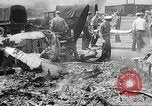
U.S. Navy officers and sailors attend prayer services for dead servicemen in Honolulu, Hawaii after the Pearl Harbor attack.
From a 1943 film blending dramatized scenes and actual archival footage about the conditions soon after the attack on Pearl Harbor in Honolulu, Hawaii in December 1941 by Japanese bombers during World War II. U.S. troops remove the dead bodies of soldiers who died in action. The U.S. flag on the grave of a U.S. soldier. Pictures and parents of U.S. service men of the Navy, the Marine Corps, the Army and Medical Corps who died during Pearl Harbor raid. The family of a U.S. Medical Corps Lieutenant who died during Pearl Harbor raid. Wife of the same lieutenant holds her baby born after the attack. Prayer services for the dead U.S. servicemen. Families of the dead servicemen lay wreaths and flowers around U.S. flags. U.S. Navy officers and sailors at shore attend the memorial services. Ceremony shows line of U.S. Navy sailors laying garlands around each U.S. flag bearing the names of U.S. servicemen who died during Pearl Harbor attack. An Army Chaplain and Navy officers attend the prayer services. Palm trees on the beach.
1940 launching of USS Hornet (CV-8); accomplishments of USS Hornet, famous for the 1942 Doolittle Raid during World War II.
A film titled 'The Life and Death of The USS Hornet' dedicated to the workers of America's shipyards and war plants during World War II. The Capitol building in Washington DC. U.S. President Franklin Roosevelt gathered at press conference to announce the bombing of Tokyo Japan by Doolittle Raid forces in April 1942. Reporters run out to phones and typewriters. A man at NBC microphone in 1943. The headlines of newspapers read 'Japs Murder Doolittle's Fliers'. American people in groups and families listen to radio broadcasts, gathered at work and in living rooms around radios to hear the radio news. They buy newspapers at newsstands. Headline of newspaper reads "Carrier Hornet was Shangri-La". Workers at shipyard, factories, machine shops. Men and women war workers of varying ages and races, including white, Japanese-American, and African-American seen welding, machining, and working to buld the ship and its parts. Scenes from the launching of USS Hornet CV-8 in December 14, 1940, with sponsor Annie Reid Knox at the launching.
U.S. Navy Dr. Walt Miner gives historical background of LSD (Lysergic acid diethylamide) drug in the United States.
The film gives an introduction and briefs the history of illegal drug LSD (Lysergic acid diethylamide). U.S. Navy Doctor Walt Miner speaks about revealing the facts about LSD which can be documented. He speaks about the historical background of LSD. He says that LSD is synthesized from lysergic acid derived from ergot, a grain fungus that typically grows on rye. He says that ergot is a fungus that grows on grains and other cereals. He speaks about Swiss chemists Albert Hofmann and Stahl who tried to make modifications in LSD molecule in 1938. He mentions the event of 1943 when Dr. Hofmann intentionally ingested 250 micrograms of LSD in his laboratory and how he felt uncomfortable. Dr. Walt Miner further explains how unique and powerful LSD drug is and says that the most unique thing about LSD is effective dose of the material. Miner states that effective dose for LSD can range from 0.5 micrcograms to 1.5 micrograms per kilogram of body weight.To explain the effective dosage of LSD, he displays a piece of wax paper where a mark is made with a pen. A penny is placed beside that mark to compare the two sizes. Dr. Miner informs that the ink mark weighs some micrograms. Dr. Miner takes one drop of human blood from a tube and says that this one drop contains 330 million cells and in comparison to that the weight of LSD to produce its effect is equal to the weight of two blood cells.

The recruitment of women as Marines in the United States, during World War II.
A film titled: 'Lady Marines' on the recruitment of women in the United States Marine Corps, during World War 2. Views of Marines engaged in combat. U.S. Naval guns firing. A Marine dive bomber in action. Splashes in water from explosions. Marines in an amphibious assault on the beach. Paramarines making a jump. Tanks moving on the field. U.S. Marines firing machine guns. Paramarines boarding an airplane. Views of U.S. Marines in non-combat assignments in Washington, DC. Exterior of the U.S. Capitol building. Trucks being refueled. Marine mechanics maintaining vehicles. Marines engaged in administrative and logistical wartime support activities. A Marine typing a document on a typewriter. Comments about the need to free trained Marines for combat. A scene of Japanese soldiers celebrating a victory. A poster with the photograph of a woman reads: 'Be a Marine'. On February 13, 1943 the Marine Corps Womens Reserve is formed. Women are recruited to relieve Marines for combat. Women Marines salute.

U.S. pilot Lieutenant Rex T. Barber describes his mission to shoot down Yamamoto in the Solomon Islands during WW2.
Title sequence “Air Force Now”. Image of Lieutenant Rex T. Barber, the United States Army Air Force pilot who shot down Admiral Isoroku Yamamoto during a military operation in the Solomon Islands in 1943, taken during World War II. Rex T. Barber is interviewed by Air Force Now. Lieutenant Rex T. Barber describes how he shot down a Japanese bomber that carried Admiral Isoroku Yamamoto during WWII.
CRITICALPAST.COM: About Us | Contact Us | FAQs - How to Order | License Agreement | My Account | My Lightboxes | Shopping Cart | Advanced Search | Featured Collections | Website Terms & Conditions | Privacy Policy ©2026 CriticalPast LLC.
License Agreement |
Terms & Conditions |
Privacy Policy
©2026 CriticalPast LLC.