


 Francais
 Deutsch
 Italiano
Refine Your Search
Adak Alaska USA 1943 stock footage and images
- Showing 553 to 558 of 27381 results more
more Hide
Hide
Allied troops take over Kiska Island in Aleutian, Alaska
"Allies take Kiska" Canadian troops on the move and join American troops to take over Kiska from Japanese possession. Admiral Thomas C. Kinkaid with a Canadian General. Troops on board a ship and put on camouflage make up. A map shows location of Kiska. Allied troops loaded in landing crafts arrive at Kiska Island and regain it without any Japanese opposition. Wrecked Japanese planes and American flag. (World War II period).
American troops complete its occupation of Attu in Aleutian Island, Alaska
'US completes occupation Attu Island '. American soldiers move across snow covered slopes at Attu in Aleutian Island. Dead Japanese soldiers in trenches. American troops move in single file, up the hill as artillery fires. Wounded soldier carried by two other soldiers. Soldiers look at Japanese equipment at a camp. Graves of Japanese soldiers. (World War II period).
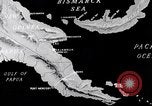
Soldiers pack supplies and parachutes at an Australian Parachute Packing Depot in Papua New Guinea.
March 1943: A map shows Salamaua in Papua New Guinea. An aircraft drops supplies with parachutes over hills. An Australian parachute packing depot. Soldiers pack parachutes on tables in rows. Stacked Australian parachutes to deliver rations, American parachutes used for Ammunition, and 24 foot parachutes for regulation. White parachutes used for medical supplies, blue ones used for rations and red used for ammunition supplies. Aerial view of Goodview, an area of conflict. A soldier radios the requirements to base. Another soldier delivers the plan to the depot. Soldiers pack mortar ammunition. The fuses and sheets are packed together in boxes. Soldiers put boxes into sacks, tie the sacks and attach parachutes. Soldiers pack canned meat: lay straw in big cans, put small cans into those, seal the big cans, secure them with a wiring machine, and attach parachutes. Sacks of rice are put into copper sacks, their mouths tied. Soldiers pack rations including onions, bacon and potatoes for delivery. Supplies are loaded onto trucks and transferred to the aerodrome. (World War II period).
C-47 Skytrains and P-38 Lightning fighters drop supplies with parachutes over Greenview in Papua New Guinea.
March 1943: Australian and American soldiers in Salamaua in Papua New Guinea. Trucks loaded with supplies move to the aerodrome. The Depot officers radio A3 of the 5th Air Force Headquarters, who in turn contact the 54th Troop Carrier Wing for airplanes. Brigadier General Prentiss monitors the mission with Colonel Hampton. Board shows duties of the Troop Carrier Wing. The pilots and crew are briefed for the mission. Soldiers leave in jeeps at dawn for the aerodrome. The pilots are given the time for take off. Supplies are loaded. Planes are ordered off ground. Douglas C-47 Skytrains and P-38 Lightning fighters taxi and take off. Pilot scouts the skies for change in weather and danger. Planes over drop area in Greenview, marked by parachutes from earlier drops on the ground. Soldiers put supplies onto ramps and prepare for the drop. Pilot gives the signal and supplies are dropped. (World War II period).
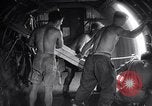
Soldiers drop supplies from C-47 Skytrains over Salamaua in Papua New Guinea.
March 1943: Soldiers in Douglas C-47 Skytrains prepare to drop supplies for American and Australian troops over Salamaua in Papua New Guinea. Aerial view of drop point in Salamaua with parachutes from previous drops visible on the ground. Supplies with and without parachutes descend to the ground. Planes fly low over the drop area. Parachutes with medical, food and ammunition supplies. C-47s fly low over the drop area. Planes fly over the peninsula. (World War II period).
Lt. Col. James Doolittle directs the Doolittle Raid on Japan and receives an award from Madam Chiang Kai-Shek.
From a 1943 newsreel covering the Doolittle Raid on Japan in April 1942. United States Navy aircraft carrier USS Hornet (CV-8) in Japanese waters. B-25 Mitchell medium bomber planes lined up on the deck of the carrier. Lt. Col. James Doolittle and Hornet skipper Captain Marc A Mitscher with the 80 volunteers seated near a 500lb bomb on board. He ties a Japanese medal (awarded to U.S. officers for humanitarian aid to Japanese people) on the bomb. The carrier in heavy seas 800 miles off the Japanese coast. A Japanese patrol boat is sighted and sunk. The survivors are taken prisoners. The crew readies the loaded bombers. General Doolittle in the cockpit as he leads the takes off. The planes take off in rough weather to bomb Japan. The Yokosuka Naval Base bombed and ablaze. The planes bomb armed plants, rail yards and oil refineries all over Japan. Soldiers examine a wrecked B-25 in Japan. U.S. pilots hold traditional Chinese umbrellas and pose with a Chinese man. Chongqing: Soong May-ling, better known as Madame Chiang Kai-shek, awards General Doolittle and his men for the gallant raid. (World War II period).
CRITICALPAST.COM: About Us | Contact Us | FAQs - How to Order | License Agreement | My Account | My Lightboxes | Shopping Cart | Advanced Search | Featured Collections | Website Terms & Conditions | Privacy Policy ©2026 CriticalPast LLC.
License Agreement |
Terms & Conditions |
Privacy Policy
©2026 CriticalPast LLC.